





It all looked harmless at first sight. Alaa Abd El-Fattah was a political activist in Egypt who protested against the authoritarian regime, wrote books and articles and whose release from imprisonment, first for organising a political protest without authorisation and then later for spreading “fake news”, was generally welcomed. His father is a human rights attorney, and his mother a professor of mathematics at Cairo University.
The Tory government granted him citizenship in 2021 on the basis of his mother having been born in the UK. At the time, there did not appear to be anything untoward, but the usual stringent checks were not carried out in an atmosphere where the decision was regarded as diplomatically helpful.
Now the situation is very different after a series of social media posts came to light showing El-Fattah to have expressed both anti-Semitic and anti-British sentiments and to have advocated violence.
He has apologised, but that could be regarded as merely expedient when his right to British citizenship has been in question, and he was facing the prospect of a return to Egypt
The Government has now decided not to strip him of his British citizenship, but while the issue was in question, only Nigel Farage seemed to understand the urgency of the situation as if Egypt decided to deny him citizenship, based on his dual nationality status, then we would have had no choice but to continue to keep him here as international law forbids making anyone stateless.
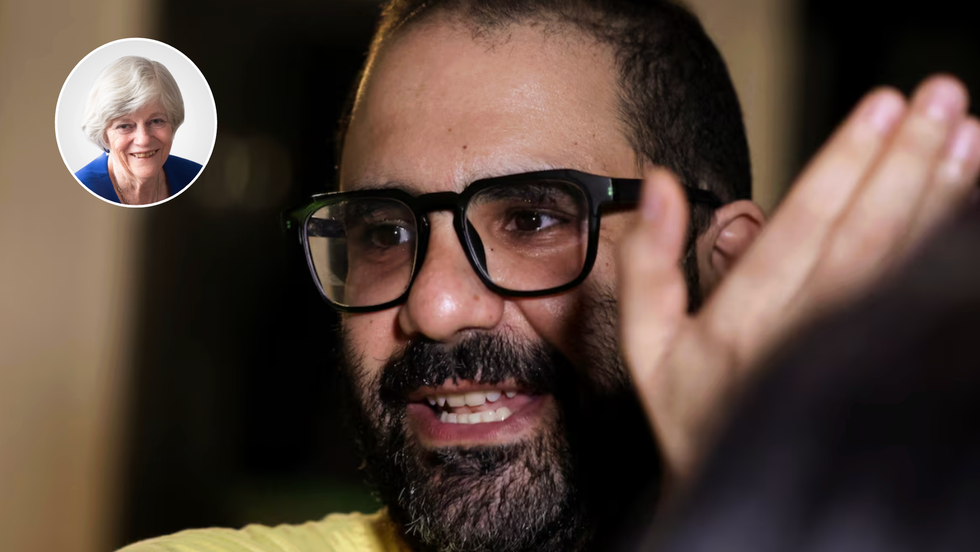
What counts as cancellable in Britain? Alaa Abd El-Fattah just rewrote the rulebook - Ann Widdecombe
|Reuters
The decision to retain his citizenship having been taken, the question remains as to whether he is as dangerous as his former media posts might suggest.
He has described them as a young man’s anger, but he was 30 at the time, not a naïve teenager. If reports are accurate, then he described the killing of Zionists as heroic and the British as a collection of dogs and monkeys.
He is also reputed to have written posts urging the killing of police. All this took place around the time of the Arab Spring, when the situation in the Middle East was, to put it mildly, febrile. Pro-democracy, he may be, but peacemaker he was not.
However, even if he is no longer dangerous – and I have heard of no evidence that he has expressed these opinions since - the case opens other questions.
First, El-Fattah gained British citizenship through his mother, who was herself born to a parent here for study purposes. That is a pretty remote chain, especially given that the family did not settle here. It is a situation which cries out for change.
Secondly, should anybody be accepted here without a thorough search through social media posts? I accept absolutely that neither this government nor the Conservatives, nor any MP who was campaigning for El-Fattah’s release while he was imprisoned in Egypt, knew of such posts.
Even now, there is doubt about verifying some of them, which were long since deleted. My point is that there was no attempt to check in the first place. That also needs to change.
Finally, the increasingly pressing question: how long should a social media post be held against anyone? We have limitations when it comes to past crimes, but none for past views. In an increasingly social media-dominated age, that is a question which we are going to have to address.
More From GB News