










Pope Leo issued an unprecedented apology on Monday for the Vatican's direct involvement in legitimising the slave trade, marking the first occasion a pontiff has sought forgiveness for the Holy See's own complicity rather than merely that of individual Christians.
The American-born pope delivered this historic acknowledgement through his inaugural encyclical, titled "Magnifica Humanitas" (Magnificent Humanity), describing the Church's record as "a wound in Christian memory."
"It is impossible not to feel deep sorrow when contemplating the immense suffering and humiliation endured by so many in stark contrast to their immeasurable dignity as persons infinitely loved by the Lord," Pope Leo wrote.
"For this, in the name of the Church, I sincerely ask for pardon."
The apology responds to decades of campaigning by Black American Catholics, scholars and activists demanding Vatican accountability for papal bulls that granted European monarchs authority to enslave non-Christians.
The papal bulls in question date to the mid-15th century, when Pope Nicholas V issued Dum Diversas in 1452, granting Portuguese monarchs permission "to invade, conquer, fight and subjugate" non-Christians and seize their lands.
Crucially, this directive also authorised the Portuguese crown "to reduce their persons to perpetual slavery."
A subsequent bull, Romanus Pontifex, followed three years later, and together these documents established the Doctrine of Discovery, which provided theological justification for colonial land seizures across Africa and the Americas.
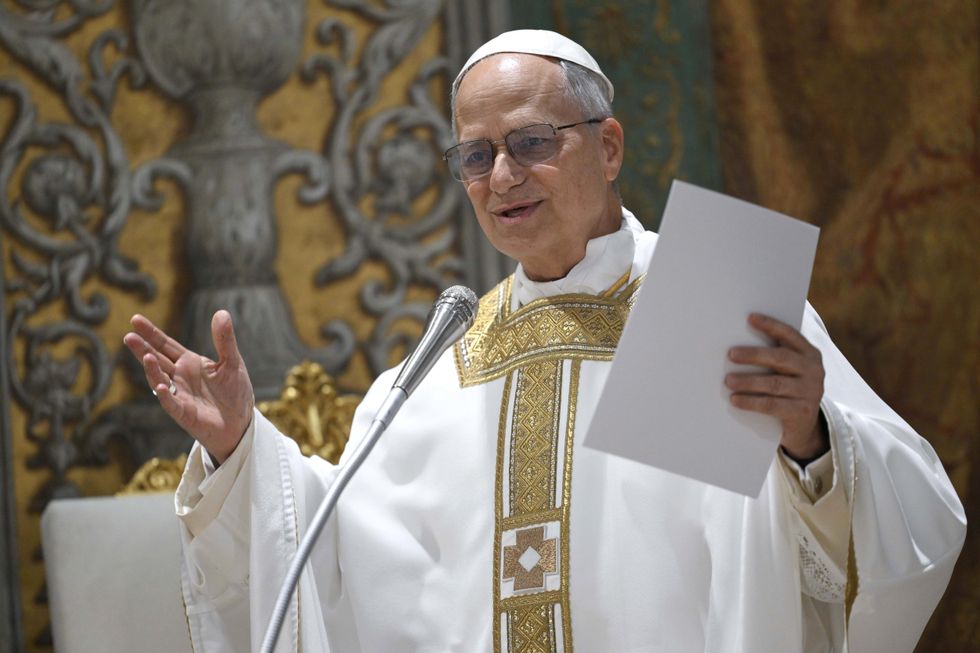
Pope Leo has made an unprecedented apology for the Holy See's direct involvement in legitimising the slave trade
|GETTY
According to the Reverand Christopher J. Kellerman, a Jesuit priest and author of "All Oppression Shall Cease: A History of Slavery, Abolitionism, and the Catholic Church," these permissions were subsequently confirmed by Pope Callixtus III in 1456, Pope Sixtus IV in 1481, and Pope Leo X in 1514.
Spanish monarchs received equivalent rights for the Americas.
While the Vatican has maintained it always upheld human dignity, Pope Leo acknowledged in his encyclical that the Church was remarkably slow to formally oppose slavery.
"Already in the early modern period, the Apostolic See of Rome, responding to the requests of sovereigns, intervened several times in order to regulate and legitimise forms of subjugation, and, in certain cases, including the enslavement of 'infidels,'" he wrote.
LATEST DEVELOPMENTS
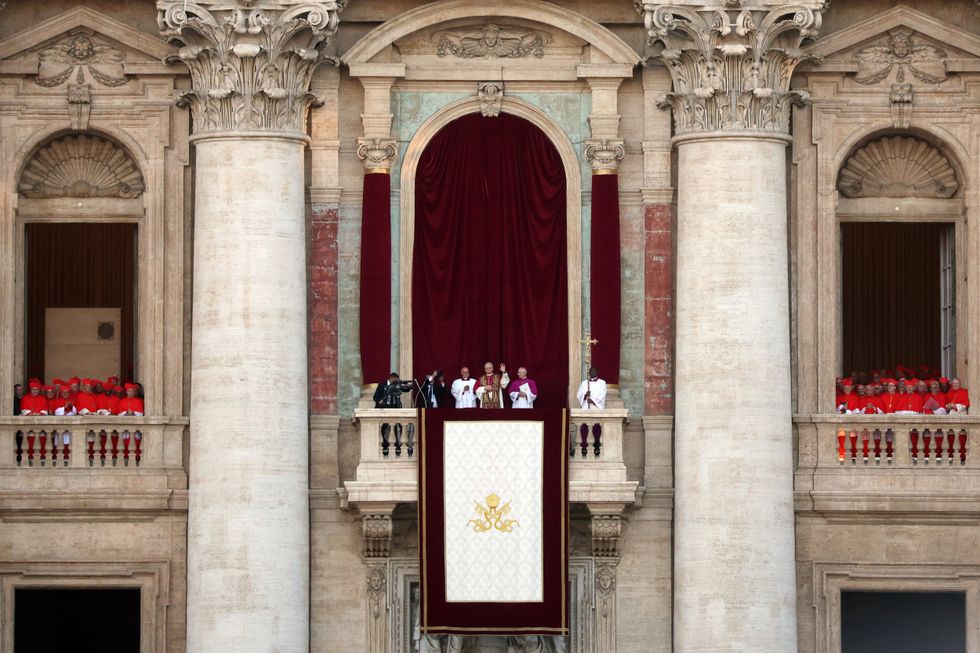
This is the first time a pontiff has recognised the role the Vatican played
|GETTY
The pontiff noted that Pope Leo XIII became the first pope to explicitly condemn slavery in 1888, by which point numerous countries had already abolished the practice.
Church institutions themselves held slaves during antiquity and the medieval period.
Though Pope Leo stated that judging historical decisions by contemporary moral standards was not possible, he added: "Yet neither can we deny or diminish the delay with which both society and the church came to denounce the scourge of slavery."
The encyclical's broader focus centres on protecting human dignity amid growing dependence on artificial intelligence, with Pope Leo drawing parallels between historical exploitation and contemporary concerns.
The encyclical's broader focus centres on protecting human dignity amid growing dependence on artificial intelligence, with Leo drawing parallels between historical exploitation and contemporary concerns.
The pontiff raised the trans-Atlantic slave trade in connection with what he termed new manifestations of slavery and colonialism emerging from the digital revolution.
Among these modern concerns, he highlighted the unregulated labour conditions faced by workers extracting rare minerals essential for AI chip production.
Pope Leo urged the Church to firmly oppose all trafficking linked to technological advancement, warning: "if we want to avoid the need to ask for pardon again in the future for having failed to respect the treasure of human dignity that is required by our faith."
Pope Leo XIV's personal connection to this history runs deep, with genealogical research by Henry Louis Gates Jr. revealing that 17 of his American ancestors were Black, documented in census records as mulatto, Black, Creole or free persons of colour.
His family tree encompasses both slaveholders and enslaved individuals, Mr Gates wrote in The New York Times.
Previous papal statements on slavery fell short of acknowledging Vatican culpability. St. John Paul II sought forgiveness from Africans during a 1985 Cameroon visit for Christians who participated in the trade, though not for papal involvement.
During a 1992 visit to Goree Island in Senegal, the largest slave-trading centre in West Africa, he described slavery as "a tragedy of a civilisation that called itself Christian."
Our Standards: The GB News Editorial Charter