







A historic atomic weapons treaty between the US and Russia has expired - sparking what could be the dawn of a new nuclear era.
The Strategic Arms Reduction Treaty, known as New Start, was signed in 2010 - and limited the number of nuclear warheads between the two countries.
Vladimir Putin had proposed to keep observing the missile and warhead limits for another 12 months - a request Moscow claims the US has ignored.
Russia said it was open to renewed talks on Wednesday.
But the Kremlin's Deputy Foreign Minister Sergei Ryabkov, who oversees arms control issues, said now was "a new moment, a new reality" and warned: "We are ready for it."
TRENDING
Stories
Videos
Your Say
In a statement, the Russian Foreign Ministry said: “Essentially, our ideas are being deliberately ignored. This (US) approach appears mistaken and regrettable.”
It added Moscow intends to “responsibly and in a balanced manner”.
On Wednesday, the US-born Pope Leo issued an urgent appeal to maintain the treaty.
At his weekly audience, the Pontiff said: “It is more urgent than ever to replace the logic of fear and distrust with a shared ethic, capable of guiding choices toward the common good.”
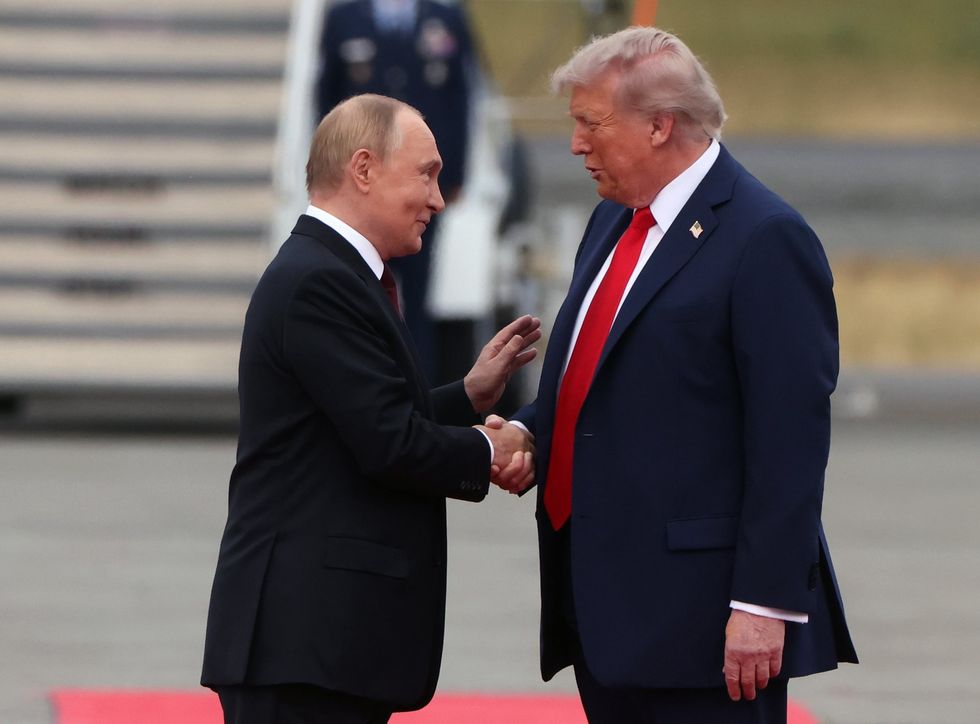
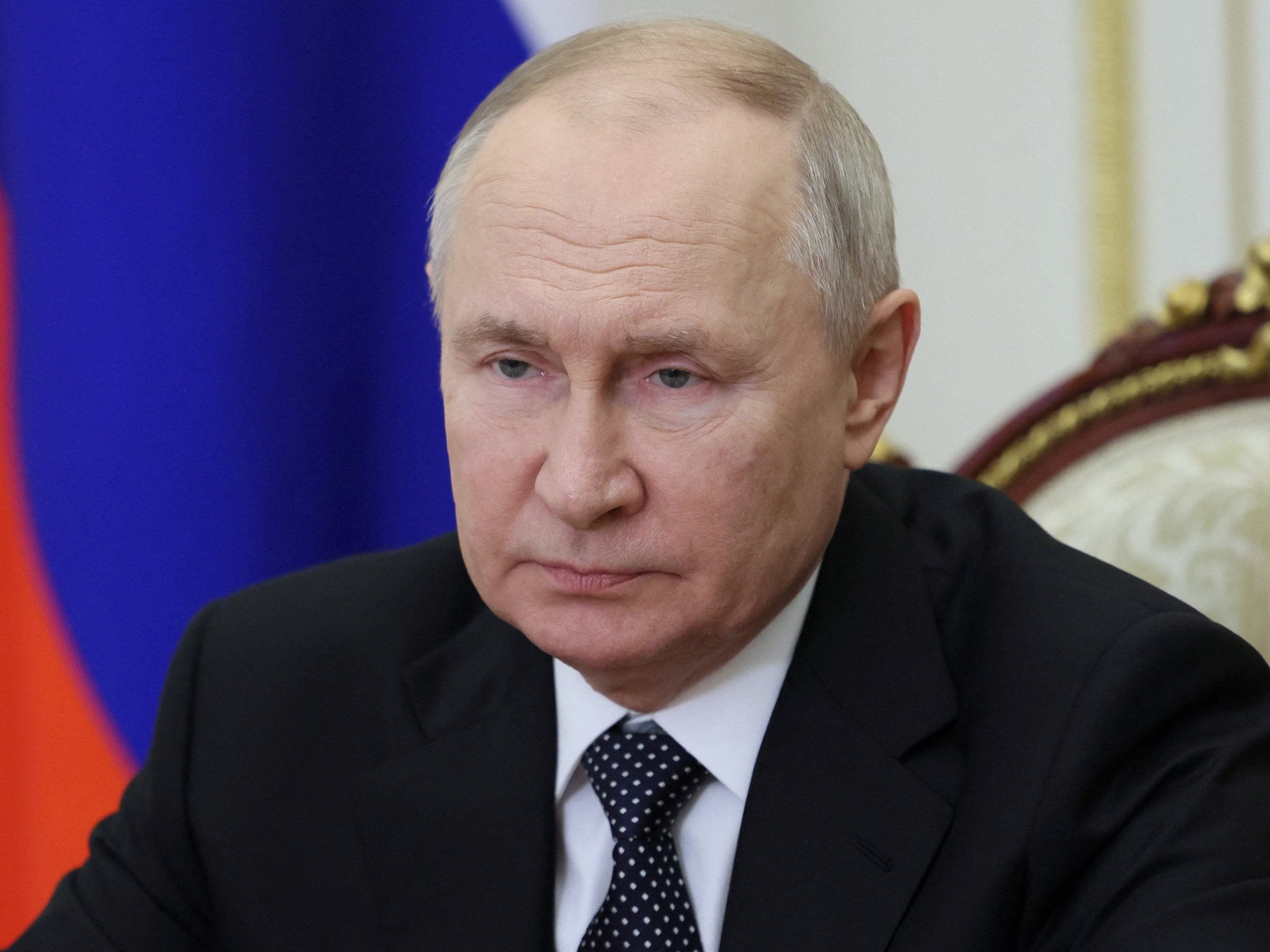
Donald Trump has not responded to Vladimir Putin's requests to extend the agreement
|GETTY
Last month, Donald Trump told the New York Times: “If it expires, it expires… We'll just do a better agreement.”
Washington has indicated a new treaty should include China, who have built up their nuclear arsenal.
Russia has previously argued the nuclear caps should be extended to France and the UK.
The original Start treaty was signed in 1991 between the US and the Soviet Union, limiting their deployed nuclear warheads to 6,000.
NUCLEAR WEAPONS - READ MORE:
- Fears Britain 'dangerously exposed' to attack with UK's nuclear strategy 30 years behind 'aggressive' Russia and China
- Vladimir Putin tests NEW 'invincible' nuclear weapon in 15-hour, 9,000-mile missile flight
- Nuclear weapons 'now justifiable' by Russia as new doctrine sparks serious concerns for the West
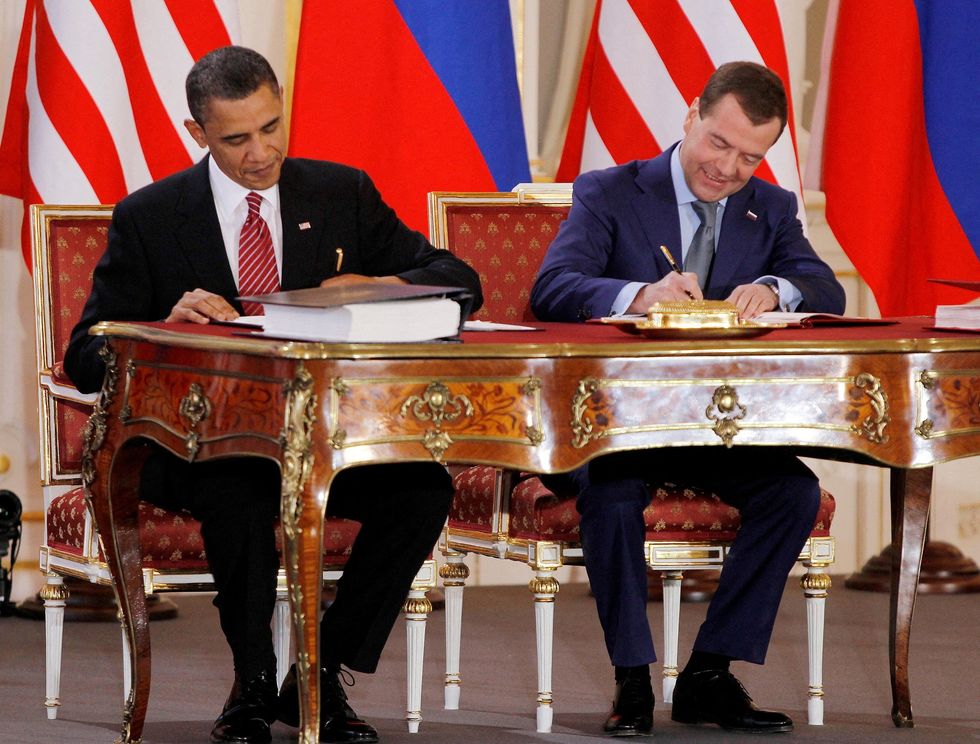
PICTURED: Then-Presidents Barack Obama and Dmitry Medvedev sign the new Strategic Arms Reduction Treaty at Prague Castle in Prague in April 2010
|REUTERS
It was followed in 2010 by the now-expired New Start deal which capped the number of deployed strategic nuclear warheads to 1,550 between the US and Russia, after the dissolution of the Soviet Union.
The deal had a time limit of 10 years, which was followed by an extension of five years in 2021.
Russia had suspended the treaty three years ago as a result of the war in Ukraine, but Moscow was believed to still be abiding by the nuclear warhead limits.
In addition to the limit, it enforced curbs on weapon delivery platforms such as intercontinental ballistic missiles and heavy bombers.
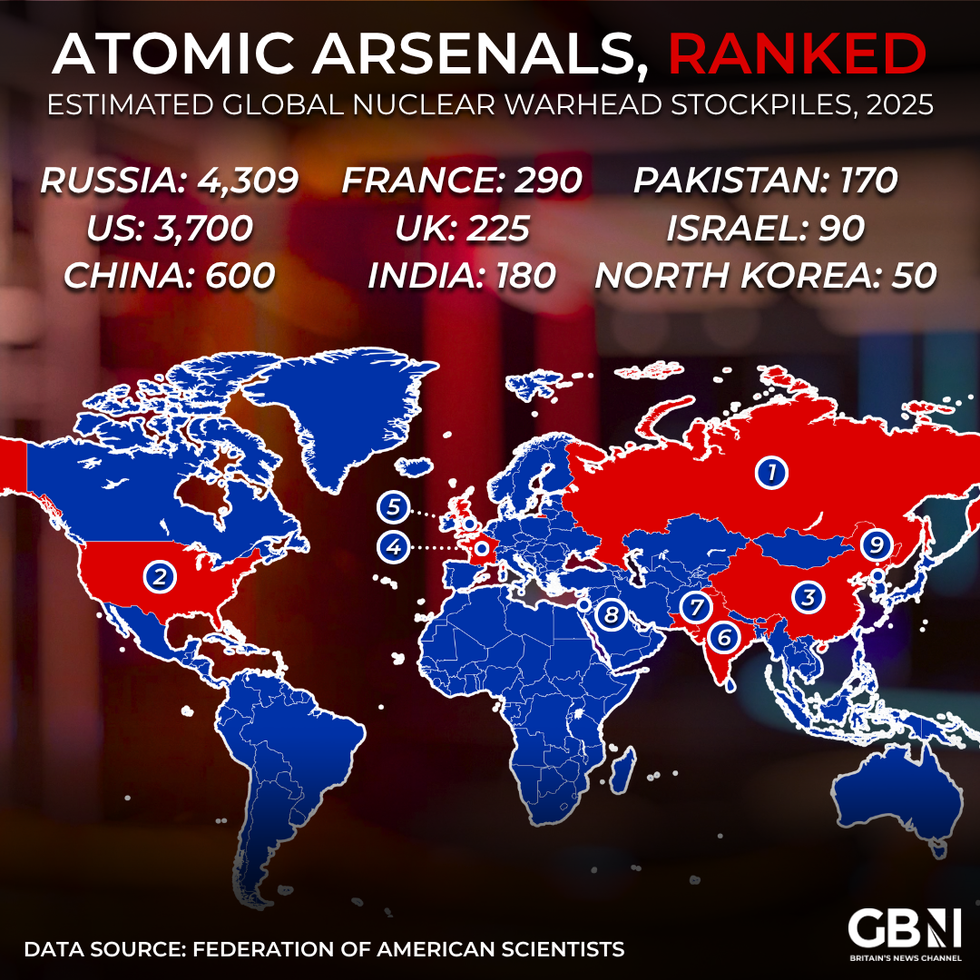 Atomic arsenals, MAPPED: Estimated global nuclear warhead stockpiles in 2025 | GB NEWS
New Start allowed the two countries to conduct short notice inspections of each other’s nuclear weapons facilities, and exchange data on the arms in the agreement.
A number of long-standing arms control treaties have expired in recent years, such as the Intermediate-Range Nuclear Forces Agreement, the Open Skies Treaty, and the Conventional Armed Forces in Europe Treaty.
The agreement was made to avoid the uncontrolled stockpile of nuclear weapons which some experts worry will now occur.
In a speech last year, Britain’s former head of the armed forces Admiral Sir Tony Rankin said the collapse of arm control agreements was “one of the most dangerous aspects of our current global security”.
Matt Korda, associate director for the Nuclear Information Project at the Federation of American Scientists said without an extension to the agreement, there is nothing stopping either nation from adding to their nuclear weaponry.
He said: “Without the treaty, each side will be free to upload hundreds of additional warheads onto their deployed missiles and heavy bombers, roughly doubling the sizes of their currently deployed arsenals in the most maximalist scenario.”
More From GB News