






Ireland's protesters have threatened to shut down the country amid a now-five-day-long demonstration against the Republic's surging fuel prices.
Demonstrators have blocked key distribution sites and major motorways in a row over soaring costs thanks to the war in Iran.
Diesel has risen from about €1.70 (£1.48) a litre to €2.17 (£1.89) across forecourts in recent weeks - and petrol is now up to 25 cents more per litre.
Travel across Ireland has been hampered by slow-moving convoys of lorries, tractors and more - some of which have been blocking the country's only oil refinery in Whitegate, County Cork.
The blockades have successfully strangled the distribution of fuel around the country, though ambulance and fire services are also facing "increasing pressure" on fuel supplies.
And now, fears are rising that as many as a third of Ireland’s 1,500 filling stations will run dry by this morning.
As a result, the Irish Government has been locked in talks to bring the protests to an end, with a fuel support package set to be finalised soon.
Irish ministers had said on Friday that no further package of support measures would be announced until fuel protesters ended their action - shortly before news of said package came to light.
The Taoiseach, Micheal Martin, has confirmed the Irish army "is on standby" to ensure the "law is upheld".
While over in Britain, Labour has held talks on how to deal with potential repeats of the action in Ireland.
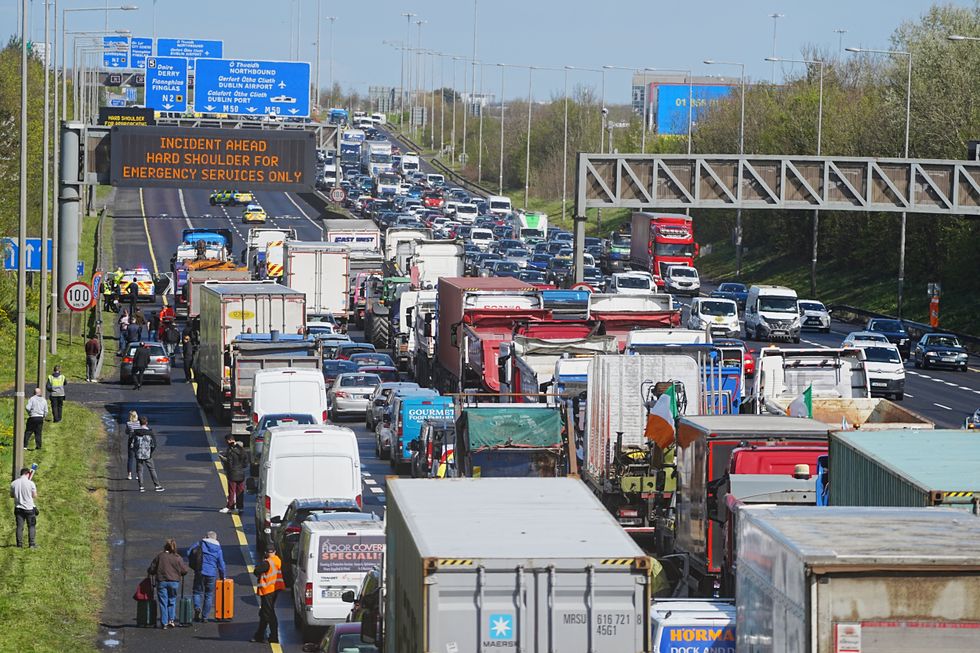
Travel across Ireland has been hampered by slow-moving convoys of lorries, tractors and more
|PA
Ireland's police force, An Garda Siochana, has also declared an "exceptional event", making every officer available for weekend duty.
One of the protesters, farmer John Dallon said: "Maybe for another week, maybe two weeks. If it takes a month, we are prepared to sit here."
Christopher Duffy, a spokesman for Dublin's demonstrators, said the blockades would continue until there was a "serious reduction in our costs".
Mary Burke, who manages Raceside Service Station in County Tipperary, said a delivery that would normally last four to five days ran out within seven hours.
FUEL FURY - READ MORE:
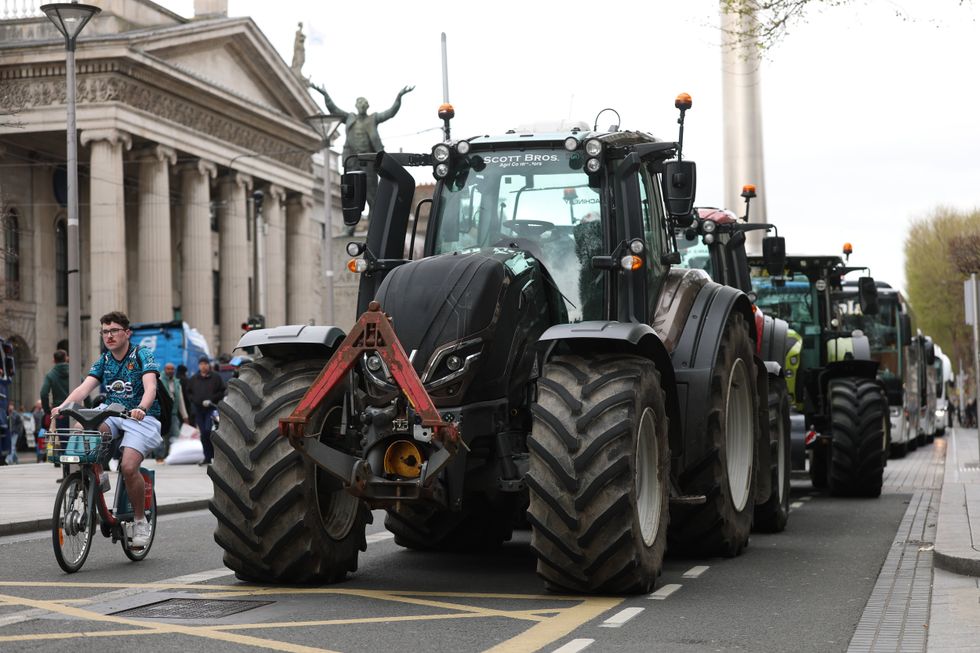
Tractors have rolled through the streets of Dublin in protest at the spiralling prices
|PA
"I'm 100 per cent going to run out of fuel before Monday," she said.
Ms Burke added: "I'm dreading Saturday evening, Sunday morning when I'm going to run out of fuel."
Irish health ministers issued a joint statement declaring "the serious risks to patient safety caused by the blockade of fuel supplies are completely unacceptable".
The Taoiseach has also warned Ireland stands "on the precipice of turning oil away from the country" amid a global supply crisis.
Mr Martin described the situation as "unconscionable" and "illogical", telling RTE that the blockade "is damaging Ireland's economy and society".
He insisted that "self-appointed" groups do not have a right to "close down the country".
Tanaiste (Deputy PM) Simon Harris has promised a "substantial and significant" package of support for "key sectors of the economy".
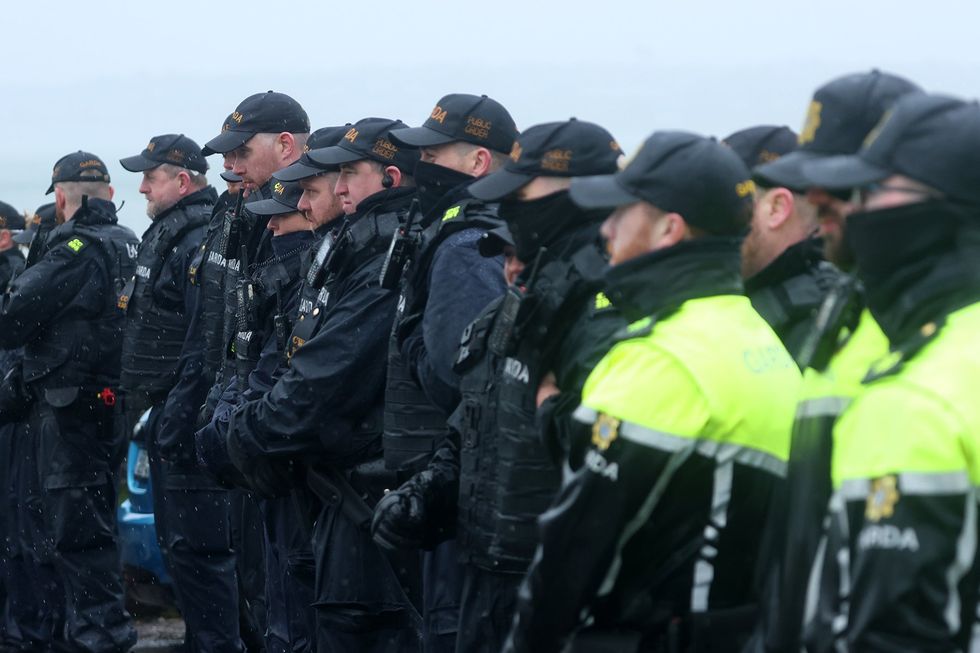
PICTURED: Columns of police line up against protesters at the Whitegate refinery
|PA
Alongside the Whitegate refinery, protesters maintained blockades at fuel terminals in Foynes, County Limerick, and Galway Port.
Police eventually secured access to the Whitegate site, designated as National Critical Infrastructure, without any disorder.
Five fuel trucks were allowed through the blockade on Friday afternoon, though protesters vowed that would be it.
Joseph Musgrave, the chief executive of Home and Community Care Ireland, said he is being "flooded" with reports from staff struggling to access fuel across multiple counties.
"If they can't get to their client, then those ambulances can't be called. And we all know what that means," he said.