









Motorists across the UK panic-bought fuel at the fastest pace in years as petrol and diesel prices continue to soar in response to the conflict in the Middle East.
Panic buying of fuel peaked on Tuesday, March 3, after the killing of Iran's Supreme Leader on February 28, which kick-started the war in the Middle East.
The surge in panic buying can also be attributed to the closure of the Strait of Hormuz, which is one of the most important chokepoints around the world for the export of oil and gas.
Fresh data shows that petrol sales were running 30 per cent above normal levels on March 3, with drivers and businesses increasing their spending, rather than cutting back.
The research, from New AutoMotive, shows that people were "defying the conventional logic that high prices cure high demand", as seen with a huge spike in both petrol and diesel sales.
Latest price data shows that motorists are paying 158.16p per litre of petrol and a staggering 191.31p for diesel at the pumps.
This represents a 25.3p jump in price for petrol, while diesel car owners are shelling out 49p more per litre for fuel - an enormous 34.4 per cent jump compared to the start of March.
Experts from New AutoMotive stated that the panic buying data demonstrated how drivers are trapped into buying fuel because they have no other option.
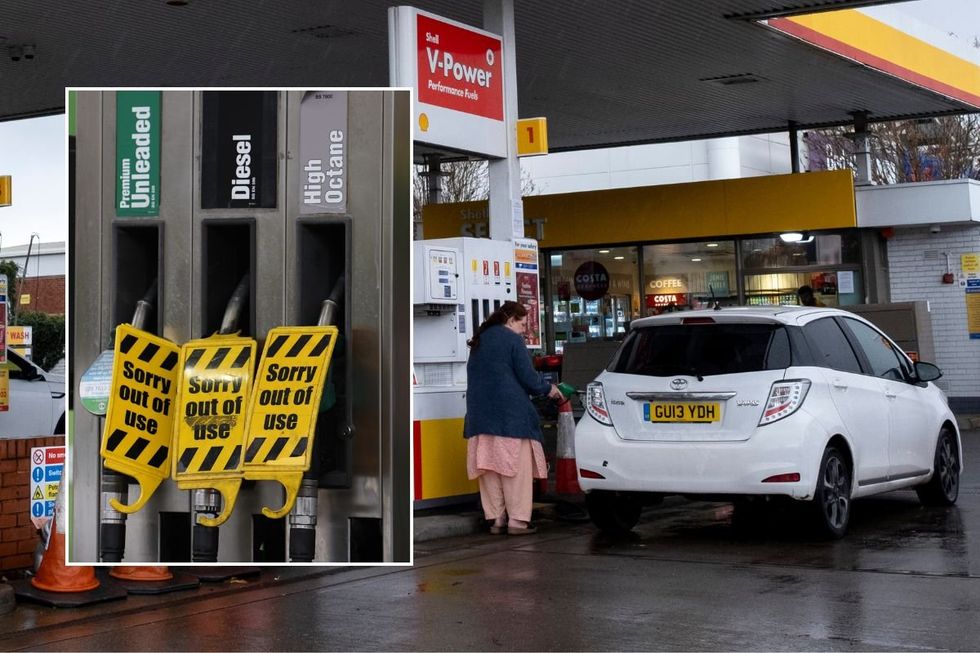
Drivers queuing at petrol stations on March 3 resulted in a panic-buying peak
|GETTY
Motorists cannot drive less since they need to get to work, access services and operate businesses, most of which need to be done by travelling somewhere in a reliable manner.
Ben Nelmes, CEO of New AutoMotive, said: "President Trump's attacks on Iran at the start of March triggered panic buying at UK fuel stations.
"Motorists know that fuel prices rise quickly and fall slowly. Most drivers cannot just drive less, and so the only option is to try to fill the tank before prices soar.
"Ministers should focus on the only way to bring the cost of motoring back under control, which is to get as many electric cars on the road as possible."
LATEST DEVELOPMENTS
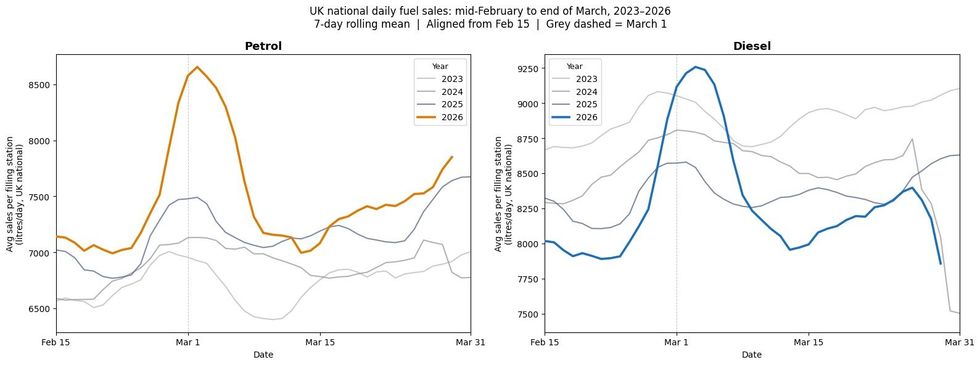
Data shows how panic buying occurred across the UK in the days after the war in Iran started
|NEW AUTOMOTIVE
The analysis also showed that short-term decisions, including cutting fuel duty, would "ultimately subsidise imported fossil fuels" and lumber the Treasury with high costs.
The organisation argues that the only suitable solution to the current fuel price crisis is to incentivise the uptake of electric vehicles and give drivers an affordable alternative.
Interest in electric vehicles has soared in recent weeks, mirroring the trend of fuel prices, as drivers look for ways to save money on their motoring costs.
Octopus Electric Vehicles reported a huge 36 per cent jump in interest for its EV leasing division in the four weeks after the outbreak of war between the United States and Israel, and Iran.
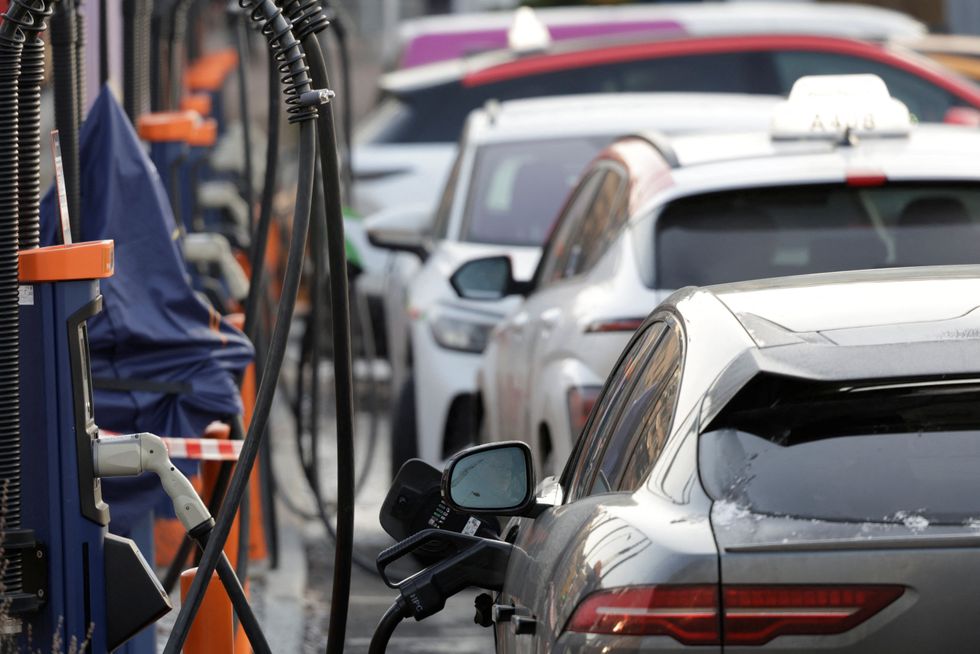
Interest in electric vehicles has soared in recent weeks amid the fuel price crisis
| REUTERSTanya Sinclair, CEO of Electric Vehicles UK, explained that, at the start of the conflict, some drivers "rushed to buy fuel", while others "rushed to go electric".
"Both reactions say the same thing: people need the cost of driving to be manageable and predictable. Electric driving offers that stability. Fuel costs don't," she added.
Similarly, Gurjeet Grewal, CEO of Octopus Electric Vehicles, said: "We're seeing a sadly familiar story - global instability causes chaos at petrol pumps.
"Electric cars offer a way out – letting drivers tap into cheaper, homegrown energy and gain more control over what it costs to get from A to B. EV drivers have been largely unaffected by this crisis. That is why more people are switching as petrol prices rise."