





Donald Trump is preparing to deploy the £11million Dark Eagle hypersonic missile against Iran for the first time as the conflict in the Middle East continues.
The US president is scheduled to meet with Centcom commander Admiral Brad Cooper today, where he will receive options for breaking Tehran's stranglehold on the strategically vital Strait of Hormuz, according to Axios.
This high-stakes briefing comes as American forces are reportedly being readied for a potential ground invasion of Iran to bolster the efforts of the new missile technology.
Admiral Cooper has reportedly prepared a blueprint for a "short and powerful" wave of military strikes, designed to force Tehran into abandoning its blockade of the crucial shipping lane.
The Dark Eagle missile boasts a range of approximately 2,700 kilometres and can travel at speeds reaching Mach 5.
These feats make it far superior to the Precision Strike missiles currently deployed by American forces, which have a maximum range of just 500 kilometres.
This extended reach would enable US forces to target concealed Iranian missile launchers, which have so far remained beyond striking distance.
According to the Library of Congress, the weapon is designed for "long-range conventional precision strike capability" against "time-sensitive and heavily defended targets".
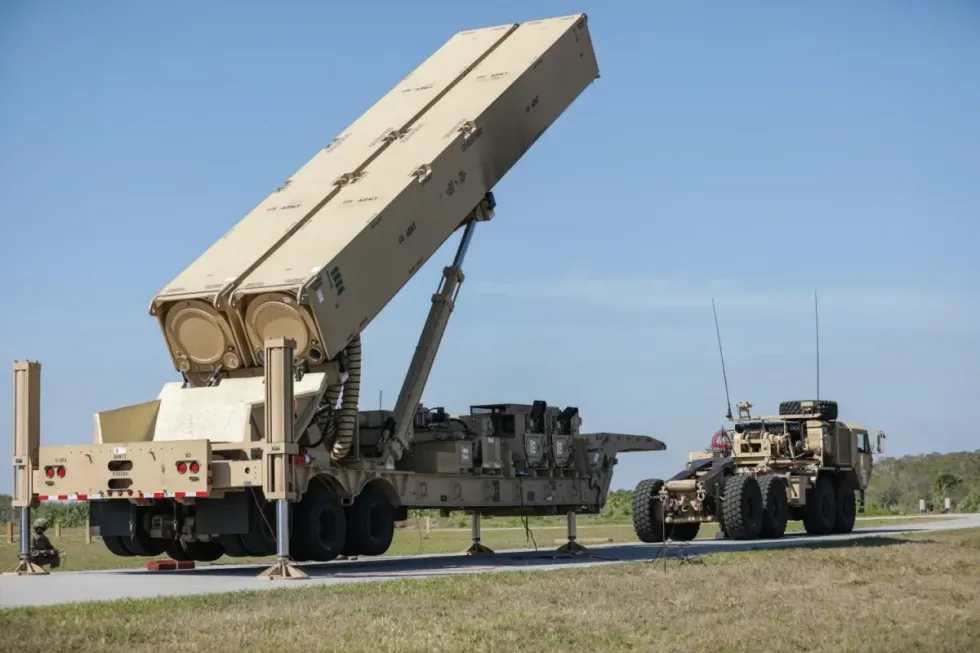
The Dark Eagle is designed for 'long range conventional precision strike capability'
|US ARMY
Should the deployment proceed, it would mark the first combat use of a hypersonic missile that has not yet been declared fully operational by the US military.
Bloomberg has reported fewer than eight of these missiles currently exist, with each battery costing around £2billion.
Russia and China have already deployed hypersonic weapons of their own, placing the United States behind rivals in exercising the emerging military technology.
The meeting to discuss deployment of such a weapon follows the collapse of diplomatic efforts between Washington and Tehran, with peace negotiations in Pakistan failing to produce any breakthrough.
LATEST DEVELOPMENTS
- ‘They got me to do it!’ Donald Trump lifts whisky tariffs after visit from King and Queen
- Donald Trump contrasts King Charles with Keir Starmer in blunt swipe: ‘He’s a much different person’
- Donald Trump prepares 'powerful' new strikes on Iran after Vladimir Putin warns of 'extremely dire consequences' for America
Both nations now find themselves at a negotiating impasse, with military action appearing increasingly likely as the standoff over the contested waterway intensifies.
Among other options being presented is a high-risk proposal to deploy American troops directly into Iran, with the dual objective of reopening the waterway and seizing the regime's nuclear materials.
Washington's aerial bombardment campaign, which began on February 28, but was halted following the April 8 ceasefire, could resume if diplomatic channels remain blocked.
Iran's Supreme Leader Mojtaba Khamenei, who has remained out of public view since his father Ali Khamenei was assassinated, declared the only place for Americans in the Persian Gulf "is at the bottom of its waters", according to state television.
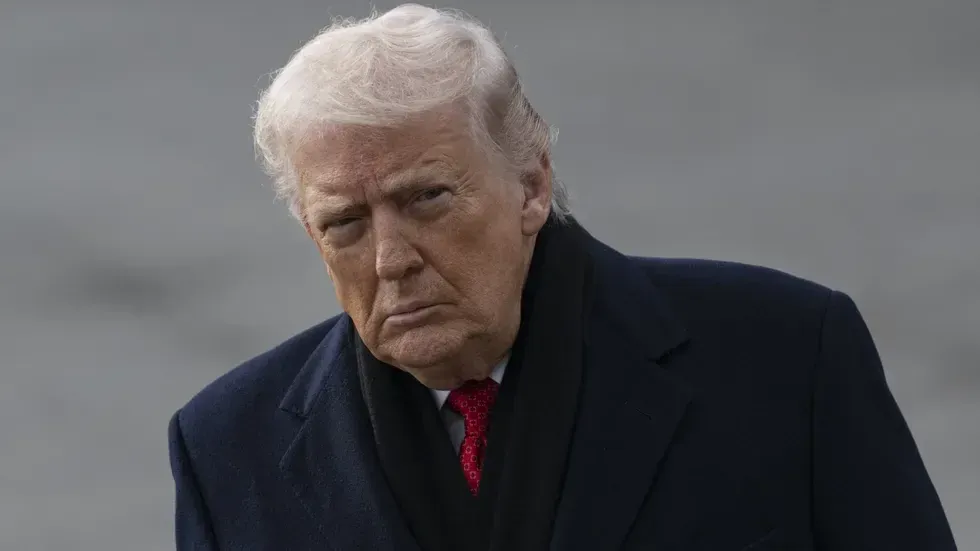
Donald Trump declared 'no more Mr Nice Guy' on his Truth Social platform
|GETTY
The reclusive leader also pledged to defend Iran's "nuclear and missile capabilities."
Mr Trump responded with an AI-generated image showing himself armed with a rifle, warning "no more Mr Nice Guy" and claiming the Islamic Republic is collapsing.
Iranian leaders proposed ending the Gulf conflict in exchange for lifting the US blockade while retaining their nuclear programme, but the US President rejected this, reportedly saying he "doesn't love" leaving enriched uranium with Tehran.
Our Standards: The GB News Editorial Charter