











A Shakespeare scholar has determined the precise location of the playwright's sole London residence in Blackfriars, following her discovery of a previously unknown architectural drawing from 1668.
Professor Lucy Munro, of King's College London, pinpointed both the position and dimensions of the dwelling Shakespeare purchased in 1613.
The conventional view held that the Bard largely withdrew from theatrical life shortly after acquiring the house, returning to his hometown of Stratford-upon-Avon.
Yet scholars now suggest this finding may indicate Shakespeare remained active in the capital for longer than historians had assumed.
Professor Munro unearthed three archival documents - two held at the London Archives and a third at the National Archives - that shed new light on the property.
She said: "I was doing research as part of a wider project and couldn't believe it when I realised what I was looking at - the floorplan of Shakespeare's Blackfriars house."
The academic noted that investigators had long believed little additional evidence remained to be found, leaving research into the property dormant for some time.
She added: "These findings really help us tell the complete story of Shakespeare's Blackfriars house, and thanks to this new discovery, we now know exactly where it stood."

William Shakespeare may have remained active in the capital for longer than historians had assumed
| GETTYThe dwelling stood in close proximity to Shakespeare's place of work at the Blackfriars theatre, according to Professor Munro.
She pointed to the collaborative play Two Noble Kinsmen, which Shakespeare wrote with John Fletcher later in 1613, the same year he acquired the property.
"This new evidence that the Blackfriars house was quite substantial makes it not inconceivable that some of it may have been written in this very property," the professor said.
The 1668 floorplan was created two years following the Great Fire of London, and confirmed both the exact position and size of the residence.
LATEST DEVELOPMENTS
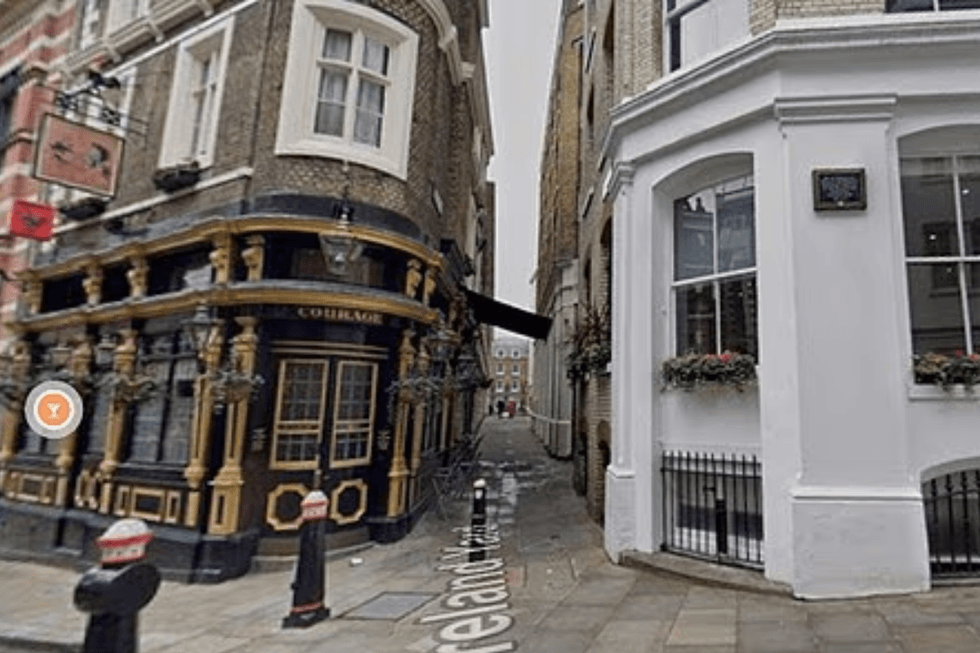
The property encompassed what is today the eastern portion of Ireland Yard
|GOOGLE STREET VIEW
The property encompassed what is today the eastern portion of Ireland Yard, the lower section of Burgon Street, and parts of the Victorian-era buildings at 5 Burgon Street and 5 St Andrew's Hill.
Shakespeare's Blackfriars residence had previously been understood to form part of "the Great Gate" spanning the entrance to the Blackfriars precinct, which originated as a significant Dominican friary dating to the 13th century.
The section of the building that extended over the gate was absent from the post-fire plan, as it lacked foundations.
Notably, the blue plaque commemorating Shakespeare on St Andrew's Hill now marks not merely the vicinity, but the actual site where his London home once stood.