










Stained glass painters are raising concerns over proposed Health and Safety Executive regulations that they claim will devastate a craft dating back 1,300 years in Britain.
The HSE has put forward plans to significantly reduce the permissible blood lead levels for workers, a move that artists warn will force older craftspeople and women out of the profession entirely.
Under the proposed regulations, the maximum permitted blood lead concentration for general employees would fall from 60 micrograms per decilitre to 30mcg by October next year, with a further reduction to 15mcg scheduled two years after that.
Women classified as having "reproductive capacity" who are under 50 face even more stringent requirements, with their threshold set to plummet from the current 30mcg/dl to just 7.5mcg/dl by October next year.
Workers who exceed these limits would be required to cease working until their blood lead concentrations drop back below the permitted thresholds.
Glass painters argue these targets are simply unachievable in practice, given that lead has been the essential material binding glass pieces together for centuries.
Mr Taylor said: "The legislators are making the levels of acceptable lead an impossible target to reach and there is then a much stricter threshold for women that could bar them from working in the industry.
"And that would be us going backwards. Our stained glass windows have survived war and deterioration but will get killed by health and safety."
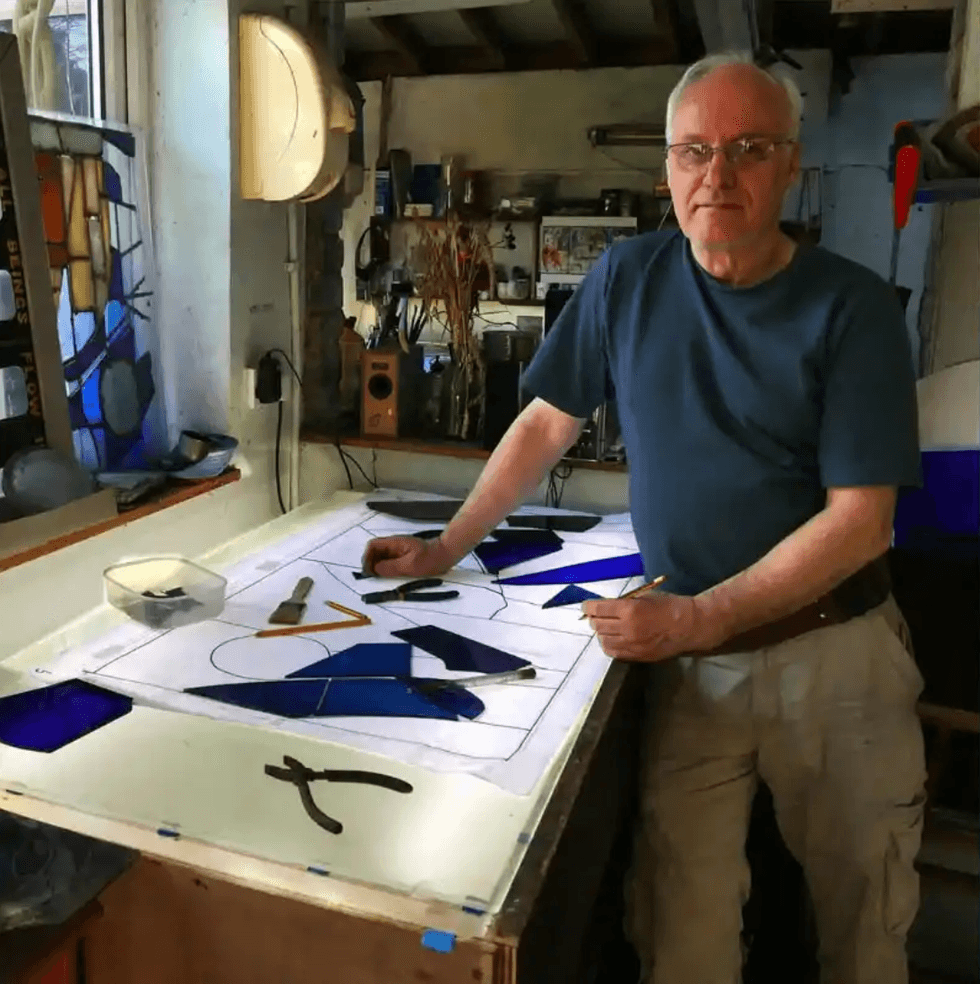
Andrew Taylor has called the changes backwards
|ANDREW TAYLOR ARTS
Mr Taylor, who developed his passion for the craft during art college in the 1980s and currently trains a female apprentice, Rebecca Bingham, noted that lead accumulates gradually in the body and can take seven years to fully replace.
He said: "We all instinctively know that lead is not a nice thing and so we are all vigilant.
"And remember paint can also be toxic. But what are we doing to do? Give up?"
Stained glass windows became widespread across Europe from around 1150 AD, with methods remaining largely unchanged since a 12th-century Latin text by the German monk Theophilus.
LATEST DEVELOPMENTS

Lead is an essential part of the process for creating the works of art
|BRITISH SOCIETY OF MASTER GLASS PAINTERS
The process involves fitting coloured and painted glass into H-shaped lead strips known as cames, which are soldered together and secured to iron frameworks.
Ms Taylor explained that practitioners maintain rigorous safety protocols, including thorough handwashing, prohibiting food in studios, and wearing protective equipment while undergoing regular blood tests.
Rachel Mulligan, co-chair of the British Society of Master Glass Painters, warned the proposals would result in numerous suspensions from studios.
"It is hard enough getting people to enter the profession and if employers are looking to take on new staff why would they take on a younger female," she said.
The HSE said the aims of the change were to reduce work-related ill health.
They said: “These regulations have not been reviewed in over 20 years and it is now known that health outcomes can be improved through lower levels of exposure to lead.
"We are consulting with stakeholders so we can better understand the impact of these proposed changes in the working environment, before making any final recommendations for reform."
The society is urging members to respond to the HSE consultation before it closes on May 24.
Our Standards: The GB News Editorial Charter