








Britain must take more risks to stay ahead of its enemies and maintaining the status quo is “simply not good enough,” the head of the Navy has said.
First Sea Lord General Sir Gwyn Jenkins has said the blockade of the Strait of Hormuz during the Iran war has shown the “vulnerability of traditional naval platforms”.
The head of the Navy said in a speech at the Royal United Services Institute he planned to leave the Royal Navy “much stronger than the one I inherited” by 2029.
Sir Gwyn continued: “Just maintaining the capable status quo is simply not good enough. We are at an inflection point.
“This need has come into focus as threats have developed and evolved over the last decade but it became irrefutable in 2022 with Russia’s egregious, full-blown invasion of Ukraine.
“That rallying call has only grown louder with the geopolitical developments of the last four years, including in the Middle East.
“The most recent conflict, in particular the shutting of the Strait of Hormuz by Iran, has also confirmed something else – sea power is vital if we are to maintain the free flow of trade, uphold freedom of navigation, deter our adversaries and safeguard Britain’s economy against the kind of global shocks we have been experiencing.”
He explained that the key to the Navy’s plan is a “hybrid approach”, where both crewed ships and drones will work with other “cutting-edge” technology.
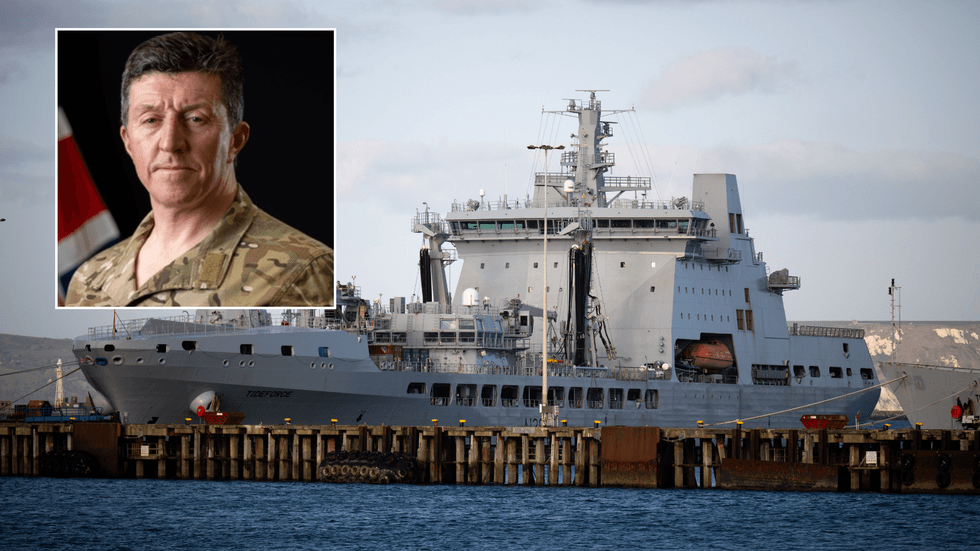
Sir Gwyn Jenkins has said the Royal Navy need to take more risks to stay ahead of enemies
|GETTY/ROYAL NAVY
He emphasised “investing in the way we train” so that personnel can focus their skills in “complex, high-threat battle scenarios, much of which can only be practised through simulation”.
Sir Gwyn continued: “It’s not about replacing existing capabilities. It is about increasing the survivability and lethality of our force.
“We must end the mentality that we need ever more expensive and ever larger platforms.”
Sir Keir Starmer’s government has committed to spending 2.5 per cent of GDP on defence by 2027, with a Nato-agreed target of 3.5 per cent by 2035.
LATEST DEVELOPMENTS:
Sir Gwyn added: “We must not only invest in the technologies of the future, we must change our entire mindset if we are to stay ahead of our enemies.
“That requires us to take more risk, to ruthlessly remove unnecessary regulations and other barriers holding us back so that we can cut the time it takes between trialling new systems and putting them to sea or alongside our commanders.
“It requires courage and getting used to failing occasionally in order that we succeed more often.”
The first Navy-wide war game took place last month to test the new ”hybrid” approach, with “clear evidence” of significantly heightened capability, with missile capacity increasing “threefold to the level necessary to win a contest in the North Atlantic.”
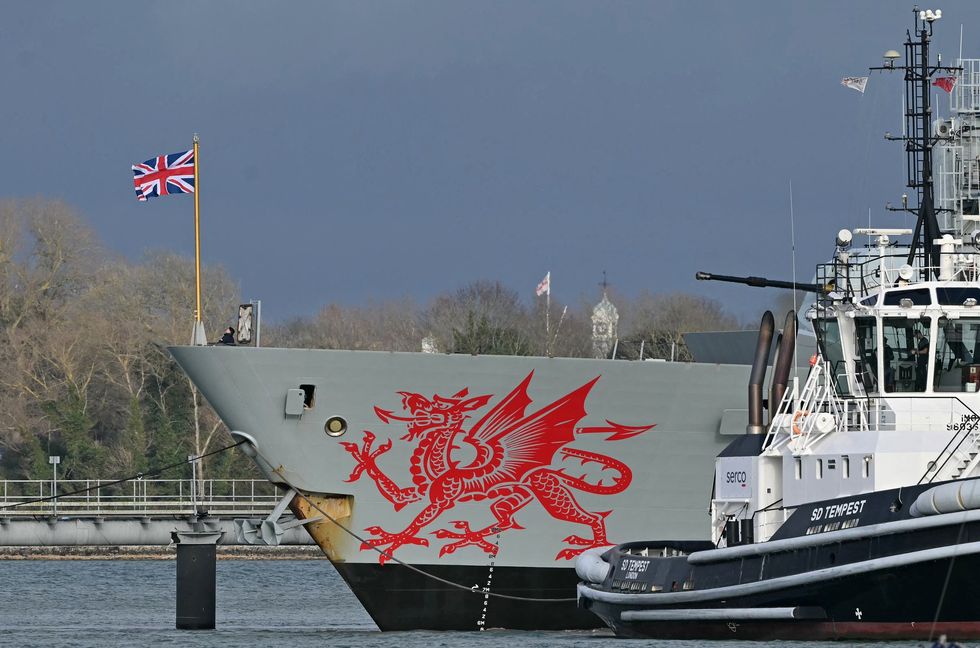
Sir Gwyn has said a new 'hybrid' approach will see of manned ships and drones
|GETTY
Sir Gwyn warned that Russian incursions into British waters had jumped by almost a third in the last two years.
“In 2025 alone, the Royal Navy was required to respond dozens of times in support of homeland defence against Russian navy surface vessels,” he said.
“That is why the Royal Navy has to be ready every day of every month of every year.”
At Prime Minister’s Questions on Wednesday, Sir Keir Starmer said the Government had increased defence spending to “the highest since the Cold War” and hit out at the previous Tory administration’s record.
Conservative leader Kemi Badenoch accused the Government of “spending so much on welfare that we cannot afford to defend the country”.
The Prime Minister responded: “This is the Labour Government that increased defence spending to the highest since the Cold War.
“What did they do? When they came into power, defence spending was 2.5% and when they left power, it was 2.3%, and even their own Secretary of State admitted they hollowed out our armed forces.
“So we’ll take no lecture from them on defence.”