









New legislation has been passed into law today, meaning protestors could face jail time if they climb national memorials, as a new crackdown on disorderly behaviour is introduced.
The Government's Crime and Policing Act now means individuals who climb significant national monuments such as the Cenotaph or the statue of Sir Winston Churchill in Parliament Square will face criminal prosecution.
Those found guilty of scaling protected war memorials could receive a prison sentence of up to three months, a fine reaching £1,000, or both penalties combined.
The act forms part of broader measures designed to maintain public safety during protests while preserving the right to peaceful demonstration.
Officers will now have clearer authority to intervene when protesters cross established boundaries at these nationally significant sites.
The legislation extends protection to 26 war memorials and parts of memorials across the country, including the Royal Artillery Memorial at Hyde Park Corner, the Merchant Navy Memorial at Tower Hill, and Birmingham's Hall of Memory.
The Home Secretary retains the authority to expand this protected list by adding further monuments deemed nationally significant.
The National Holocaust Memorial and the National Muslim War Memorial will both be added to the list once construction is complete.
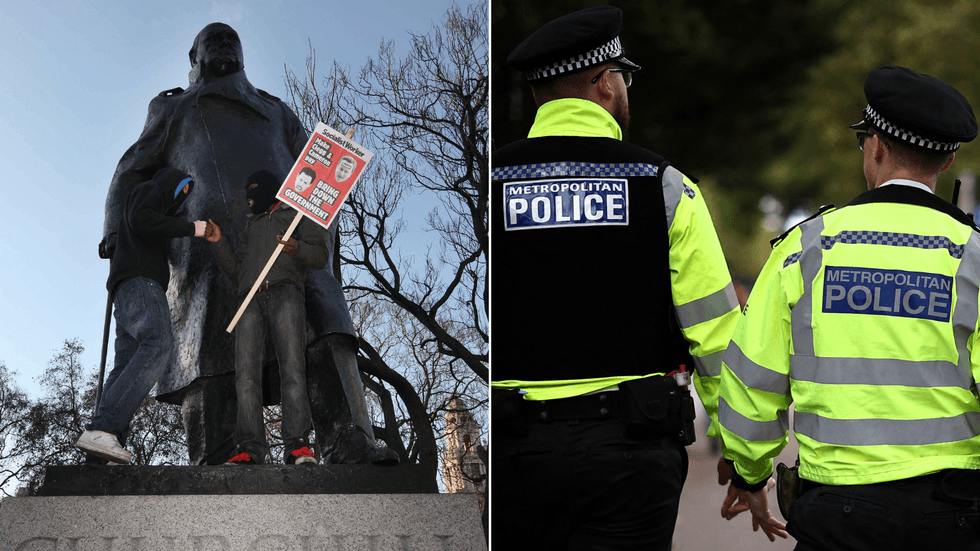
Protestors could now face prison time for climbing national memorials, under new crackdown rules
|GETTY
Minister for Crime and Policing, Sarah Jones, said: “The right to peaceful protest is a cornerstone of our democracy - and we will always defend it.
“But that right does not extend to climbing our memorials, hiding behind masks, or putting the public at risk with flares and fireworks.
“Our fallen heroes deserve dignity and respect. These new powers send a clear message: those who cross the line will be held to account.”
Police will receive new powers to tackle protests that take place at the same place for an extended period of time, as well as to consider the ongoing impact of repeated protests at the same site.
LATEST DEVELOPMENTS:
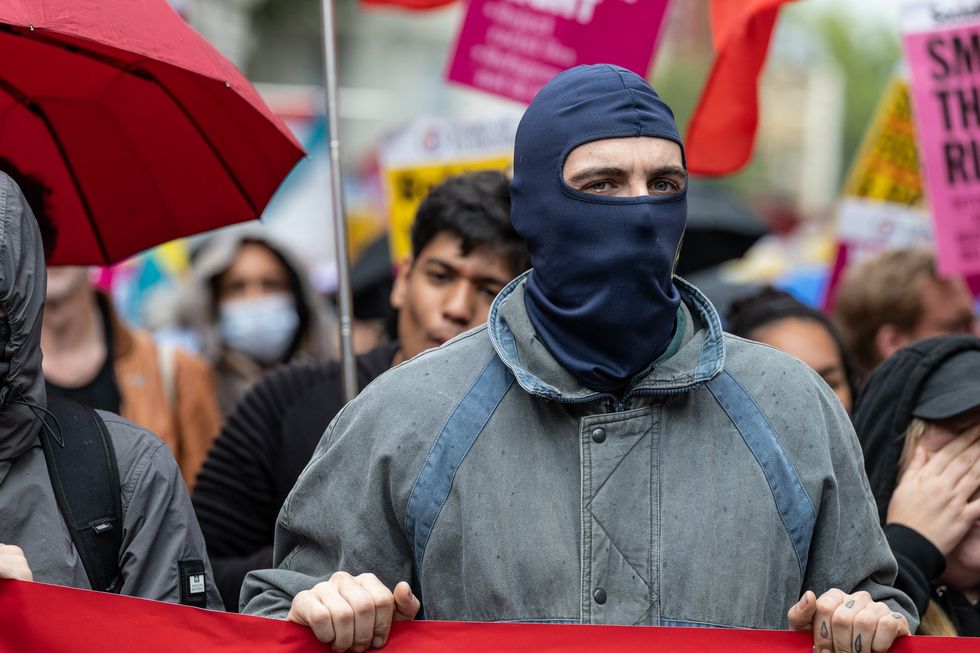
Under new rules, wearing a mask in certain areas could mean a one month prison sentence
|GETTY
The new measures will also see penalties for people who use masks at protests.
Current legislation means individuals can follow the direction of an officer and remove their face covering but then move to a new area and put the covering back on.
Under the new rules, police will be able to designate areas where wearing a face covering is an offence, carrying a maximum penalty of £1000 and one month imprisonment, or both.
Flares and fireworks are also prohibited under the new rules, with a £1,000 penalty for those found in possession in prohibited areas.
Dal Babu, former Chief Superintendent at the Metropolitan Police, said: “The new Crime and Policing Act is a piece of legislation that I welcome.
“It will help police to deal with the emerging problems of some demonstrators masking up to use anonymity to attack police and deliberately disrespect memorials to the dead.
“Although the majority of protestors are law-abiding, a hard core from across the political spectrum attend marches masked up, with pyrotechnics designed to attack police and oppositions.
“The new legislation will help deal with this worrying trend.”
Director of Policy and Evidence at Historic England, Ian Morrison, said: “Our war memorials are important for keeping parts of our national story from being forgotten and the Government’s Crime and Policing Bill will help protect the stories these memorials help to tell.”