










Patient information leaflets about the NHS’s controversial puberty blocker trial hype potential benefits and play down risks, senior clinicians have warned.
Experts say the official documents fail to clearly spell out major unanswered questions about fertility, identity development, brain development and the likelihood that children who start on blockers will go on to take cross-sex hormones.
GB News understands Britain’s NHS research watchdog, the Health Research Authority, is examining a formal complaint about the paperwork for the government-backed PATHWAYS trial, which will involve children as young as 10.
The national research programme, led by King’s College London, aims to build an evidence base on the use of puberty-suppressing drugs in children and young people with gender distress.
TRENDING
Stories
Videos
Your Say
The trial, set to begin within months, follows the landmark Cass Review, which concluded the evidence base for such treatments was weak and highlighted the need for high-quality research.
But critics say the written information given to families before they consent does not reflect the potential harms of the drugs and scale of uncertainties.
The Clinical Advisory Network on Sex and Gender (CAN-SG), a coalition of doctors and health professionals, says key risks and unanswered questions are not clearly or properly explained.
Dr Louise Irvine, CAN-SG’s co-chair, said parents are not clearly told that some young people may later feel differently about their gender identity if natural puberty is allowed to progress, that it is impossible to predict which children might benefit from puberty suppression, and that some could later regret medical steps taken.
She also says the information sheet was not changed after an ethics panel recommended parents be clearly warned that puberty blockers could affect how a child’s sense of identity develops.
Critics also say that while risks are mentioned, the overall framing is reassuring.
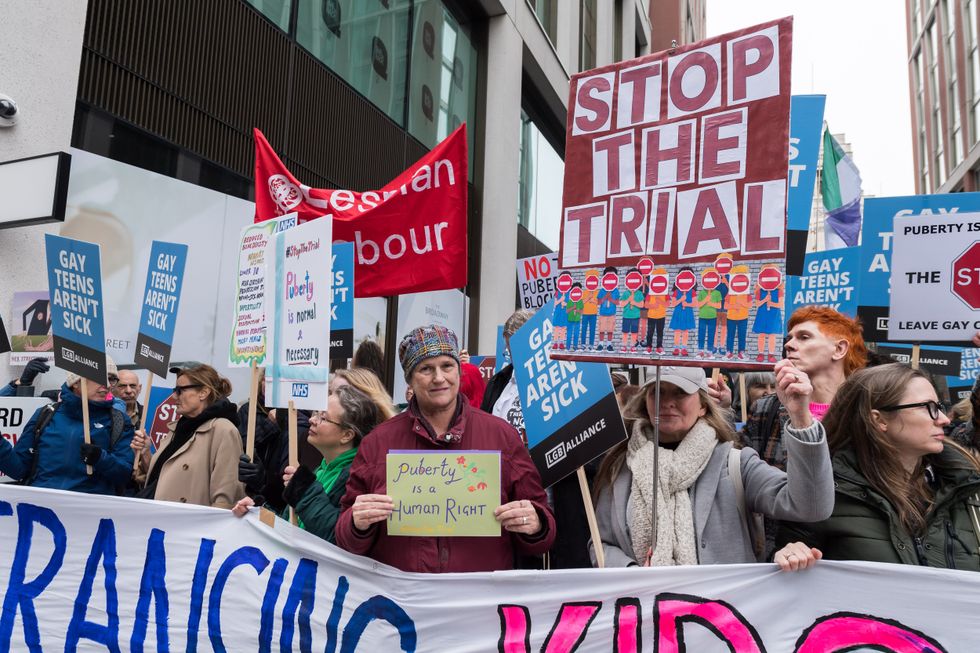 The trials have faced plenty scrutiny from critics | GETTY
She said: “Parents are not told of the risk that puberty blockers may prevent the natural resolution of gender related distress that occurs in the vast majority of children and could ‘lock in’ a cross-sex identification, leading to further medical interventions.”
She also argues that risks to bone health, sexual function, brain maturation, identity development and fertility are not properly set out.
“The Pathways Patient Information Sheets treat puberty blockers as though they were a standalone, reversible pause,” Dr Irvine said.
She added: “That is misleading. In reality, more than 90 per cent of children who start puberty blockers go on to cross sex hormones.”
Dr Irvine said: “Patients are not informed of evidence showing most young people who begin blockers go on to cross-sex hormones (which change sex characteristics) which have irreversible effects.
"Nor are they informed of the risks of cross sex hormones. These include irreversible sexual dysfunction, loss of fertility, breast development in males from oestrogen, and voice deepening, and facial/body hair growth in females from testosterone.”
LATEST DEVELOPMENTS
 Health Secretary Wes Streeting has been told to intervene and stop the trial | PA
Experts also say the leaflets do not highlight how little long-term outcome data currently exists.
The official documents - one for parents and one written directly for children - explain that puberty blockers have not been fully tested for gender distress.
They say the drugs “may provide young people… time to explore their gender identity” and acknowledge there is “limited evidence” about whether improvements in quality of life are achieved.
Possible risks listed include weaker bones, impacts on sexual development and fertility, and possible effects on memory, decision making and thinking.
The leaflets state that some harms may not become clear until years later.Children are told they will be allocated to one of two groups “by chance (like flipping a coin)” - with one group starting treatment immediately and the other after a 12-month delay.
The row comes after more than 380 clinicians signed a letter raising concerns about the study’s design and ethics.
A separate public petition calling for the trial to be halted has secured enough backing to be considered for parliamentary debate.
Supporters argue the trial is precisely what the Cass Review called for - a structured attempt to gather reliable evidence in an area marked by uncertainty.
King’s College London says the trial underwent independent scrutiny and that written leaflets form only part of a wider consent process involving detailed discussions with specialist clinicians.
A spokesperson for the Health Research Authority which is overseeing the trial said the PATHWAYS documentation - including the leaflets given to families - was reviewed by a Research Ethics Committee as part of the “usual regulatory process”.
It said ethics committees assessed the information to ensure it is “as clear as possible and easy to understand”, including explanations of “any potential risks and benefits".
It added that third-party complaints about studies that have already received ethical approval are handled confidentially under a published process.
A Department of Health and Social Care spokesperson said: “Medical care must always be based on solid evidence, and children’s safety must come first.
“The participation sheets - including to ensure participants are properly informed in order to provide consent - have been approved for use by the Health Research Authority.
“There is a triple lock of checks on an individual, clinical and national level with mental, emotional and physical assessments to overcome before a person is involved.”
More From GB News