










Children as young as ten are being asked to rate their private body parts as part of a controversial trial over the use of puberty blockers.
The questionnaire given to the children taking part in the NHS-backed study has fuelled anger about the ethics of the research which is now at the centre of a mounting political, legal and public storm.
The disclosure has intensified pressure on Health Secretary Wes Streeting to intervene, as the trial faces a legal challenge from parents and opposition from senior clinicians, alongside high-profile public petitions.
Experts say the questionnaire risks driving increased demand for 'sex change' drugs and surgery by adding to gender distress - when a person's identity doesn't match the sex they were assigned at birth. And they say the survey gives the wrong impression of what can be achieved through potentially harmful surgical gender transition.
TRENDING
Stories
Videos
Your Say
Trial documents show pubescent children enrolled in the puberty blockers trial will be required to complete a detailed survey asking them to rate their satisfaction with more than 30 body parts, including breasts, penises, vaginas, testicles, ovaries, clitoris, scrotum and voice - and to state whether they would want each body part changed through medical or surgical treatment.
The questionnaire, titled Body Image Scale - Gender Spectrum, is listed in the trial as one of the tools used to assess outcomes for children receiving puberty blockers - drugs that work on the brain to stop the rise in sex hormones - oestrogen and testosterone - that lead to puberty.
The document instructs participants to choose two answers for each body part: first, how satisfied or dissatisfied they feel, and second, whether they would want to change that body part if it were possible.
Where a child does not have a particular body part, they are directed to tick “don’t have” and then rate how they feel about not having it, before again answering whether they would want it changed.
 Ministers have been told to stop the trial over health and safeguarding fears | GETTY
The list of body parts spans the entire body, from nose, shoulders and hips to explicitly sexual anatomy.
The trial will include 226 children, from aged ten, who will be prescribed puberty blockers for up to two years. It is part of a wider study into 3,600 children who visit NHS gender services all of whom will be asked to participate in research.
All the children will be given the questionnaire, but only one smaller group offered puberty blocking drugs.
Oxford University’s Professor Michael Biggs, a sociologist who has researched the harms of puberty blockers, said: “These scales are intended to measure gender dysphoria, but they run the risk of exacerbating it.
“Many children are embarrassed by their bodies during puberty, and it is unhelpful to encourage them to ruminate on their body parts - and it is irresponsible to encourage them to believe that these parts can be altered at will.”
LATEST DEVELOPMENTS:
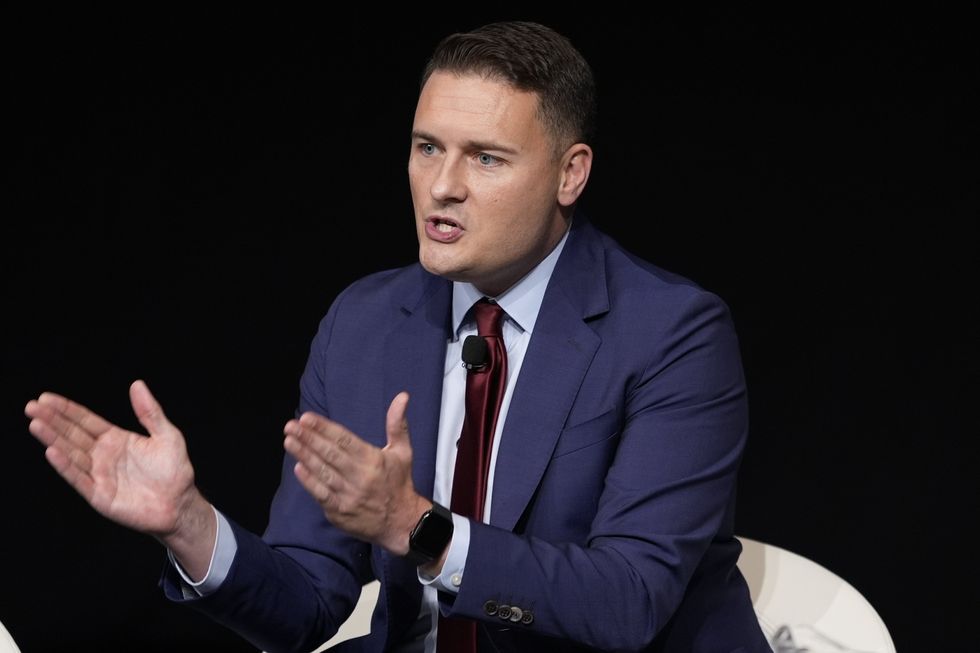
Health Secretary Wes Streeting has been told to intervene and stop the trial
| PAShadow equalities spokeswoman Claire Coutinho, MP said: “Sexualising children by asking them to rate their sexual body parts is as harmful as it is absurd.
“This questionnaire not only encourages them to think negatively about their appearance, but also plants the idea that it can be improved by changing sex - something that is biologically impossible.”
She added: “The Health Secretary has said the puberty blocker trial makes him uncomfortable. Now he must do his job and put an end to the Streeting Trial.”
Dr Louise Irvine is a GP and co-chair of the Clinical Advisory Network on Sex and Gender who has studied the trial documents, said: “This survey fuels children's unrealistic expectations about what can be achieved through gender transition and implies such intervention is on the cards for them.
“Research shows us that some girls believe they can father children if they have a surgical penis. However it is not, it is a piece of flesh taken from another body part that cannot function as a penis.
“And boys also think they can have a vagina, but in reality this is a surgical wound, which is at risk of infection and constantly trying to heal. It will not work in the same way. These children are being totally misled by this questionnaire.”
She added: “Given that puberty blockers by definition disrupt a crucial natural phase of human development, the anticipated benefits must be tangible and significant to justify the risk to children but we do not have evidence of this.
“In pushing ahead with a puberty blockers trial, we are concerned that political interests are being prioritised over clinical, ethical and scientific concerns, and over the health and wellbeing of children.”
WATCH: Labour MP blasts puberty-blocker trial as ‘morally wrong’ and ‘shameful experiment’ in heated GB News rant
Separate documents relating to the trial have also shown the main goal will be to assess children’s self-reported wellbeing rather than physical development or long-term health outcomes.
According to the published protocol, this will be drawn from a ten-question survey known as KIDSCREEN-10, which asks children how they have felt over the previous week, including whether they feel “fit and well”, “sad”, or have spent time with friends.
Measurements such as height, weight and bone mineral density, will be taken but seen as a “secondary” finding to this.
The trial forms part of a £10.7million programme called PATHWAYS, run by King's College London, which aims to explore “how the NHS can best support children and young people attending gender services”.
The methodology has prompted strong criticism from politicians and campaigners, with concerns focused on both the ethics of the questions and the scientific robustness of the measures.
The trial takes place against a backdrop of escalating national and international attention on the treatment of children with gender distress.
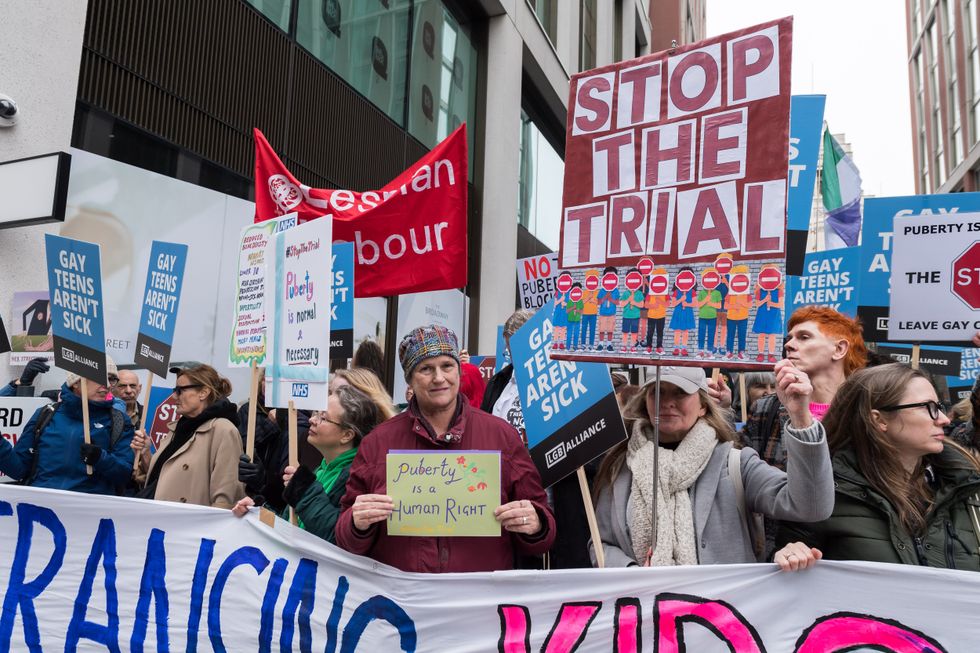 The trial could enrol 226 young people between the ages of 10 and nearly 16 who are questioning their gender identity | GETTY
Puberty blockers were banned for routine prescription to gender-questioning children following the independent Cass Review, which concluded there was insufficient evidence that the drugs are safe or effective.
Routine prescribing of puberty blockers to under 18s, was stopped by NHS England in March 2024 as part of an overhaul of children's gender identity services.
NHS England said in a policy statement: “There is not enough evidence to support the safety or clinical effectiveness of PSH [puberty suppressing hormones] to make the treatment routinely available at this time.”
The ban was later tightened to apply to private clinics as well.Despite this, the PATHWAYS trial was approved as a research study to assess “short/medium-term benefits and risks”.
The trial is now facing a legal challenge brought by parents of gender-distressed children, arguing that it fails to meet ethical and safeguarding standards.
Public pressure has also intensified through petitions. One petition calling for the trial to be halted has been promoted by Elon Musk and signed by author J.K. Rowling. A separate petition opposing the trial has been signed by around 350 clinicians.
A Department of Health and Social Care spokesman said: “Medical care must always be based on solid evidence, and children’s safety must come first.
“We're following expert, independent advice from the Cass Review, which was accepted under the last government, to set up a clinical trial assessing the safety and effectiveness of puberty-suppressing hormones to ensure young people receive safe and comprehensive care.”
More From GB News