






Norwich City Council has announced plans to restore the medieval tower of one of the region's most renowned religious landmarks that barely survived World War Two.
St Bartholomew's church on Heigham Street stands as the sole surviving remnant of a place of worship destroyed during wartime bombing.
The 15th century structure was struck during the Baedeker Raids in April 1942, when German forces targeted historic English cities in retaliation for British attacks on German cultural sites.
Following the devastation, repair work was carried out during the 1950s, but authorities now intend to address ongoing structural concerns and rectify issues stemming from earlier post-war interventions.
The restoration aims to ensure the tower's long-term preservation and public safety.
According to the restoration plans, the primary concern centres on substandard cement over-pointing applied during the post-war clean-up operation more than seven decades ago.
The proposals state that the work involves "undertaking necessary repairs to safeguard the public and the building."
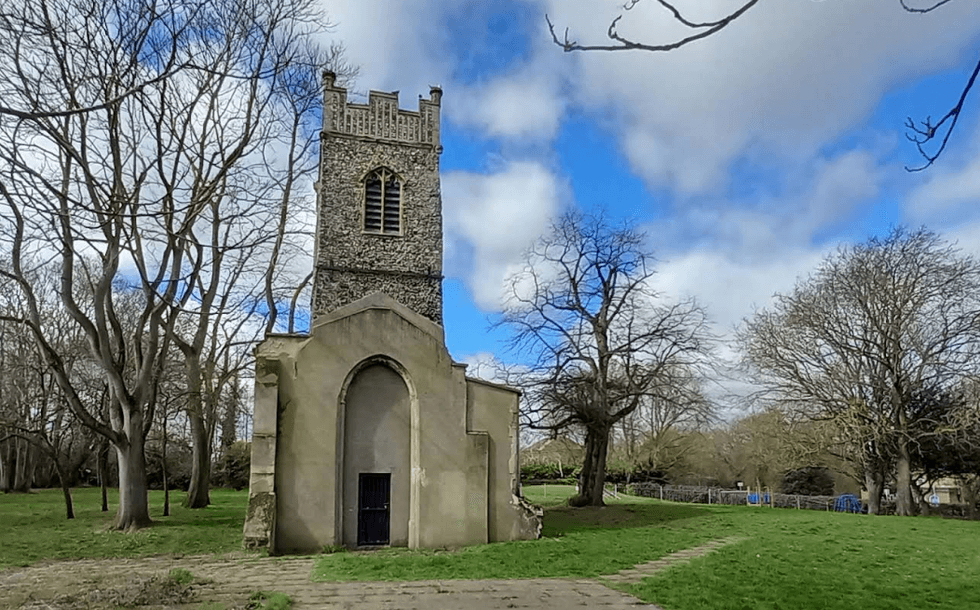
The remnants of St Bartholomew's church tower in Heigham Street, Norwich
|GOOGLE MAPS
Beyond the problematic 1950s pointing, surveyors have identified several additional areas requiring attention.
The flint quoins have fallen into poor condition, whilst the cement render on the tower's eastern face has also deteriorated.
These structural deficiencies, combined with damage from the original bombing, have created an urgent need for comprehensive conservation work on the historic landmark.
The tower has also fallen victim to vandalism, with graffiti defacing the historic structure and necessitating cleaning as part of the restoration programme.
LATEST DEVELOPMENTS
Council documents highlight that this antisocial damage represents one of several pressing issues facing the medieval site.
As the only physical reminder of the original St Bartholomew's church, the tower holds significant historical value for Norwich, representing both the city's medieval heritage, and its wartime resilience.
On a cloudy Monday in late May 1938, photographer George Plunkett captured St Bartholomew's Church from the graveyard entrance.
The image reveals the original building, heavily modified during the Victorian period, with the 19th Century south aisle sitting somewhat uncomfortably against the unified nave and chancel structure.
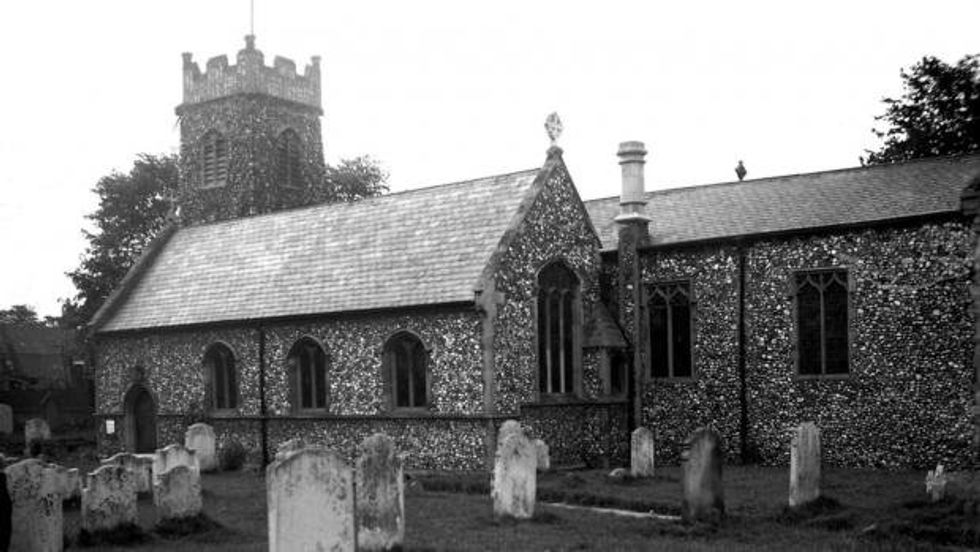
St Bartholomew's church tower in Heigham Street, Norwich before the site was bombed in the 1940s
|GEORGE PLUNKETT
The graceful 15th century tower, featuring battlements that appear to have been embellished during the 18th century, appears slender compared to the main body of the church.
A decorative font bearing shields with imagery of the Instruments of the Passion and the Holy Trinity provides one of the original church's more attractive features.
Whilst the organ screen at the north aisle's eastern end blocked incoming light, the south aisle benefitted from brightness streaming through its east window, which illuminated an altar adorned with a Crucifixion triptych.
Beyond the font, only an angled piscina and the faint traces of a sedilia along the chancel's south wall survive, as reminders of the building's history.
Heigham parish sits as close to central Norwich as possible whilst remaining beyond the city walls, and had already established itself as a bustling area well before Victorian times.
During the mid-19th century, the district north of Dereham Road transformed into a densely packed neighbourhood of working class housing, complete with corner shops and public houses, several of which remain standing today.
The river formed natural boundaries to the north and west, whilst Waterworks Road curved along the perimeter, with the substantial waterworks facility serving both the city's needs and providing jobs for local residents.
To accommodate the expanding population, St Bartholomew's was enlarged and additional churches were constructed, including St Philip on Heigham Street, St Barnabas, and St Thomas on Earlham Road.