










A 6-year-old girl has had her sight restored thanks to a life-changing eye gene therapy on the NHS.
Saffie Sandford from Stevenage in Hertfordshire was diagnosed with a rare inherited condition called Leber's Congenital Amaurosis (LCA), which inhibits the protein creation in cells that are essential for normal vision.
Children born with the condition typically have reduced vision in daylight and no vision at all in low light.
The condition meant she could have potentially lost her sight completely by the age of 30.
TRENDING
Stories
Videos
Your Say
Saffie, a Spider-Man fan, was five years old when her parents first noticed she was struggling to see in the dark and sought medical advice.
She was diagnosed at Moorfields Eye Hospital in London before being referred to Great Ormond Street Hospital for the gene therapy treatment, known as Luxturna.
The therapy is the first of its kind for one of the genetic causes of LCA and works by delivering a healthy copy of the faulty gene directly into the eye via injection.
It is a one-off treatment rather than an ongoing course of medication.
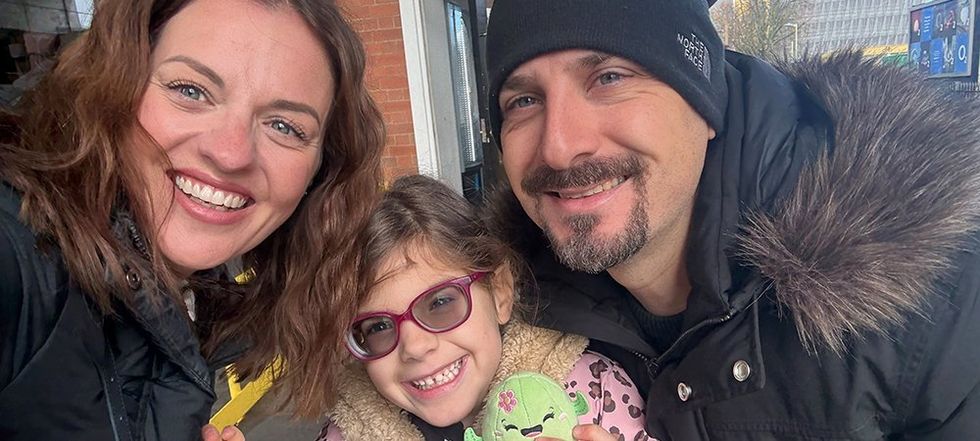
Saffie, with her parents, Lisa and Tam
|NHS / FAMILY HANDOUT
Saffie had already been wearing glasses since the age of two, having been diagnosed as short-sighted and underwent the therapy in her first eye in April 2025 and in her second eye in September.
Her mother Lisa said the family had been completely unprepared for the diagnosis, describing it as a "rollercoaster journey" as she had no knowledge of the condition and no idea that she and Saffie's father, Tam, were both carriers.
She said: "It was such a rollercoaster of a journey, but we were so relieved and grateful when we heard there was a treatment available on the NHS for Saffie. We were told that without the treatment, she would be blind by the age of 30."
The change in Saffie's quality of life since treatment has been profound.
LATEST DEVELOPMENTS:
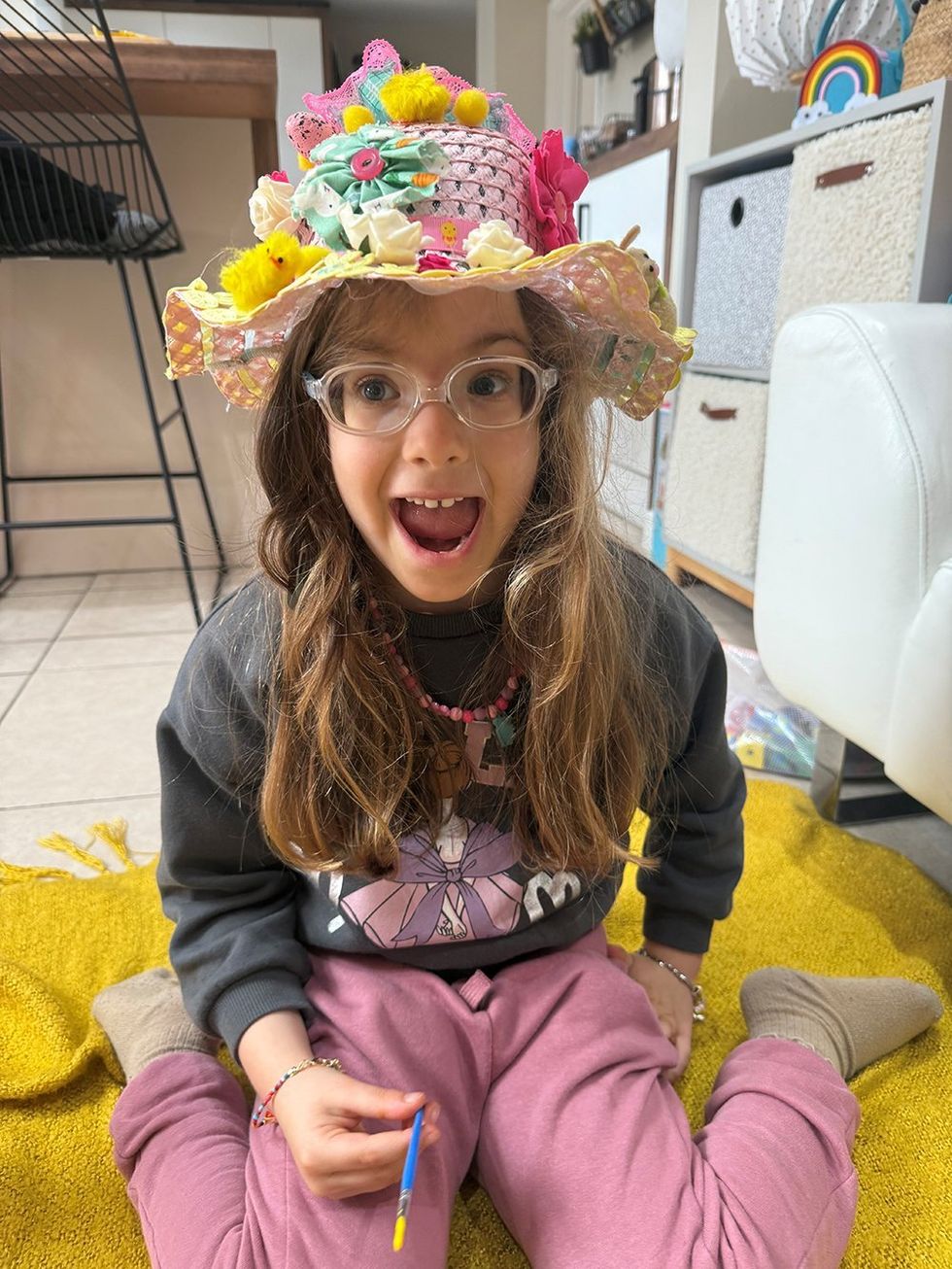
Lisa said: "Having the gene treatment has been life-changing, it's like someone waved a magic wand and restored her sight in the dark.
"We've been able to take her trick or treating and out to restaurants in the evening - something that was impossible before."
Her peripheral vision in daylight has also improved, allowing her to spot hazards she would previously have missed and to take part in activities she had previously been unable to enjoy, including playing on a climbing frame.
Lisa added: "She's thriving and you wouldn't know she had the condition just by looking at her.
"The results have been incredible, and we are eternally grateful that our little girl has been given her sight back. We know it might not last forever, but we feel fortunate every day that she has been given this chance."
Researchers at Great Ormond Street and University College London have now published new findings showing that Luxturna can not only improve sight but also strengthen the visual pathways in the brain at a critical stage of development.
The study followed 15 children who received the therapy between 2020 and 2023, ranging in age from 15 months to 12 years old.
The research found that the youngest children showed the greatest improvement, as treatment delivered during an early critical window of visual development had a greater impact on the brain's ability to process what the eye sees.
Older children saw more limited improvement in their ability to see clearly, though the therapy still produced measurable benefit.
The research team also used a test called pattern Visual Evoked Potentials (VEPs), a painless procedure that measures how well signals travel from the retina to the visual cortex, as an alternative to traditional vision tests, which can be difficult for very young or neurodevelopmentally complex children.
Rob Henderson, consultant ophthalmologist at Great Ormond Street, said: "For the first time, we've been able to show objectively that gene therapy can strengthen the visual pathways in babies and young children who are living with this rare eye condition.
"For many of the families we work with, even small improvements in their child's ability to see the world around them make a profound difference."
He added that the research highlighted not only the potential of gene therapy to transform outcomes for children with inherited retinal disease, but also the importance of developing new ways to measure progress in very young patients.
Mr Henderson said pattern VEPs could set a new international standard for how future paediatric gene therapy trials are assessed.
The team has stopped short of describing Luxturna as a cure, but said they were hopeful for strong long-term results and that further data would be gathered on the therapy over time.