











The Gambling Commission was wrong to allow changes to the National Lottery contract once the franchise had already been awarded, the High Court was told.
The Fourth National Lottery licence was won by Allwyn following a tender process overseen by the Gambling Commission.
The award sparked a legal row, with former incumbents Camelot the first to launch litigation.
The case was settled, and Allwyn eventually bought Camelot.
TRENDING
Stories
Videos
Your Say
But billionaire Richard Desmond’s New Lottery Company, which entered and came third in the contest, has brought litigation of its own.
In a long-running High Court case, TNLC has argued that manifest errors were made in the bidding process. These damaged its chances, it claims, and it is seeking damages of up to £1.3 billion.
The Gambling Commission denies the allegations and insists it held a “fair, open and robust competition”.
Although the evidence was heard last year, lawyers were invited to return to the court today (TUES JAN 13) for a further hearing in the multi-million pound case.
 Allwyn won the competition to run the National Lottery | GB NEWS
Mrs Justice Joanna Smith reconvened the parties ahead of her judgement to hear their arguments over a point of law.
This revolved around the Enabling Agreement, which was part of the contract designed to ensure the smooth transition of the National Lottery from Camelot to Allwyn.
TNLC has argued that modifications were made to this agreement after the contest had been run. It claims these changes shifted the “economic balance” and suggests that, had it been aware of the potential for such changes, it may have altered its approach to the bid.
It claims that the changes related to Allwyn’s recoverable implementation costs. They also permitted a delay to Allwyn achieving implementation of its bid, TNLC says.
LATEST DEVELOPMENTS
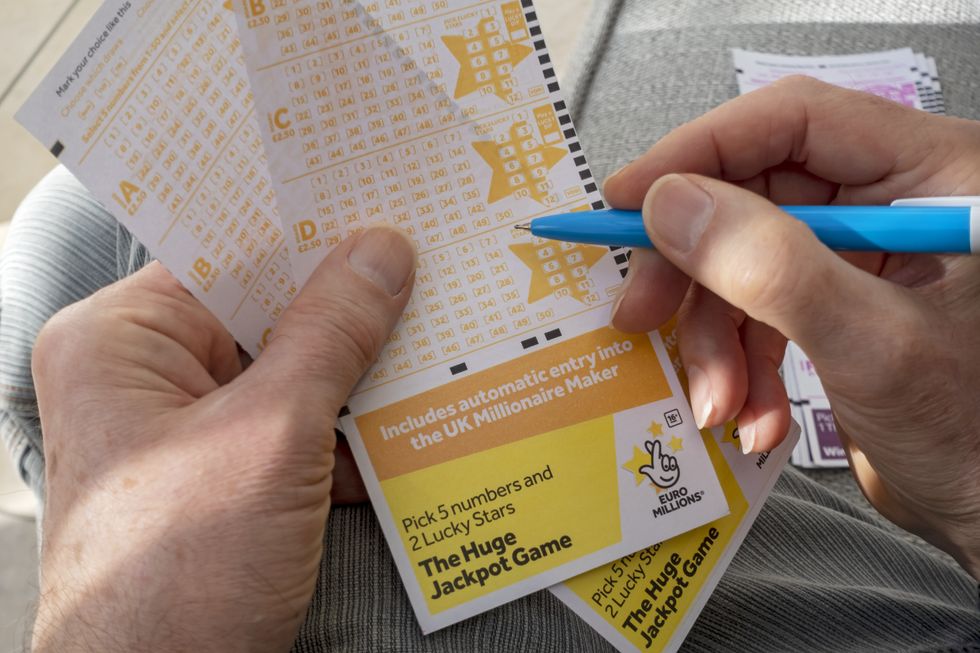
All sides were in court today
| GETTYFurther, the changes affected Allwyn’s liability to costs to the Gambling Comission and worked “to its economic advantage”, it is claimed.
All sides were in court today to clarify their legal positions on the changes.
Azeeem Suterwalla KC, for TNLC, argued that any changes made to the contract should have been tested against procurement law. This would have found them to be “substantial”, he claims.
It meant that the final contract was different than the one bidders had prepared for.
He said: “What’s the purpose behind the legal regime? It’s to ensure that the contract that has been entered into following procurement is not exercised in a manner which could not have been anticipated by bidders and is, in substance, a very different contract than the one that was tendered.”
But Sarah Hannaford KC said, the law did permit the changes to be made. She claimed the modifications were “neither substantial, nor foreseeable”.
She said: “You shouldn’t take that this is a point on which the Commission’s sinks or doesn’t sink - it is not.
“We say, relying on law, that these amendments were not substantial and didn’t change the economic balance.
“We say it’s very clear that bidders knew they could get an extension of time if the delay was not their fault. That’s not a surprise.”
She added that the delay had been caused by litigation from Camelot and one of Camelot’s sub-contractors.
She said: “We have to consider what the cause was, and if the cause was the outgoing licensee or something outside the control of the incoming licensee, we could give an extension of time and more money. It’s completely unsurprising.”
She said that it was permissible for the contract to be adjusted in this way and denied this amounted to substantial changes or modifications.
Joseph Barrett KC, representing Allwyn, also contended that the alteration were not substantial and did not breach the law.
A ruling had been expected this month but the judge said it likely in February.
She said: “I can’t promise anything and it’s going to be a very long judgement.
“I’m hoping it will be in the middle of February.”
More From GB News