










Giant jellyfish weighing 35kg and spanning up to a metre in width have been bombarding British beaches recently.
Sightings of the Rhizostoma pulmo, more commonly known as the barrel jellyfish, have increased by 230 per cent in the UK and Ireland, according to the Marine Conservation Society.
Barrel jellyfish weigh around the same as a large Labrador and are largely translucent. Their mushroom-shaped bell can grow to the size of a dustbin lid and can sometimes be shaded in yellow, pink or blue.
Their eight frilly “oral arms” contain small stinging tentacles that deliver plankton, their food, to hundreds of surrounding tiny mouths.
TRENDING
Stories
Videos
Your Say
But while they boast significant stature, barrel jellyfish are generally benign. Their sting has been likened to a nettle, or even less, and is usually too weak to seriously harm or injure a human.
Despite this, those who do discover one at the beach are still recommended to steer clear; a dead jellyfish can still sting.
Earlier this year, a barrel jellyfish bloom of hundreds in size was discovered washed up on a beach in Cornwall.
Dr Dan Barrios-O'Neill had said the increase in jellyfish was "normal in the grand sweep of time" but insisted there were questions to be asked about whether there were "more blooms, more often".
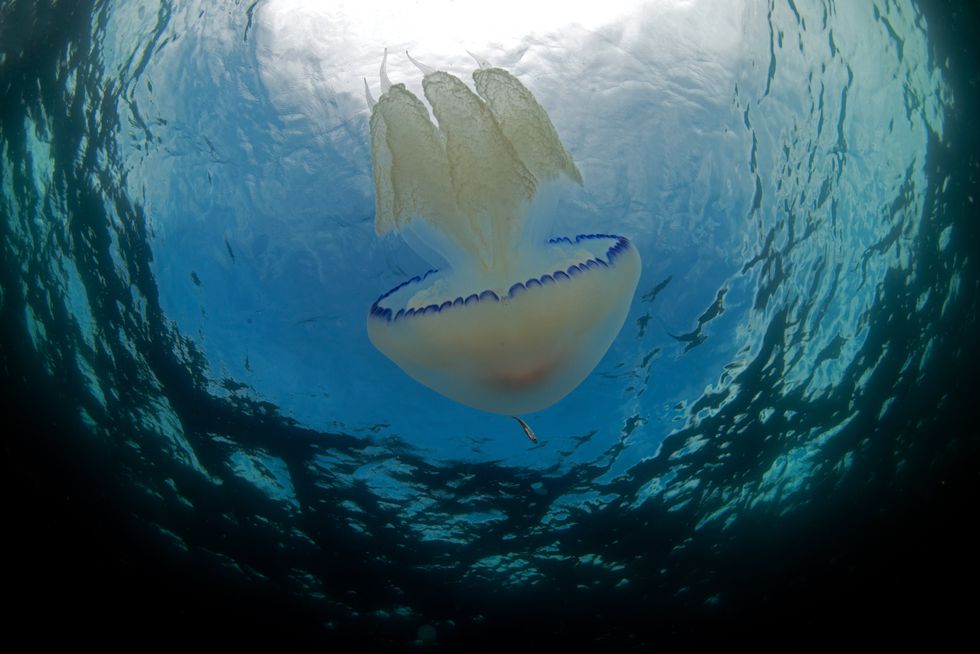
Giant jellyfish weighing 35kg and spanning up to a metre in width have bombarded British beaches this year
|GETTY
"People tend to view them as these pests and if we see more of them, something's going wrong, but we're discovering more and more jellyfish are fundamental to marine ecosystems," he said.
British seas are generally too cold for the barrel jellyfish to thrive, though the huge increase in sightings suggests they are becoming more acclimatised to the water temperature, particularly on the south-western coast.
Anna Bunney, citizen science programme manager at the Marine Conservation Society, described the recent upturn in sightings as "particularly interesting".
"Volunteer reports show just how dynamic and ever-changing our coastal ecosystems truly are," she said.
LATEST DEVELOPMENTS
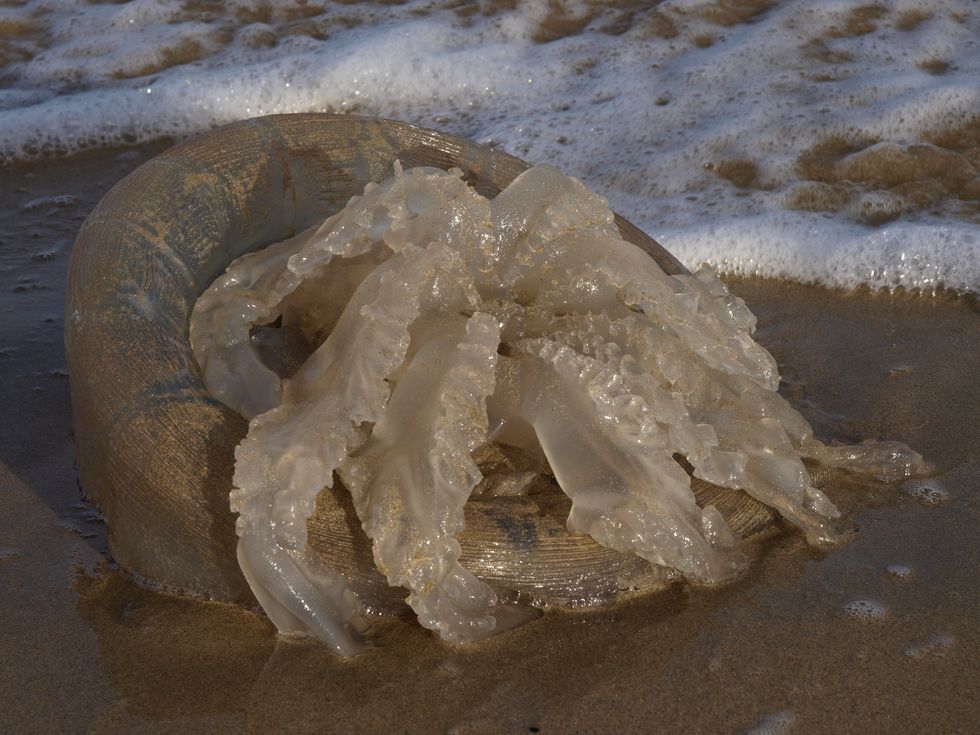
Sightings of the barrel jellyfish in the UK and Ireland has increased by 230 per cent
|GETTY
"The surge in barrel jellyfish sightings is particularly interesting.
"Whilst we need more records and data to help us understand these fluctuations, it may be linked to warmer sea temperatures and changing ocean currents.
"That’s why our public sightings are so vital: they help build a clearer picture of what’s happening in our seas and allow scientists to track changes in real time."
Rhizostoma pulmo is even known to be eaten in certain parts of the world. Its flesh can be served with sushi, sesame oil and soy, sometimes even ice cream.
But while sightings have hugely increased for the dustbin-lid jellyfish on these shores, the Portuguese man o' war has decreased by around 80 per cent.
By contrast to the gentle nature of the barrel, the man-of-war can deliver an excruciating sting with its tentacles that can stretch up to several metres in length.
It is believed that a decrease in Atlantic storms blowing towards the UK is the reason for this.
More From GB News