










An "explosion" in the amount of false widow spiders in the UK has led to a surge in hospital admissions, research reveals.
Hospital admissions resulting from spider bites across England have doubled over the past 10 years, according to provisional NHS data.
The figures reveal that 100 people required hospital treatment following contact with spiders in 2025, more than twice the 47 admissions recorded a decade earlier.
Researchers attribute this sharp rise to the rapid spread of noble false widow spiders throughout the country.
TRENDING
Stories
Videos
Your Say
The species, which arrived in Britain as an accidental import from Madeira and the Canary Islands, has established itself as what academics describe the most hazardous spider currently reproducing on British soil.
First documented in southern England in 1879, the noble false widow is the largest of Britain's three common false widow varieties, with females growing up to 14 millimetres in body length. Its distinctive markings are often likened to a skull pattern.
Clive Hambler, an Oxford University ecologist and lecturer at Hertford College, warned: "The days when you could just treat spiders as benign in Britain are over."
While the spider's venom causes pain and itching, Hambler explained that bacteria carried by the creature pose the greater threat, potentially resulting in "amputation, sepsis and death".
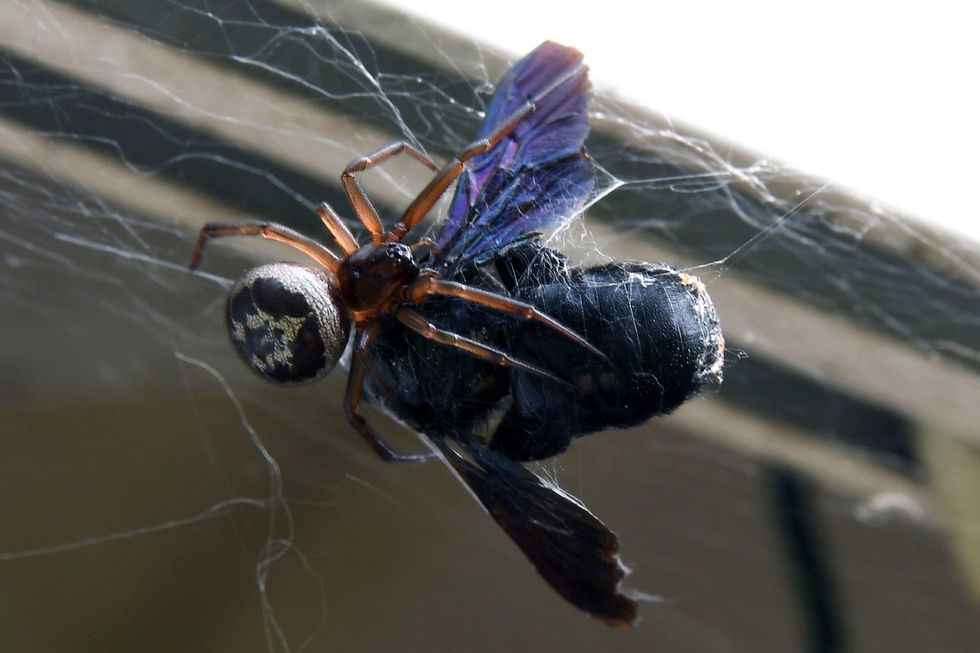
An 'explosion' of false widow spiders has led to an increase in hospital admissions, research finds
|GETTY
He added that the species is "much more willing to bite than many people are willing to admit".
NHS statistics show a fluctuating but upward trend in recent years, with 43 admissions in 2021 climbing to 95 the following year, before settling at 91 in both 2023 and 2024. Approximately two-thirds of these cases required emergency treatment.
Of last year's 100 admissions, 73 patients arrived through A&E departments, compared with 38 of the 47 cases in 2015.
Michel Dugon, a venom specialist at the University of Galway, described the figures as "not surprising" given the "explosion in the population of noble false widow".
LATEST DEVELOPMENTS
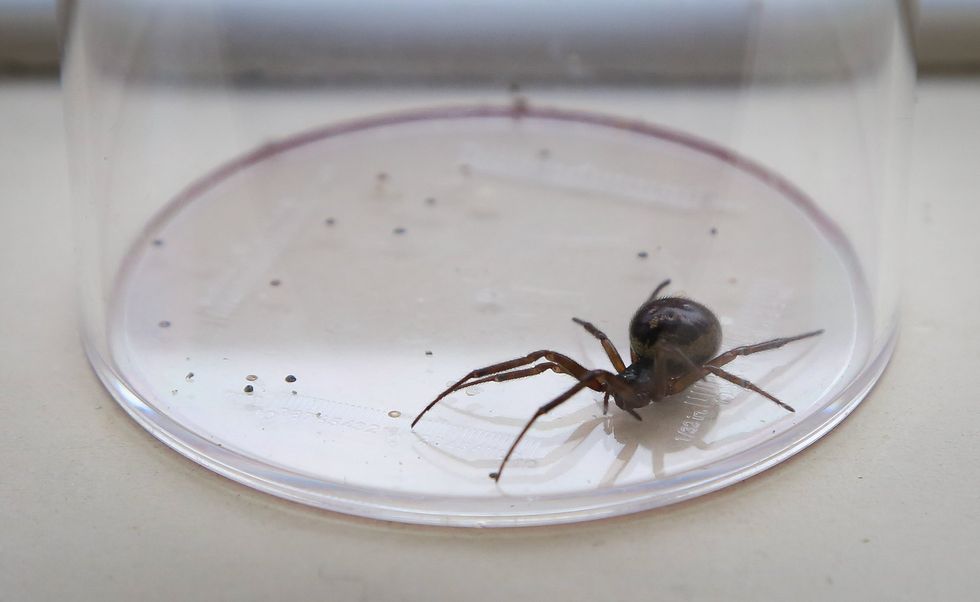
Experts have urged people to stay calm amid the rise in admissions
|PA
He noted: "A bite by the noble false widow will actually wake you up. The pain is equivalent to a wasp sting or even more than that."
Despite the rising figures, experts have urged the public to remain calm rather than alarmed.
Adam Hart, professor of science communication at the University of Gloucestershire, said: "While they can bite if handled or trapped against the skin, most bites are mild and severe reactions are rare."
Britain is home to more than 650 spider species, though only around a dozen have been recorded biting humans.
The NHS recommends cleaning any spider bite with soap and water and using cold compresses or painkillers to ease discomfort.
Anyone experiencing worsening symptoms or pain spreading beyond the bite site should contact 111.
Our Standards: The GB News Editorial Charter