









Ed Miliband must approve drilling at Britain’s largest untapped oil field, Tony Blair’s think tank says.
More North Sea exploration is “essential”, it argues, warning that the UK’s approach to energy “is increasingly out of step with global competitors”.
While the UK is right to commit to Net Zero by 2050, it needs to adopt a more pragmatic approach, the report finds, explaining: “Energy is not an area where ideology can substitute for outcomes.”
Drilling at Rosebank, Britain’s largest untapped oil field, with an estimated 300 million barrels, along with Jackdaw, a gas field, has been frozen after a legal challenge on environmental grounds.
Energy Secretary Mr Miliband has the final say over whether work can resume at either site. Activists say exploiting Rosebank would be “climate vandalism”.
But Tone Langengen, energy policy advisor at the Tony Blair Institute, says both Rosebank and Jackdaw should be approved “at pace”.
She points out that 70 per cent of the nation’s energy demand is still reliant on oil and gas.
Clean energy should play a central part in our energy mix rather than “being pursued as an end in itself”.
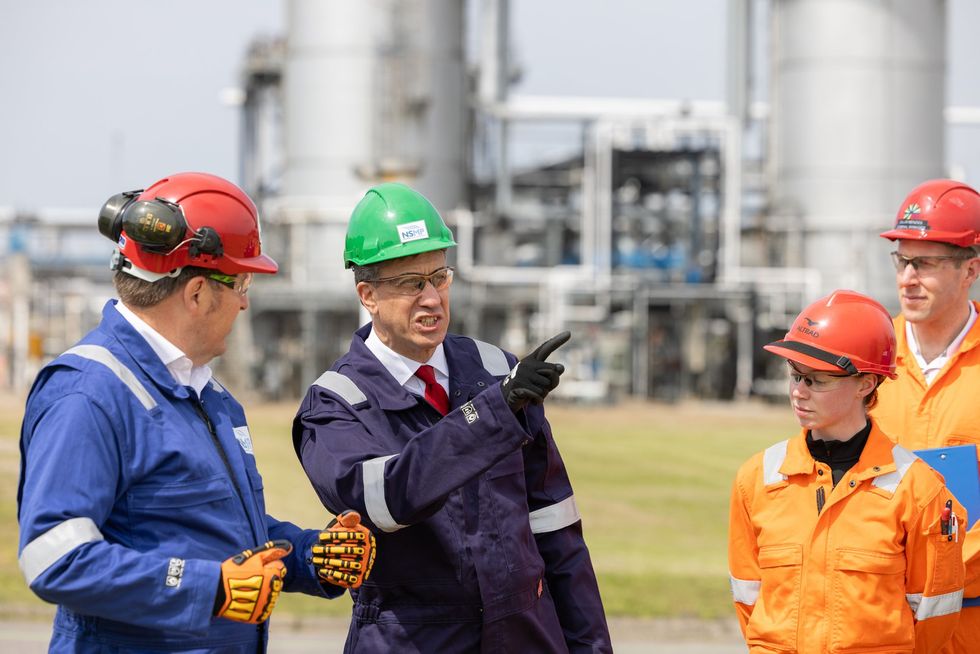
Energy Secretary Mr Miliband has the final say over whether work can resume at either site
|PA
Arguing for both Rosebank and Jackdaw to be given the go-ahead, she said: “As long as demand remains, reducing domestic production does not reduce reliance on fossil fuels – it increases reliance on imports.
“In a context of sustained geopolitical disruption and tightening global supply, this not only exposes the UK to greater price volatility and security risks, it also weakens the UK’s trade balance.
“This is why domestic supply must be understood as a strategic resilience issue, not simply a question of climate signalling.”
Jackdaw was particularly important as it could displace 15 per cent of liquified natural gas imports.
LATEST DEVELOPMENTS:
Rosebank could account for eight per cent of UK oil production this decade, she writes.
Other “viable” North Sea projects should be unblocked and a more stable licensing regime put in place, she argues.
The windfall tax, which sees producers paying a headline figure of 78 per cent, also required reform.
In her paper, More Than Clean Energy: Electrification is the UK’s Best Bet for Resilience, she calls for a “fundamental reset” in our approach to energy, warning that, without this, plans to transition to Net Zero by 2050 will be under threat.
She points out that the Iran war has shown how quickly global shocks feed through to the UK economy.
“This is not just an energy shock,” she writes. “It’s an inflation shock, a cost-of-living shock and a test of the UK’s economic resilience.”
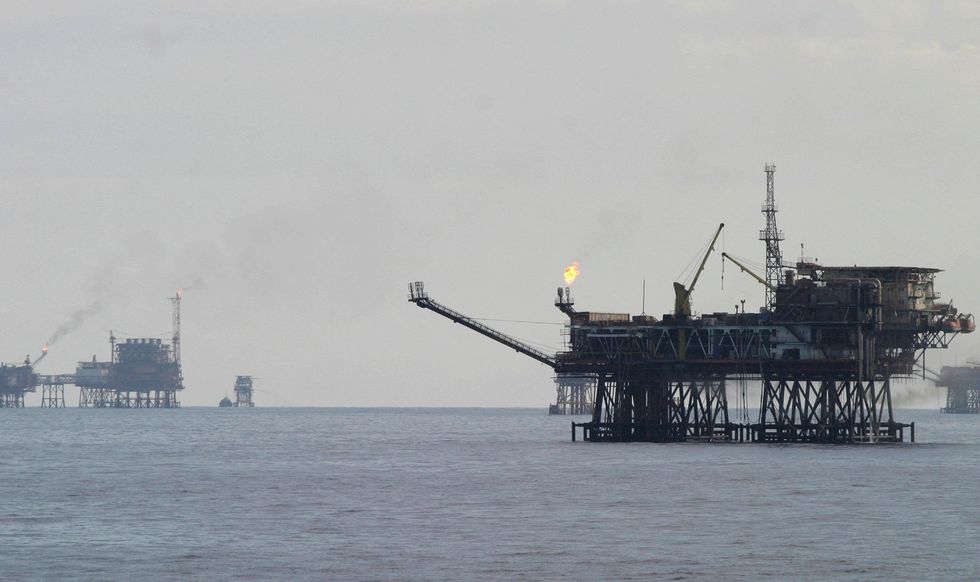
Rosebank could account for eight per cent of UK oil production this decade
|REUTERS
The result of the Iran crisis won’t be a slow return to normal, she suggests, but a faster shift towards “regional, diversified and security-driven energy systems”.
Clean electricity would help move Britain away from fossil fuel reliance. But Ms Langengen warned against viewing all energy policy “through the lens of decarbonisation”.
She writes: “Across China, the United States and India, that rewiring is already underway. In these economies, decarbonisation is not the organising logic of energy policy.
“The priority is to build electricity systems that are abundant, secure and cheap enough to support economic growth, industrial strength and rising demand.
“Clean energy plays a central role but it is being deployed as part of a broader strategy of system expansion and national resilience – not pursued as an end in itself.
“The UK appears set to follow a different, riskier path.”
The Government plans to run the electricity system with 95 per cent low-carbon sources by 2030.
Ms Langengen said electrification was the right approach.
But high electricity prices were slowing electrification, and weak electrification keeps demand on fossil fuels high, she said, describing this as a “self-reinforcing loop”.
She said that while the Government was not focused enough on reducing the cost of electricity, the opposition approach – maximising North Sea production – was not a silver bullet, because resources are finite in the declining basin.
Yet neither side was giving ground.
“The deeper problem is that energy policy is increasingly being shaped by competing ideological positions, rather than by a clear-eyed assessment of physical and economic realities.
“Yet energy is not an area where ideology can substitute for outcomes. The core strategic issue is not simply how quickly the UK decarbonises the power sector, nor whether it can marginally increase domestic fossil fuel supply.
“It is whether the UK can build an energy system capable of delivering abundant, affordable and secure electricity at scale – and use that to reduce dependence on fossil fuels across the wider economy.”
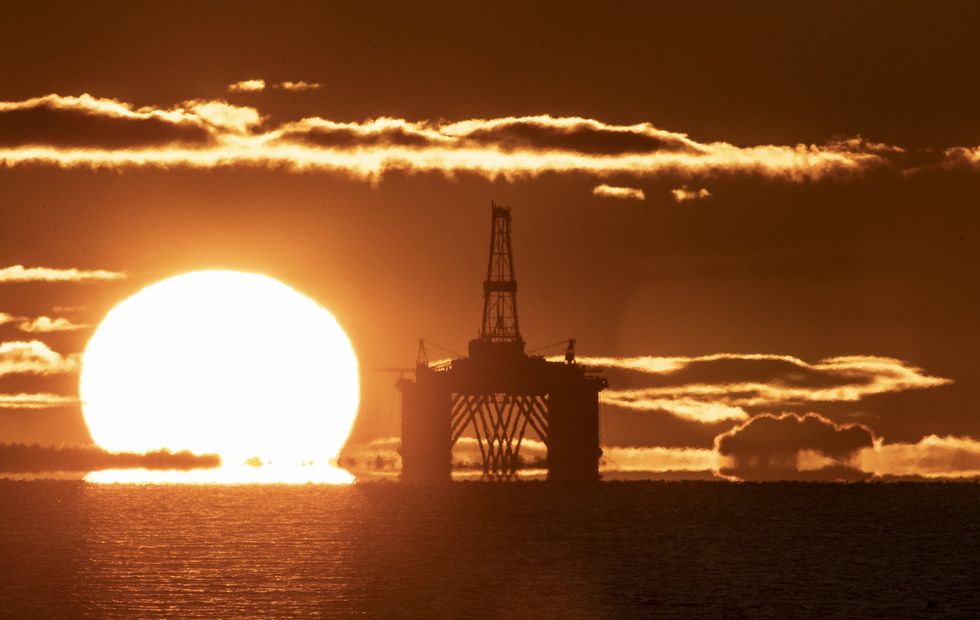
Without more affordable energy, the UK’s 2050 Net Zero target is under threat
|PA
Ms Langengen said that Iran posed a “test of Britain’s economic resilience” but also gave the country the opportunity to reset its energy policies.
Without more affordable energy, the UK’s 2050 Net Zero target is under threat, she warns.
She says: “The case for strengthening domestic supply and backing projects like Jackdaw and Rosebank was already strong – the crisis has simply exposed how vulnerable the UK remains without it.
“If the Government doubles down on the wrong parts of the system, the UK will remain exposed to the same vulnerabilities.
“But this is also an opportunity to reset - including by accelerating domestic supply to reduce reliance on volatile imports and support UK jobs and tax revenues.
“The lesson from Iran is clear: the UK doesn’t just need more clean power, but electrification, greater resilience and a more affordable system over time.
“Without it, households will face repeated price shocks, businesses will carry persistently high costs, and the transition itself will fail.”
But campaigners insisted that more North Sea drilling was not the answer, claiming 90 per cent of accessible North Sea reserves had gone.
Jess Ralston, head of energy at the Energy and Climate Intelligence Unit, said: “Anyone who paid a gas bill during the last crisis when Russia invaded Ukraine knows that the North Sea didn’t stop costs shooting up.
“The problem is the debate becomes a distraction from the things that will permanently insulate us from this volatile global oil and gas system - like boosting electric technologies that increasingly run off British renewables.”
A spokesman for the Department for Energy Security and Net Zero said: “We are taking action to bear down on the cost of living, including taking £117 off average energy bills this month and supporting de-escalation in the Middle East.
“The lesson of yet another fossil fuel crisis is the UK needs to get off the fossil fuel rollercoaster and onto clean homegrown power we control.”
DESNZ said it could not comment on individual projects. It has previously denied media claims that Jackdaw was about to be approved, saying that the process was ongoing.