











The coastguard has issued a warning stretching for miles of coastline after multiple poisonous plants washed up on Britain’s beaches.
Millom Coastguard Rescue Team, which operates across the West Cumbrian coastline and the South Lakes, issued the alert on its Facebook page, warning beachgoers and dog walkers about the plant.
The post showed the root system of Hemlock Water Dropwort (Oenanthe crocata) which the coastguard says has been sighted between Drigg and Parton – a stretch of about 14 miles as the crow flies.
Also known as “dead man's fingers”, the poisonous plant can be fatal to humans and animals, even in small quantities.
TRENDING
Stories
Videos
Your Say
Millom Coastguard wrote on Facebook: “Please be aware that we have received reports of a highly poisonous plant being washed up on local beaches.
“So far there have been confirmed sightings between Drigg and Parton.
“Hemlock Water Dropwort (Oenanthe crocata), also known as Dead Man’s Fingers.
“Even a small portion can prove fatal to humans by attacking the nervous system.
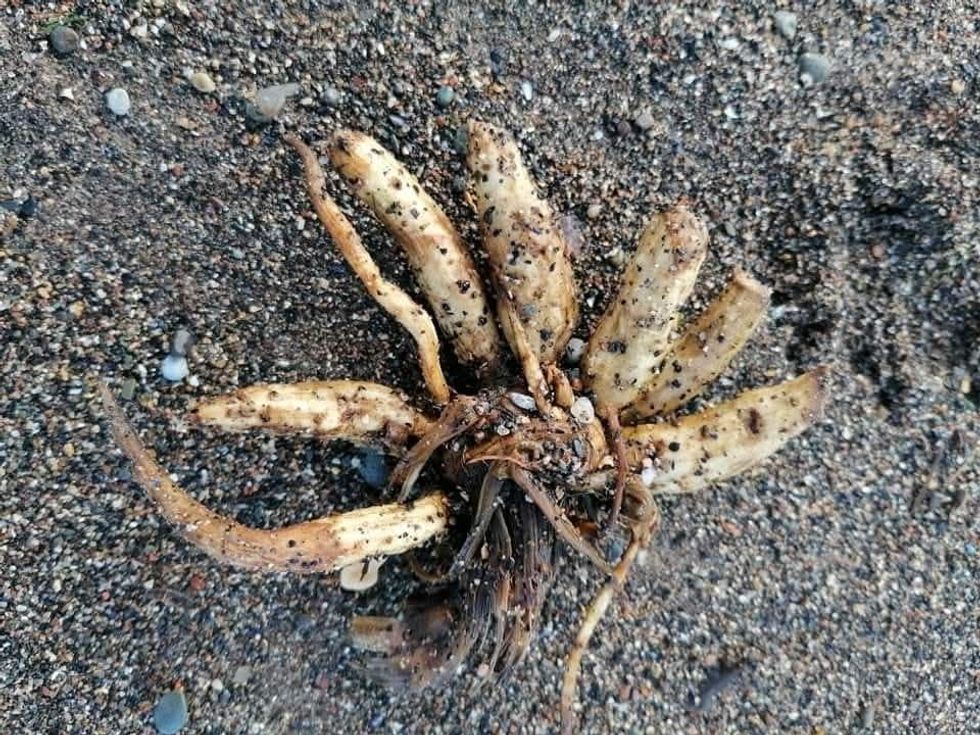
Hemlock Water Dropwort (Oenanthe crocata), also known as Dead Man’s Fingers, has washed up on several beaches
|MILLOM COASTGUARD
“It is also fatal to animals. The plant has a highly poisonous root that looks, and smells, like Parsnip.”
“It is highly likely that this is happening due to the aftermath of recent stormy weather.
“We advise people, especially with children and animals, to stay vigilant, avoid this plant and take extra care when visiting the beach.
“We are not the agency responsible for its disposal. Sightings should be reported to your local council who will arrange disposal. Please do not touch.”
LATEST DEVELOPMENTS:
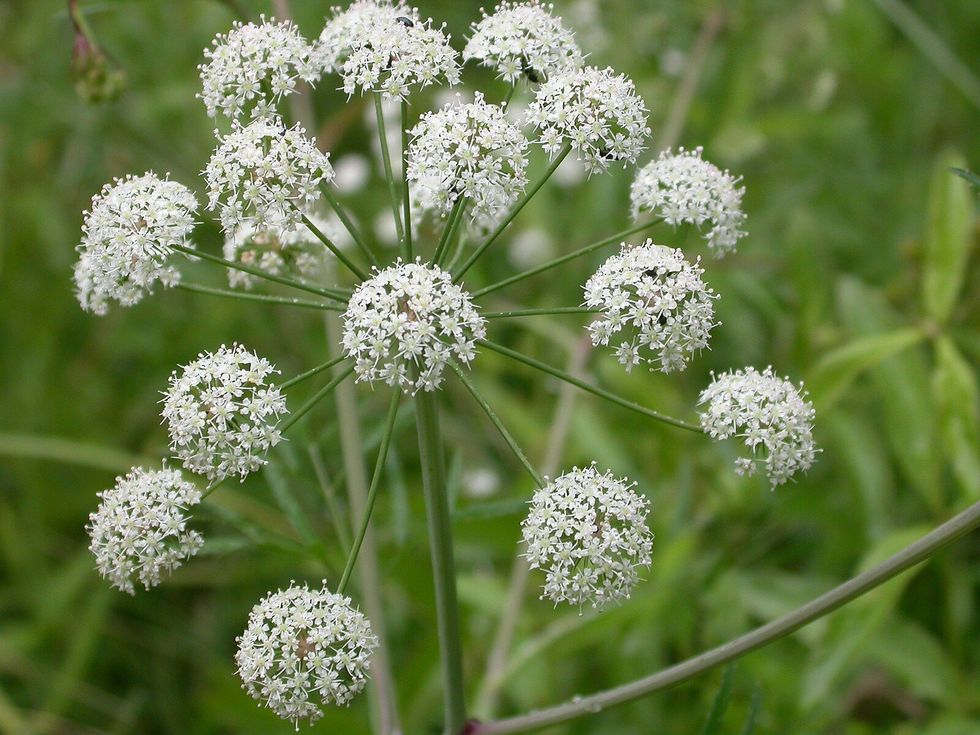
Hemlock Water Dropwort's flower and leaf shape is reminiscent of parsley
|WIKIMEDIA COMMONS
The plant is one of, if not the most poisonous plant in the UK and is commonly found along Britain’s waterways but can also grow in damp ditches and marshy areas.
Hemlock Water Dropwort has bright green and disney leaves with two to four pinnate divisions in a triangular shape.
When it flowers, it produces small white petals arranged in an umbel – stalks of nearly equal length springing from a common centre.
The plant is often mistaken for being a member of the parsley family due to the shape of its leaves and flowers.
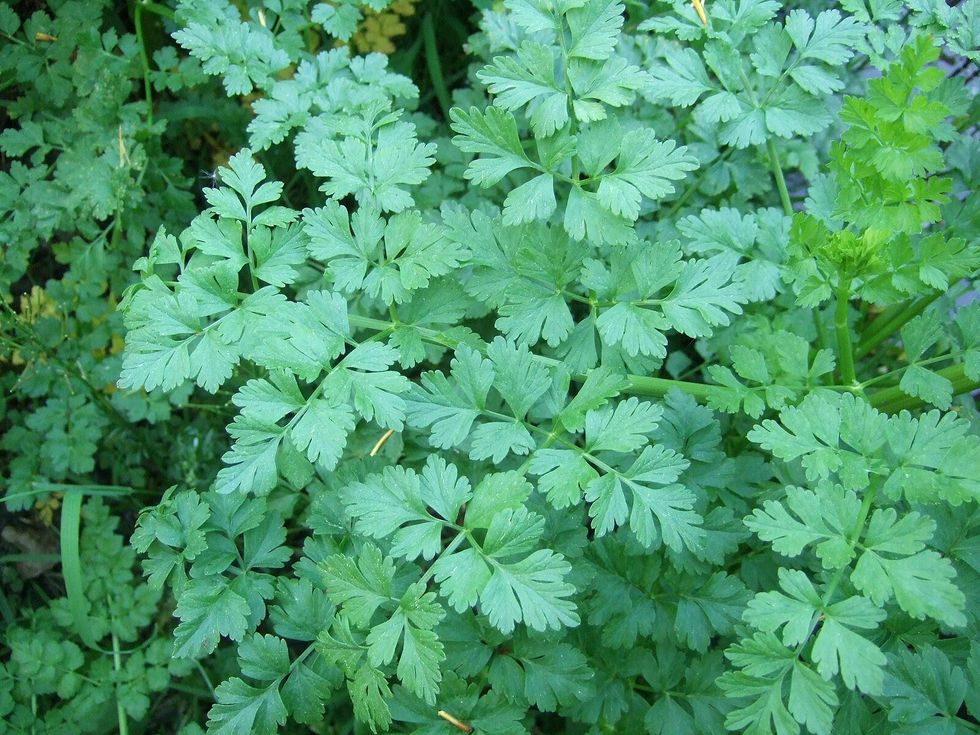
Hemlock Water Dropwort is often mistaken for a member of the parsley family due to the shape of its leaves and flowers
|WIKIMEDIA COMMONS
Its stem is green, hollow, grooved and hairless and can grow up to six feet tall.
However, when cut, the stem oozes a staining yellow liquid.
Rather sinisterly, the plant is the origin of the sardonic grin – seen in Jack Nicholson's portrayal of Joker from Tim Burton’s 1989 imagining of Batman – due to its poison constricting the muscles and causing a rictus-like death grin.
The muscle contractions would eventually lead to asphyxia.
When the Phoenicians controlled Sardinia, the pre-Greek empire would ritually kill the elderly or criminals using the plant’s poison.
Death from the plant’s poison can occur in as little as a couple of hours after ingestion.
Our Standards: The GB News Editorial Charter
More From GB News