





A volunteer diving team believes it has discovered the wreckage of a US Coast Guard vessel torpedoed by a German submarine during the First World War, following a three-year hunt off the Cornish coastline.
The Gasperados Dive Team announced they had located what they believe to be USCGC Tampa resting approximately 100 metres beneath the surface, around 50 nautical miles north of Newquay.
The group has notified the US Coast Guard Historian's Office about their discovery.
Despite the absence of a nameplate on the ship's stern, the divers maintain that the "weight of evidence" strongly suggests this is the long-lost vessel.
"We had a list of about 10 possible targets and the Tampa turned out to be number 10," said Chris Lowe, skipper of the dive boat Atlantic Diver, which launched expeditions from Newquay Harbour.
The Tampa served as a convoy escort during the Great War, shepherding vessels across dangerous waters. On September 26, 1918, the cutter was struck by a German torpedo while making her way to refuel at Milford Haven in Wales.
"She was escorting a convoy from Gibraltar," explained dive team leader Steven Mortimer, from Devon.
He said: "They were north of the Isles of Scilly and they decided that Tampa was running short of coal, so she was going to go to Millford Haven. She went her own way. Four hours later, they [the convoy] heard a big explosion and she was never seen again."
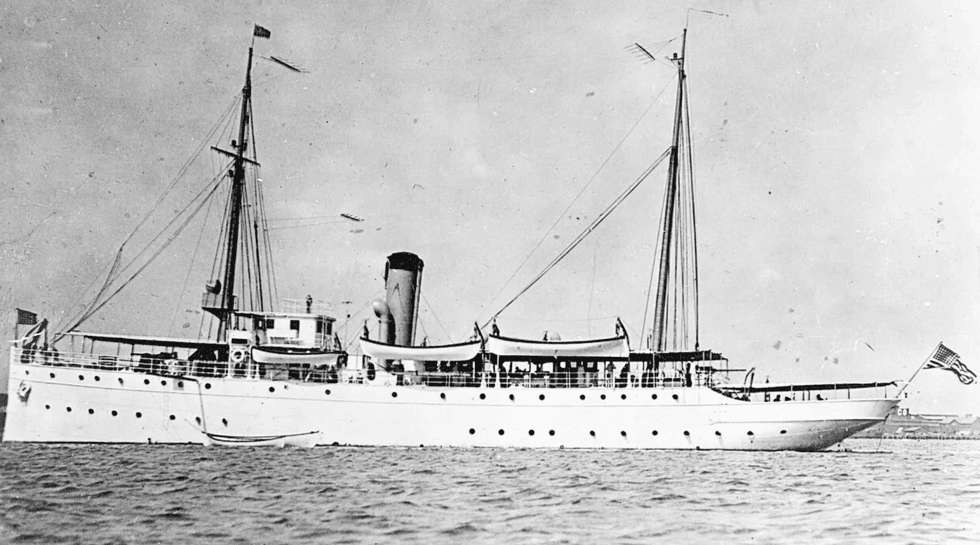
USCGC Tampa was sunk in 1918
|US NAVY
According to the United States Coast Guard, the ship went down in under three minutes, claiming the lives of all 131 souls aboard, comprising 111 coast guardsmen, four US Navy personnel, and 16 Royal Navy members and civilians.
"For the US Navy, it was the largest single loss of life due to combat in Word War One," said Dr William Thiesen, Atlantic area historian for the US Coast Guard.
The Gasperados team collaborated with historians and researchers to pinpoint the Tampa's likely resting place.
A crucial breakthrough came when a historian provided them with the log from the German U-boat, detailing where the submarine crew believed they had carried out their attack.
"We looked on a nautical chart and we saw there were some unknown shipwrecks in that patch. Over the last three years we've tried to dive them one at a time," Mr Mortimer said.
LATEST DEVELOPMENTS
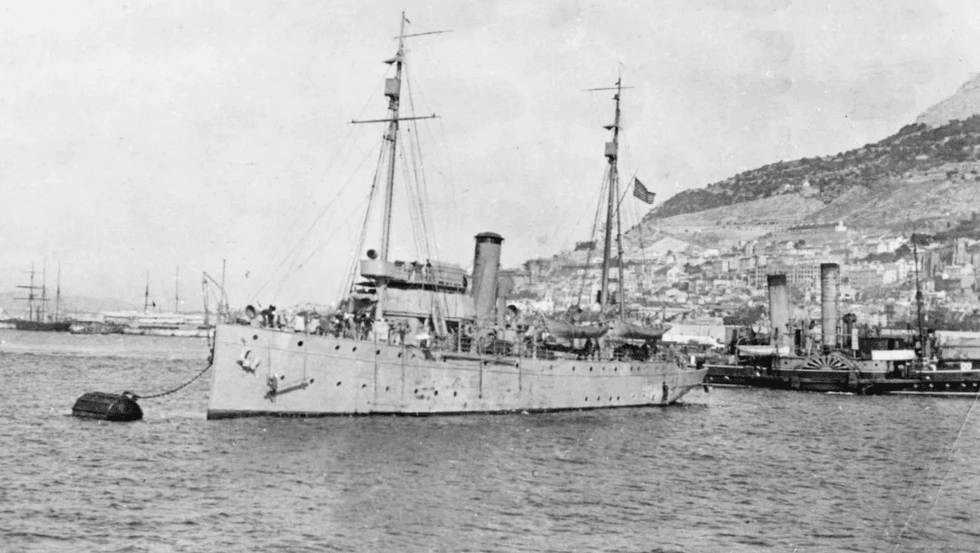
USCGC Tampa docked in Gibraltar
|US COAST GUARD
Barbara Mortimer conducted research at the National Archives in Kew, examining records from the Tampa's final convoy mission.
"It included the departure point when Tampa set off independently to re-coal," she said. "That gave us a position. It also said what direction she set off, and it then gave a time until they heard an explosion."
The journey from Newquay Harbour to the search zone took approximately four hours, with the 100-metre depth restricting each dive to roughly 20 minutes.
On April 26, the volunteer divers explored a wreck displaying characteristics matching their search criteria.
"The first we saw was that it had a steel deck," said Steven Mortimer. "We immediately thought: 'This looks like a little warship.'"
The team discovered substantial quantities of ammunition alongside American-made plates at the site.
Cross-referencing their findings against a 200-page specification document supplied by the US Coast Guard Historian's Office allowed the divers to confirm multiple identifying features.
The absence of a stern nameplate is attributed to depth charges detonating as the vessel sank, likely destroying the rear section of the ship.
"We want to just ensure this is the one," said Dr William Thiesen, noting plans to deploy automated technology including remotely operated vehicles capable of surveying the wreck for extended periods.
Mortimer reported receiving "lovely messages" from descendants of the Tampa's crew, describing them as "really very moving."