







One of Britain's most scenic railway lines celebrates its 150th birthday today after the community rallied together to stop its closure.
The Settle to Carlisle line, which runs through some of the country's most dramatic countryside, has been operating passenger services since May 1, 1875, and was voted the second most scenic railway in the world last year.
Tickets commemorating the occasion are available for just £1.50.
The route begins in Leeds, passing through Shipley and Skipton, before reaching the section between North Yorkshire and Cumbria that has made it world famous.
Heading north from Settle, passengers are treated to sweeping views of Pen-y-Ghent, Whernside and Ingleborough as the train winds through the Yorkshire Dales.
Karen Morley-Chesworth from the Settle-Carlisle Railway Development Company described the route as "the best of British countryside," adding that passengers could board at Leeds surrounded by people and step off into complete solitude.
The line has not always been guaranteed a future.
In the 1980s, a proposal to close it entirely was made, but an extraordinary public campaign saved it, including an objection submitted by a border collie named Ruswarp, whose pawprint was counted as a valid signature on the petition.

One of Britain's most scenic railway lines celebrates its 150th birthday today after the community rallied together to stop its closure
|PA
A statue of Ruswarp now stands along the route as a permanent tribute to his role in saving the line.
Today, the Northern-operated service is marking its sesquicentennial with 150p tickets available to passengers.
Conductor Aaron Hendry said working on the line was the best part of his job.
He said: "Last year it was voted the second most scenic line in the world, and I get to work on it. It's brilliant."
LATEST DEVELOPMENTS:
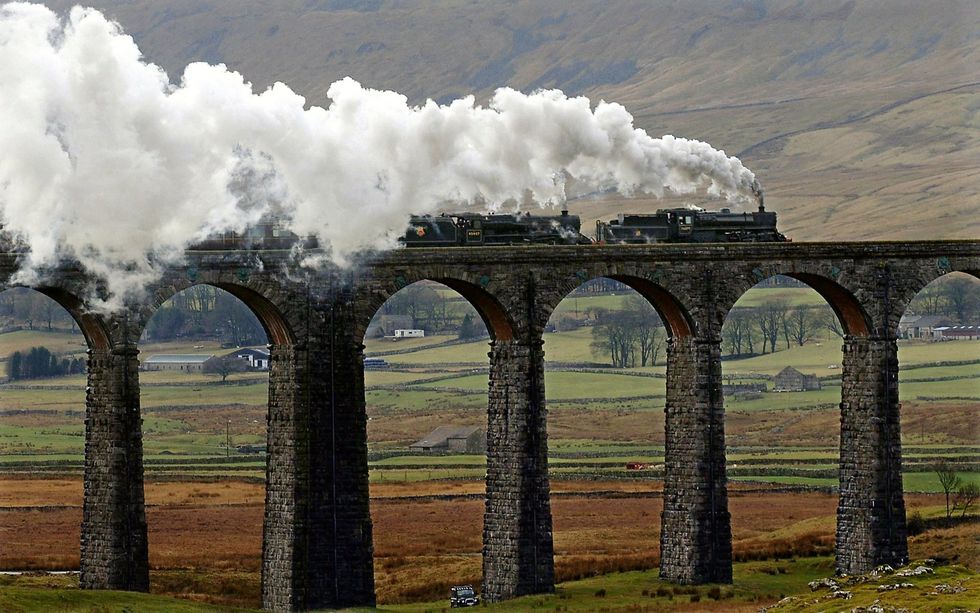
The Settle to Carlisle line, which runs through some of the country's most dramatic countryside, has been operating passenger services since May 1 1875
|PA
The line also carries a more personal significance for some of those who work on it.
Operations manager Susie Smith said her father had been a driver on the route, recalling childhood holidays in Dentdale spent waving tea towels at his passing train.
She said: "I met my husband, who works on the line, so we have our very own love story."
The undisputed centrepiece of the route is the Ribblehead Viaduct, a 24-arch engineering marvel that carries the track more than 100 feet above the valley floor.
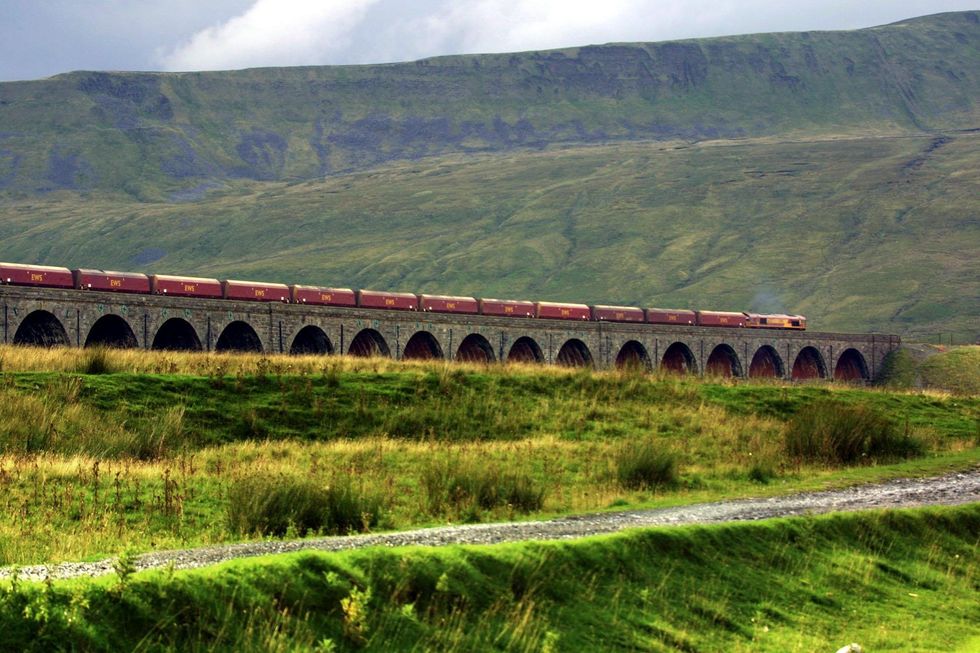
It was voted the second most scenic railway in the world last year
|PA
The viaduct's construction came at a significant human cost, with so many workers, many of them itinerant navvies moving between major projects, dying during its construction that local graveyards had to be extended to accommodate them.
Pete Myers, chair of the Settle-Carlisle Railway Development Company, said the viaduct was essential to the line's identity and wider significance.
He said: "Without the viaduct, the line just wouldn't be complete. If we are serious about carbon reduction and green travel, public transport is an instrumental part of that. It is a truly green way of looking at the Dales."
At Ribblehead, passengers can also visit the Station Inn, a pub that has stood beside the viaduct since the railway's earliest days.
The pub has recently changed hands, with new owner Andrew Hields describing both the hostelry and the viaduct as "iconic".

Tickets to commemorate the occasion have been made available for just 150p
|PA
He said: "It's a few thousand people a year who come in from the train for sure. This place wouldn't exist if it wasn't for the railway 150 years ago."
Some of the line's stations are famously remote, with Dent station sitting four and a half miles from the village it serves, a consequence of the geography that dictated where the tracks could be laid.
In 2026, the line continues to serve a wide range of purposes, from regular commuter services to steam excursions and mainline diversions for London to Glasgow trains.
It is not uncommon for train conductors to offer a running commentary on the landscape as it passes, adding a distinctly personal touch to the journey.
The line's survival story remains one of the most remarkable in British railway history - a route that was nearly lost, saved by public outcry, and has since gone on to be recognised as one of the most beautiful rail journeys in the world.