









The Bayeux Tapestry’s planned move to Britain could be at risk after French conservationists raised concerns about the parlous state of Britain’s roads potentially damaging the priceless artefact while in transit.
A French heritage organisation has launched legal proceedings in the country's highest court to prevent the transfer, citing complaints about potholes.
Sites and Monuments, the conservation group behind the challenge, is contesting President Emmanuel Macron's decision in the Conseil d'État, which determines the legitimacy of executive authority.
According to court documents, the campaigners argue that the French President committed a legal "error of judgment" by approving the transfer of the medieval masterpiece to London.
The 70-metre embroidery depicting the Norman conquest of 1066 is scheduled to cross the English Channel in September for a nine-month exhibition, its first journey to British shores in over 900 years.
Legal documents submitted to the court specifically highlight the dangers posed by "vibrations and shocks" to what conservationists describe as an "extremely fragile" artefact.
Experts from the heritage group warn that jolts from uneven road surfaces, including potholes in both Britain and France, could generate forces capable of tearing the thousand-year-old embroidered cloth apart.
Julien Lacaze, who leads Sites and Monuments, stated: "If (the roads) are in poor condition, that is obviously not a good thing."
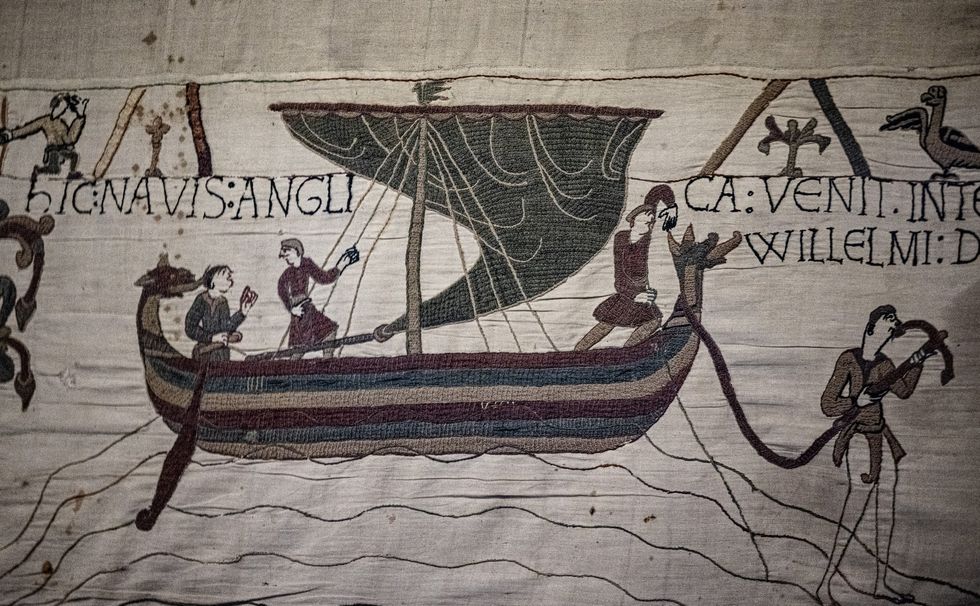
The return of the Bayeux Tapestry to British shores is under threat
|GETTY
He continued: "The risks are those associated with handling the tapestry and the vibrations during a long journey. They must be limited to the bare minimum."
The court submission references a 2022 study commissioned by the French culture ministry, which identified "breaks in the load, a defect on a road (sudden change in level, hole in the surface, etc.)" as potential shock sources threatening the artwork.
That same report strongly advised against any journey exceeding three hours, concluding that no active vibration-damping system exists capable of eliminating all movement during handling and transport.
As a result, the Government and the British Museum have pledged that vibrations during transit would remain below two millimetres per second.
LATEST DEVELOPMENTS
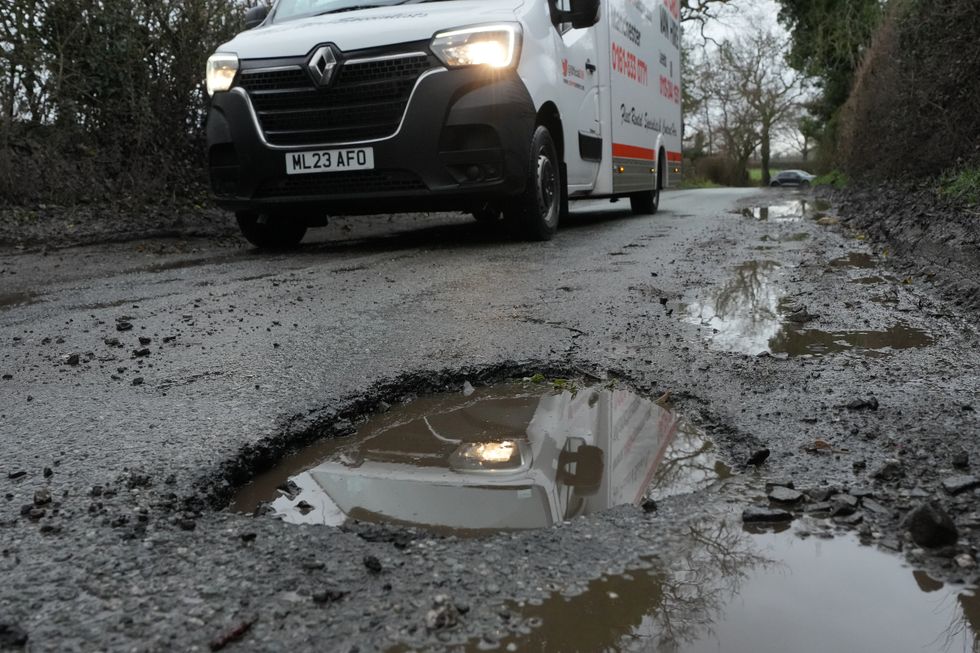
French conservationists said potholes in British roads could damage the priceless artefact
|GETTY
However, Dr Kerstin Kracht, a Belgian specialist in museum vibration mitigation, expressed doubts about whether this threshold could realistically be maintained.
She said: "Adhering to the limit will certainly not cause any damage. The only question is whether it is technically possible to comply with this limit."
Dr Kracht suggested vibrations could more realistically approach 45 millimetres per second, with additional spikes caused by bumps and potholes.
She explained: "There are a lot of bumps in the UK. I learnt this during my studies with the British Museum. Believe me, the bumps in Belgium are just as bad, if not worse."
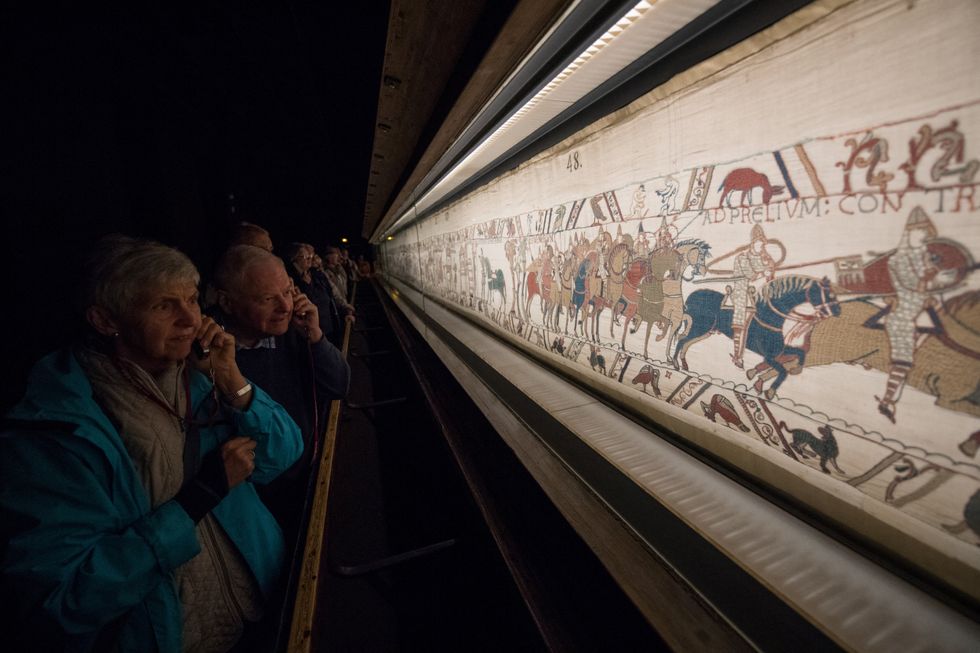
The priceless artefact is currently set to return to British shores for the first time in over 900 years
|GETTY
The renowned British artist David Hockney has been among the most vocal critics of the proposed transfer, describing it as "madness" and "too big a risk" to take.
He asked: "Why does a London museum which prides itself on conserving and preserving great art want to gamble on the survival of the most important art image of scale in Europe?"
Mr Hockney warned that any movement of the wool embroidery threads risks "tearing, stitch loss and distortion of the fabric".
A petition opposing the relocation has attracted more than 77,000 signatures.
Nicholas Cullinan, the British Museum's director, has defended the plans, telling The Telegraph that "more fragile things travel all the time" and that such work is what the institution does "day in, day out".
The Treasury has approved an £800million insurance package to cover potential risks.
Our Standards: The GB News Editorial Charter