










NHS staff have been told to stop addressing unfamiliar patients as "sir" or "madam" in an effort to avoid offending transgender individuals.
Internal training documents at Birmingham and Solihull Mental Health NHS Trust state that those uncertain about a patient's pronouns are advised that "using they/them is a good approach," according to the materials.
The guidance advises that gendered language should be avoided when "referring to service users not known" to staff members.
Staff are recommended to substitute terms such as "lady" with "person" — offering the example of changing "the lady with the yellow scarf on the third row" to use gender-neutral wording instead.
TRENDING
Stories
Videos
Your Say
Guidance extends to telephone interactions, with materials warning staff not to make assumptions about a caller's gender based on their voice.
Within the document, it notes that transgender individuals may have voices at different pitches than expected, either deeper or higher.
Staff are told it would be "inappropriate to refer to someone as 'sir' because they have a deep voice, despite their records saying their name is Ms Katherine Sullivan, for example."
When gender is unclear, using the patient's name is recommended as an alternative to gendered terms.
NHS staff have been told to stop calling patients 'sir' and 'madam' to avoid offending trans people
|GETTY
The bespoke training programme, delivered by the charity Birmingham LGBT, is made available to all 5,300 employees working across the trust's 40 sites.
Birmingham and Solihull Mental Health NHS Trust confirmed the charity delivers the training three times annually, though participation remains voluntary.
However, Birmingham LGBT stated it had provided training at the trust previously, but had not done so since November 2024, per The Times.
The trust defended its approach, describing itself as "a values-based, inclusive organisation" that takes "a person-centred approach in everything we do."
LATEST DEVELOPMENTS
The advice was issued by Birmingham and Solihull Mental Health NHS Trust
|GETTY
It added: "Getting pronouns right is a simple but powerful way to affirm identity, build trust and create environments where transgender staff, patients and service users feel safe, respected and seen."
Current NHS England guidance for treating transgender patients is under review, though existing policy suggests accommodating them according to their chosen gender.
The British Medical Association recommends discreetly asking about pronouns when uncertain.
Fiona McAnena, director of campaigns at the charity Sex Matters, which promotes clarity about sex in law, policy and language, condemned the new guidance.
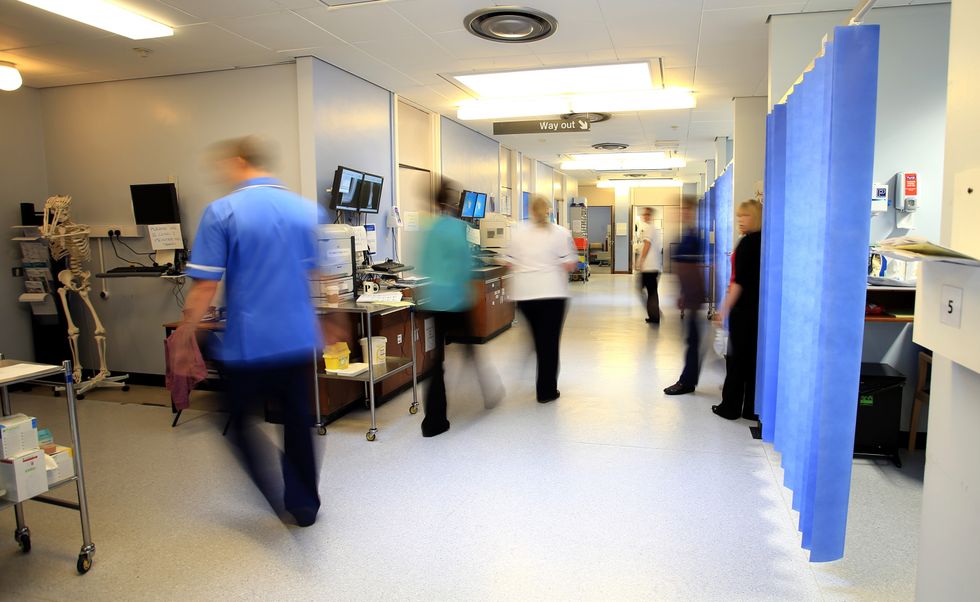
The bespoke training programme is made available to all 5,300 employees working across the trust's 40 sites
| PAShe said: "Something has gone very wrong when an NHS trust is directing staff to use robotic, impersonal language just to avoid terms such as 'sir' and 'madam'.
“This is dehumanising and uncaring to everyone, dressed up as 'inclusion' for people who identify as transgender."
Ms McAnena described the expectation that staff perform "mental gymnastics" to avoid such terms as "seriously misguided”.
She argued patients deserved "the warmth and respect of normal human speech when attending medical appointments."
Ms McAnena added that "unclear and vague terminology" could discriminate against those with English as a second language.
The Sex Matters director said: "The trust needs to ditch this policy and return to ordinary, well-understood terms for men and women when addressing patients."
Our Standards: The GB News Editorial Charter
More From GB News