










Norwich City Council's Labour administration is considering a plan to feed pigeons contraceptives in an effort to reduce the expanding bird population at the city's historic market.
The proposal would involve concealing fertility-reducing medication within grain placed in bird feeders, rendering the birds temporarily infertile as a "humane and non-lethal" method of population management.
Traders and shoppers have been pressing for action, describing the birds as both a nuisance and a health hazard.
The scheme was put forward at a City Hall meeting on Tuesday, where approximately 30 pigeon supporters gathered in opposition, with one attendee donning a pigeon mask.
TRENDING
Stories
Videos
Your Say
A council spokesman said: "We are exploring a range of legal and humane ways of deterring the pigeons from our market as part of our wider plans to make it not only the best market in the UK but also Europe."
Councillors also voted to explore introducing fixed penalty notices for individuals who persistently feed pigeons at the Lutyens War Memorial Gardens situated at the market's upper end.
Mike Sands, who tabled the motion on fines, said: "The number of pigeons runs into the hundreds. Their droppings are corrosive for the stone work, and they represent a health issue."
Labour councillors argued the measures were essential to protect the war memorial from damage caused by pigeon guano.
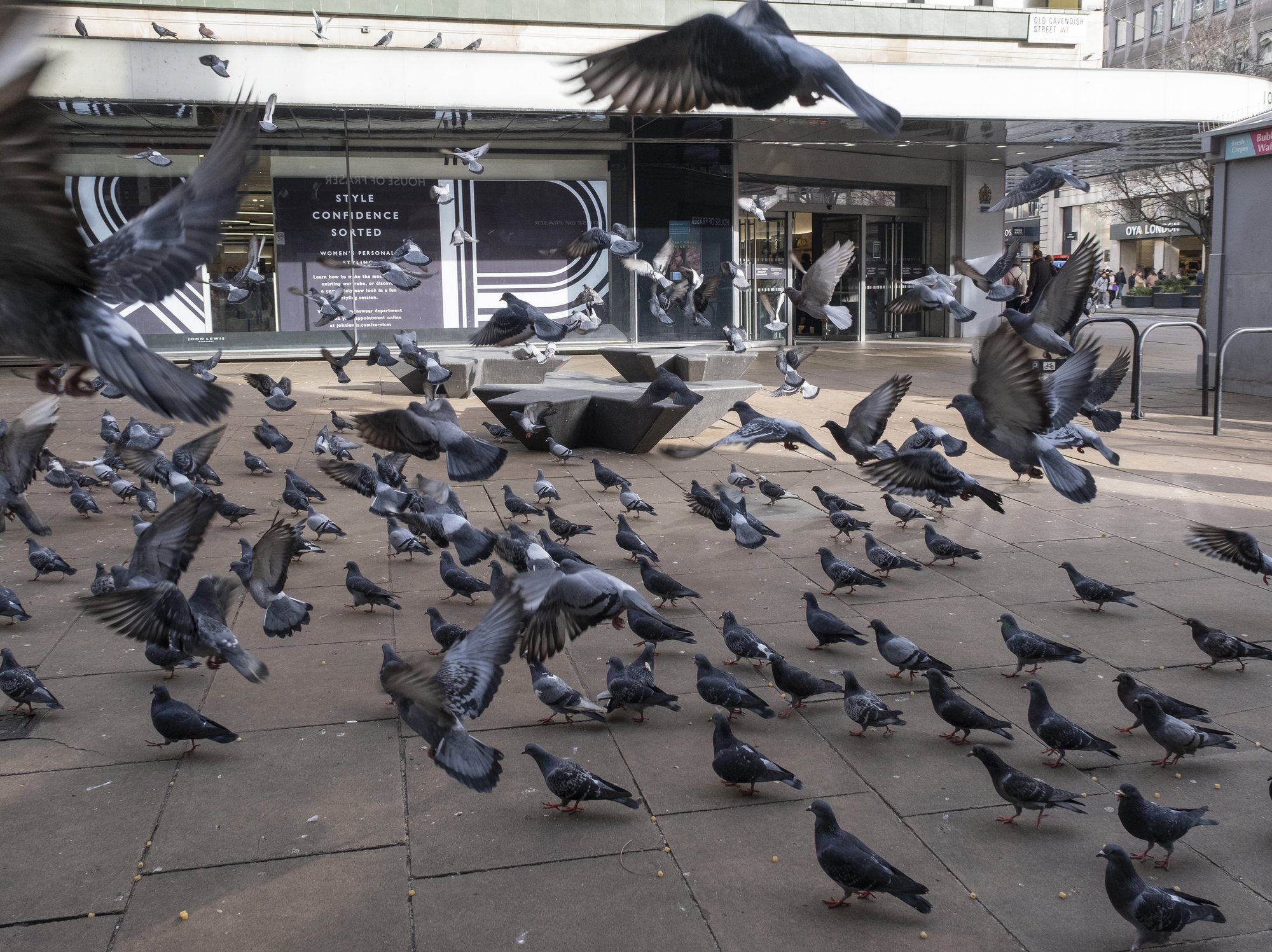
'The number of pigeons runs into the hundreds,' councillors were told. 'Their droppings are corrosive for the stone work''
|GETTY
Carli Harper, cabinet member for major projects, said: "We have been looking at other methods, but it will take time to explore this.
“It will potentially have implications for other avian species, including endangered birds," she warned.
Ms Harper, who insisted she was not anti-pigeon, cautioned persistent feeding was attracting other vermin, including rats, adding there was "no reason" pigeons couldn't be fed elsewhere in the city.
Jenny Coupland, of Peck Savers, a group campaigning to protect the birds, said: "Norwich City Council, although no doubt well-meaning, haven't seemed to have done any research about any of this across the board."
LATEST DEVELOPMENTS

'If they do go ahead with investing resources into this, they do so with the full knowledge that it won't work'
|She questioned the legality and effectiveness of the contraceptive proposal, citing research by Flo Blackburn criticising contraception for bird population management.
Ms Coupland warned there would be "great opposition" to both the contraceptive scheme and feeding fines.
"If they do go ahead with investing resources into this, they do so with the full knowledge that it won't work," she said.
Elisa Allen, vice president of programmes at Peta, said: "Norwich's council should remember that pigeons are local residents as much as any human being – they are born there and a part of life in the city."
Summer Loh, a university student whose petition to protect the pigeons has attracted more than 3,500 signatures, expressed "disappointment"" at the council's lack of engagement, according to the Eastern Daily Press.
Environmental concerns have been raised about the contraceptives potentially being consumed by other bird species, particularly those that are endangered, as well as the risk of hormones spreading to predators through their prey or entering the environment via bird waste.
The local authority previously attempted to deter the birds using a hawk named Hazel in a four-week pilot scheme, although pigeon supporters responded by leaving large quantities of feed in retaliation.
Similar contraceptive programmes have proven successful across Europe, with Brussels reducing its pigeon population by 50 per cent, while trials in Malta achieved a 30 per cent reduction over two years.
Our Standards: The GB News Editorial Charter
More From GB News