








Unilever chief executive Fernando Fernández has distanced the Ftse 100 company from accusations it pursued a "woke" agenda under previous management.
Speaking at the Wall Street Journal CEO Council Summit in London on Wednesday, Mr Fernández insisted the consumer goods giant would only back principles directly connected to customer demand.
"I will never support principles in our brand that are not anchored in consumer needs," he said.
His remarks come after years of criticism from investors who accused Unilever of prioritising social messaging and sustainability campaigns over commercial performance.
Fundsmith founder Terry Smith, one of Britain’s best-known fund managers, publicly attacked the company in 2022 for what he described as an excessive focus on virtue-signalling.
Mr Smith argued at the time that Unilever had become "obsessed with publicly displaying sustainability credentials".
The investor also criticised the company’s marketing strategy, stating: "A company which feels it has to define the purpose of Hellmann's mayonnaise has in our view clearly lost the plot."
Mr Fernández, who became chief executive in March last year, indicated he intends to take a different approach to brand strategy.
Asked about Unilever’s purpose and Mr Smith’s criticism during the summit, the chief executive said strong brands must first deliver quality products before promoting wider values.
Unilever chief Fernando Fernández distances company from woke agenda criticism after Terry Smith backlash
| GETTY"Every brand stands for something. The first point is that you have to deliver functional superiority. You have to deliver great aesthetics, great sensorials," he said.
Mr Fernández added that successful brands also required a clear identity capable of resonating with consumers.
He cited Dove, Unilever’s largest brand, as an example of a product with a purpose grounded in customer concerns.
The chief executive said Dove emerged partly in response to beauty industry stereotypes which were affecting female self-esteem.
LATEST DEVELOPMENTS
When asked whether Unilever had previously become disconnected from consumers, Mr Fernández declined to directly criticise earlier management decisions
|GETTY
"I will not comment on the past. I am interested in the future. I am really building the brands for the future," he said.
The comments come as investors continue debating Unilever’s planned merger of its food division with American spice and seasoning company McCormick.
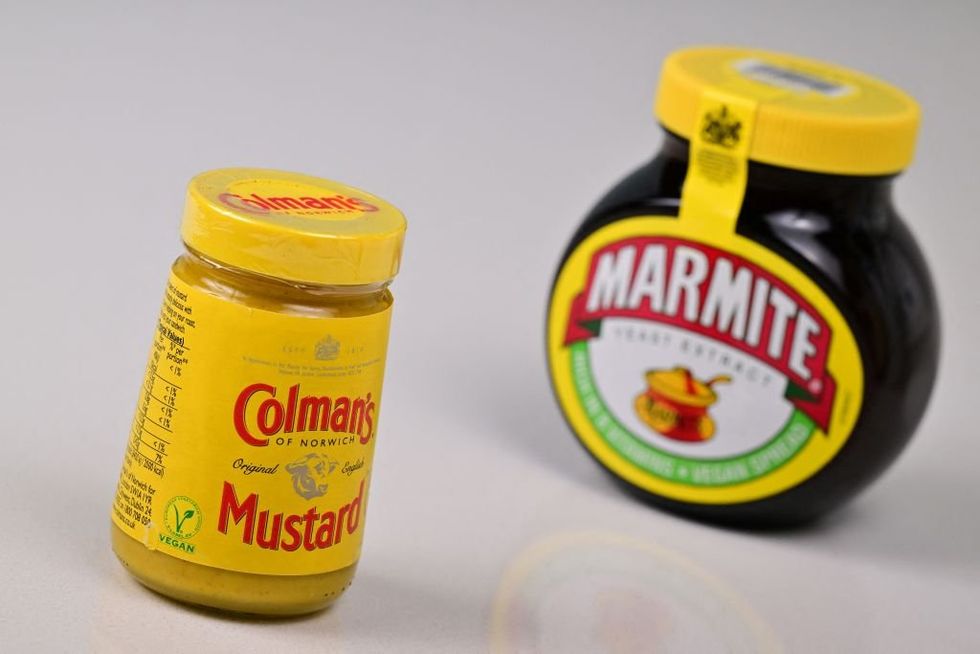
It would combine the maker of Marmite and Hellmann’s with the owner of French’s mustard and Frank’s RedHot sauces.
The combined business is expected to be valued at around $66billion.
The deal is anticipated to complete around the middle of 2027.
Some shareholders have raised concerns about the scale of the transaction, particularly surrounding debt levels and the challenges involved in integrating such large businesses.
Mr Smith has since exited his investment in Unilever entirely. The veteran fund manager revealed last month that he had sold his remaining stake in the company.
He criticised Unilever for having "abandoned its promised operational focus in favour of activist-driven break-ups".
Mr Fernández also praised Nelson Peltz, the American activist investor who joined Unilever’s board after Trian Fund Management acquired a stake in the business in 2022.
The chief executive described Mr Peltz as a "super expert in the consumer sector. We have an excellent relationship with him. I feel he understands the industry very well. He understands the US very well."
Defending the McCormick merger, Mr Fernández acknowledged Unilever had previously been "a bit of an inconsistent performer".
He nevertheless argued the deal would create significant long-term value for shareholders despite uncertainty in the near term.
The chief executive also noted Unilever’s home and personal care division had outperformed the food business over the past three years.
Mr Fernández acknowledged McCormick faced a major challenge integrating a business roughly twice its own revenue size but said he remained confident the merger would ultimately succeed.