







Britain's jobless rate has risen from 4.9 per cent to five per cent in the three months to March, the latest Office for National Statistics (ONS) labour market data has revealed.
The unemployment jump comes despite expectations that joblessness would remain unchanged this quarter.
These figures include the first month of the US–Iran conflict, which triggered a sharp rise in global oil and gas prices.
The resulting increase in fuel costs fed through to businesses and households almost immediately.
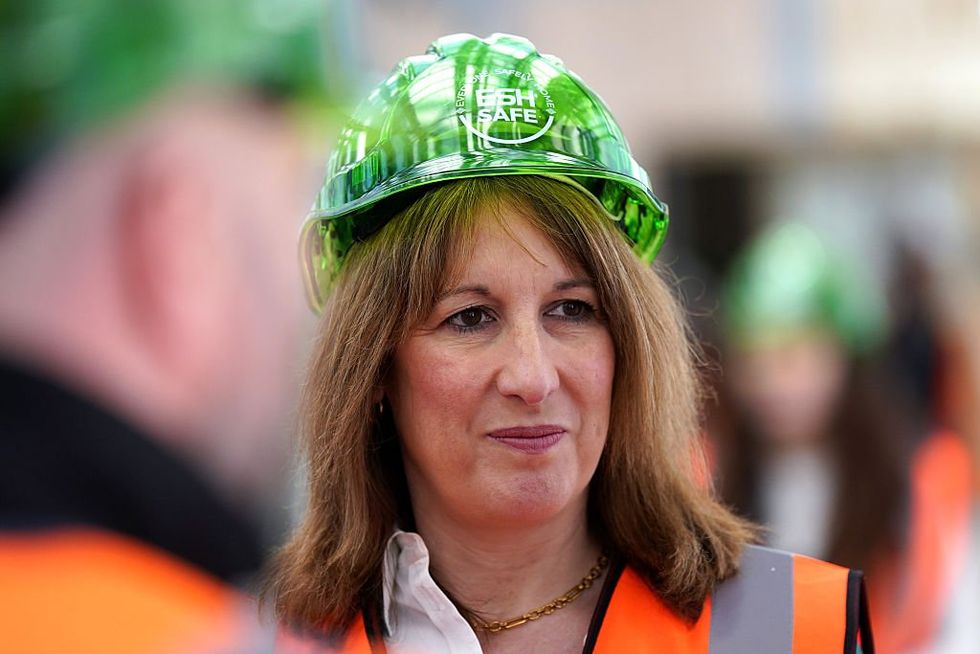
UK unemployment rises to five per cent
|GETTY
Average weekly earnings - excluding bonuses - grew by 3.4 per cent, down from 3.6 per cent and the slowest pace since 2020.
The ONS said the data continued a pattern of easing pay growth at a time when inflation is expected to pick up again if tensions in the Middle East persist and the effective Iranian blockade of the Strait of Hormuz remains in place.
ONS director of economic statistics Liz McKeown said the latest numbers “suggest the labour market remains soft”, with vacancies at a five‑year low and unemployment higher than a year ago.
Payroll employee numbers fell over the three months to March, with hospitality and retail among the sectors seeing the largest declines in vacancies and staffing levels.
Early estimates for April point to further weakness, though the ONS noted greater uncertainty around initial readings at the start of the tax year.
Work & Pensions Secretary Pat McFadden said the latest unemployment figures were “encouraging” despite the impact of the Iran conflict on the labour market.
He said the data showed 416,000 more people in work than a year earlier, adding that while the rise was positive, the Middle East conflict continued to weigh on economic conditions.
Mr McFadden said Labour was “in a stronger position” to manage the volatility and higher costs linked to the war, noting that the UK recorded the fastest growth of any European G7 economy last year.
He added that reducing youth unemployment remained a priority and that the Government’s jobs guarantee was supporting young people into work while helping employers access the skills they need.
Businesses continue to report weaker demand, higher borrowing costs and elevated energy bills. Recruitment has slowed, investment plans are being delayed and job losses are emerging in some industries.
Youth unemployment remains close to 16 per cent, with fewer opportunities in retail, hospitality and entry‑level professional roles.
Recent surveys also point to a more challenging outlook.
Research by the Chartered Institute of Personnel and Development (CIPD) this week showed employer confidence close to a record low, with firms prioritising cost control over investment.

Youth unemployment among 16 to 24-year-olds remains close to 16 per cent
| GETTYPay settlements are expected to average around three per cent, below the projected rate of inflation, though the survey was conducted before the political uncertainty that followed Labour’s election results.
Inflation for the 12 months to April, due on Wednesday, is forecast to ease to three per cent before accelerating towards four per cent by the end of the year.
Rising prices are expected to weigh on demand in the second half of 2026, offsetting the stronger‑than‑expected start to the year.
For the Bank of England and the Government, the figures indicate a labour market under increasing pressure, with implications for tax revenues, welfare spending and the broader economic outlook.
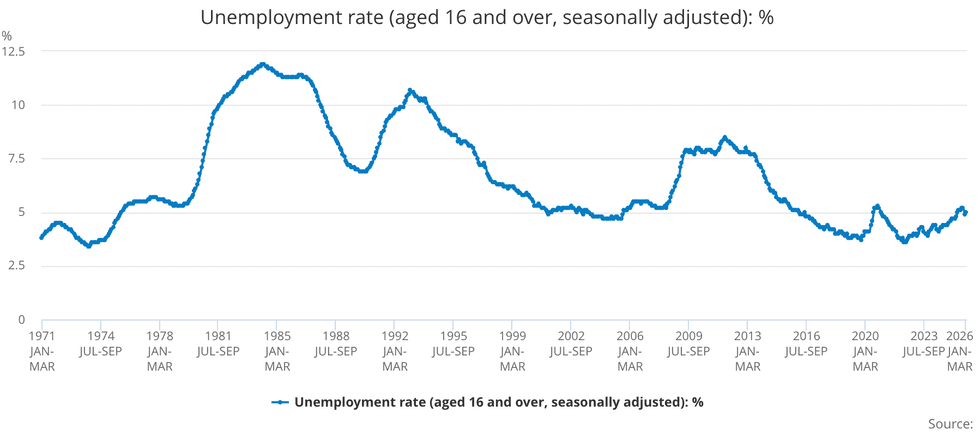
Unemployment rate over time
|ONS
Responding to the latest figures Suren Thiru, Institute of Chartered Accountants in England and Wales (ICAEW) Chief Economist, said: “These figures signal a growing distress within the UK’s labour market as soaring labour costs and the fallout from the Iran war drive more businesses to reduce recruitment and limit pay awards.
“The continued fall in job vacancies is a worrying sign of the strength of the labour market as it suggests that demand for staff is deteriorating quickly amid global headwinds and the growing financial squeeze on firms.
“Slowing salary growth offers hope that any second-round inflation effects from the Iran war will be limited, particularly with rising unemployment and a weaker economy likely to help keep pay settlements on a downward trajectory."