










Chancellor Rachel Reeves’s tax arrangements are discouraging higher earnings among British workers, a new report has warned.
The Organisation for Economic Co-operation and Development (OECD) said that Labour’s fiscal approach risks undermining incentives, with certain income brackets facing punitive marginal rates that could weigh on economic growth.
Around 700,000 individuals earning between £100,000 and £125,140 are affected by the current structure.
While the official income tax rate for this group stands at 40 per cent, the withdrawal of the £12,570 tax-free personal allowance above £100,000 creates an effective marginal rate of 60 per cent.
TRENDING
Stories
Videos
Your Say
The Paris-based economic body said: "An in-depth tax review is needed to make the tax system more efficient and growth-friendly."
The impact extends beyond income tax for working parents.
Crossing the £100,000 threshold by even one penny results in the immediate loss of childcare subsidies, which can cost families thousands of pounds in support.
Some professionals have responded by limiting their earnings to avoid crossing the threshold.

Chancellor's tax system 'weakens work incentives', OECD warns
|GETTY
The Telegraph reported that airline pilots and scientists have reduced working hours or bought additional leave to remain below £100,000.
This behaviour reduces overall economic output as workers prioritise financial stability over additional earnings.
Child benefit is also tapered, with payments reduced once a parent earns above £60,000 and removed entirely at £80,000.
The OECD also highlighted wider structural issues within the UK tax system.
LATEST DEVELOPMENTS

Britain is going through a joblessness crisis
|GETTY
It described VAT reliefs on goods such as food, children’s clothing and household energy as "largely inefficient and regressive".
The body recommended removing zero and reduced VAT rates and instead increasing benefits for lower-income households to offset higher costs.
Council tax was also criticised, with the organisation noting it remains "based on outdated valuations".
"There is scope to improve the efficiency and fairness of the UK tax system," the report stated.
It added: "Parts of the tax system are complex, leading to large compliance costs."
The OECD said compliance has declined, particularly among smaller businesses that lack the resources to manage complex requirements.
The report also urged Labour to expand childcare provision to support more parents into work.
It said rising economic inactivity has weighed on UK growth in recent years.
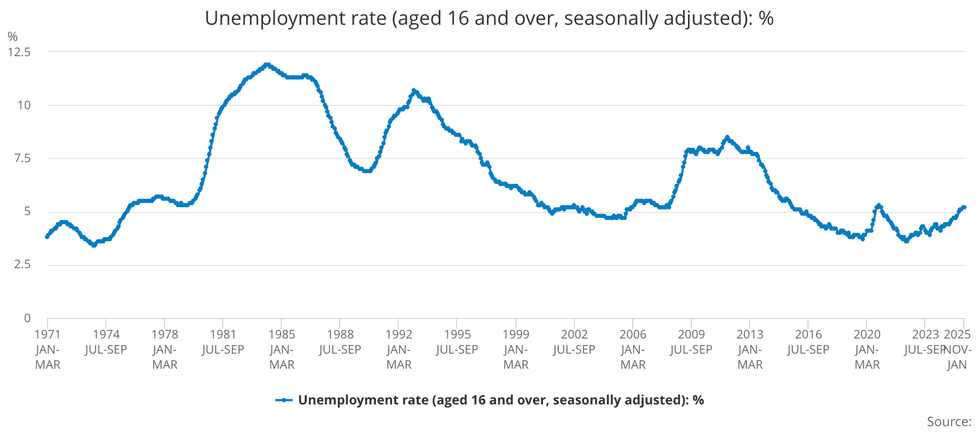
A million people are not in Education, Employment or Training (NEETs)
|ONS
"Women make up a disproportionate share of the economically inactive, largely due to family and caring responsibilities," the report stated.
Limited access to affordable childcare increases the cost of employment and restricts workforce participation.
The OECD acknowledged that reforms are underway but warned that staffing shortages and insufficient contingency planning could affect delivery.
The organisation also called for stronger support for school leavers to help more young people enter the labour market.