






British business leaders have criticised Chancellor Rachel Reeves’ planned meetings with retail and banking executives, describing the move as "entirely performative" as the energy crisis intensifies.
Helen Dickinson, chief executive of the british retail consortium, urged ministers to "focus on its energy policy and the pipeline of additional policy costs that are about to impact businesses".
She told the Financial Times that "this seems to be a solution looking for a problem."
Rain Newton-Smith, chief executive of the confederation of british industry, said: "The Government can do more now, including cutting policy costs from firms' bills and targeted support for energy efficiency."
TRENDING
Stories
Videos
Your Say
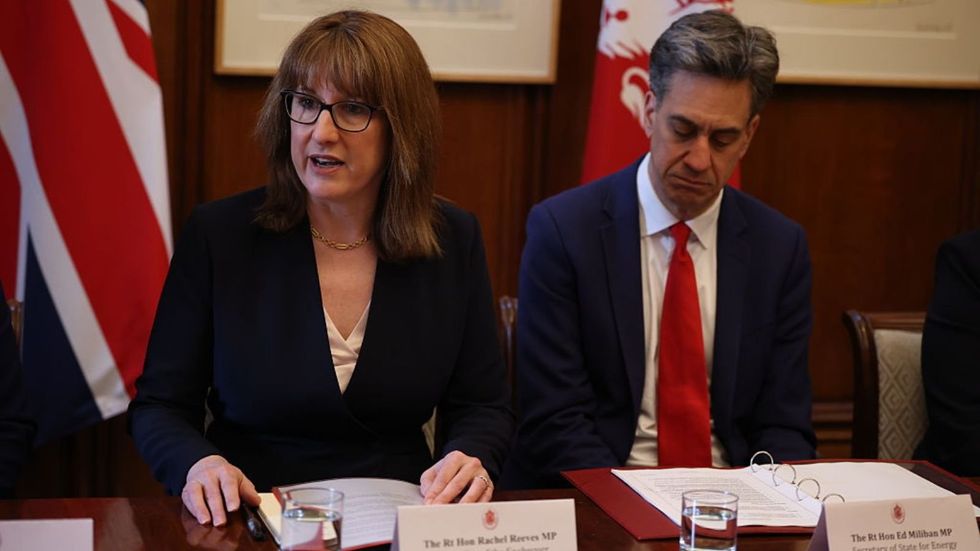
Ms Reeves announced plans to convene supermarket and bank executives on Thursday to discuss measures aimed at protecting customers.
The Treasury has also said it will examine the powers of the Competition and Markets Authority to address potential energy sector "price gouging".
New economic data has indicated the impact of the Middle East conflict on UK industry.
The S&P Global Flash UK PMI composite output index fell to 51 in March, its lowest level in six months, down from 53.7 in February.
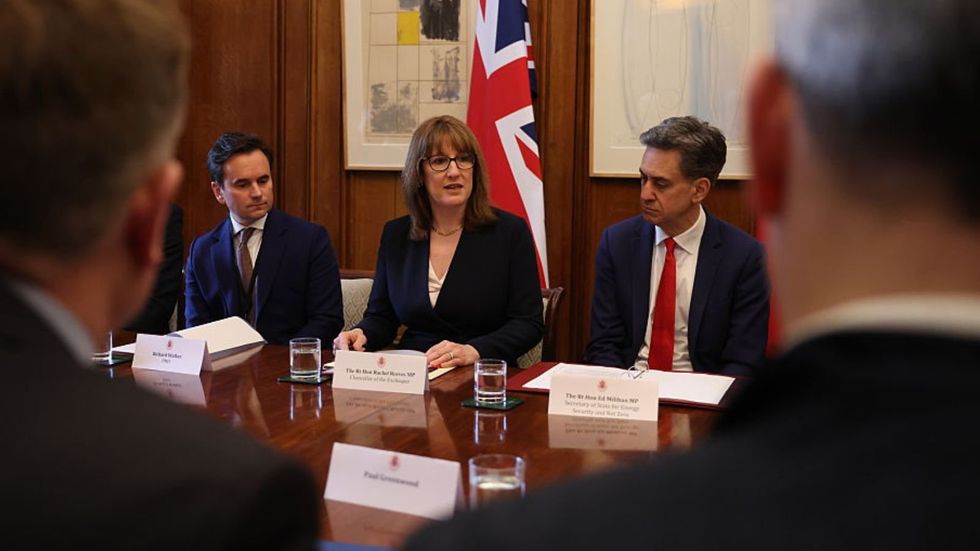
Business leaders criticise Rachel Reeves as UK economy hit by Iran conflict and rising energy costs
|GETTY
Manufacturing recorded a sharp increase in input prices, rising from 56.0 to 70.2, marking the steepest monthly acceleration since October 1992 following the Black Wednesday.
Chris Williamson, chief business economist at S&P Global Market Intelligence, said: "The war in the Middle East has hit the UK economy in March, stalling growth while driving inflation sharply higher."
Paul Dales, chief UK economist at capital economics, said: "March's flash PMIs show that the conflict in the Middle East is already going a long way to boosting inflation and extinguishing GDP growth, and this is just the start."
LATEST DEVELOPMENTS
The haulage sector has also raised concerns over rising fuel costs
|GETTY
Richard Smith, managing director of the road haulage association, said abandoning the planned September fuel duty increase was now "a minimum" requirement, while also calling for tax relief on essential commercial vehicles.
Hauliers transport around 80 per cent of goods across Britain, placing the sector under pressure from higher diesel prices.
Kate Nicholls, chief executive of UKHospitality, said: "Ministers need to urgently review and pause Government imposed non-commodity costs and levies."
Businesses have also warned about further cost increases expected next month, linked to new charges funding the Sizewell C nuclear project and electricity network expansion.
The Bank of England faces a policy challenge as it weighs inflation risks against slowing growth.

Markets project interest rate hikes over the course of the rest of the year
|GETTY
Financial markets are now pricing in two quarter-point interest rate rises by the end of the year, compared with expectations for cuts prior to the escalation in the Middle East.
Mr Williamson said the central bank "faces a challenging period where it will need to balance these growth and inflation risks when setting policy, seeking to dampen the potential for the inflation spike to become more engrained while ensuring a hawkish interest rate outlook does not exacerbate downturn risks".
One cabinet minister said: "There may be some economic 'scarring' from a longer-term halt to shipping in the Strait of Hormuz, which will lead to gilt yields staying higher for longer."
A Labour official said there was "no appetite" within cabinet for additional borrowing.