







Bereaved families could face bills from HM Revenue and Customs (HMRC) surpassing £115,000 under the Labour's Government's "mansion tax", analysis suggests.
Britons are bracing for the new property levy, which will see homes valued above £2million targeted, according to recently published Treasury consultation documents.
The papers outline how homeowners earning below £35,000 annually will have the option to postpone paying the "high value council tax surcharge" until their death or the sale of their property.
However, the interest charge would accumulate on deferred amounts if is potentially set at HMRC's current late payment rate of 7.75 per cent,
Labour's proposed mansion tax is under fire
|GETTY
Analysis indicates that postponing the maximum yearly charge of £7,500 over a decade could result in a combined liability exceeding £115,000, which would then fall upon inheriting relatives alongside any existing inheritance tax obligations.
The Conservatives have condemned the deferral mechanism as forcing pensioners into what they describe as "a cruel 'pay as you die' policy."
Sir James Cleverly, the Shadow Housing Secretary, said: "Many pensioners will be pressured into deferring the new surcharge, and then passing the bill on to their children. When combined with inheritance tax, this is a cruel double death tax."
He added: "Labour are punishing aspiration and success, and none of the money will go to local communities."
LATEST DEVELOPMENTS
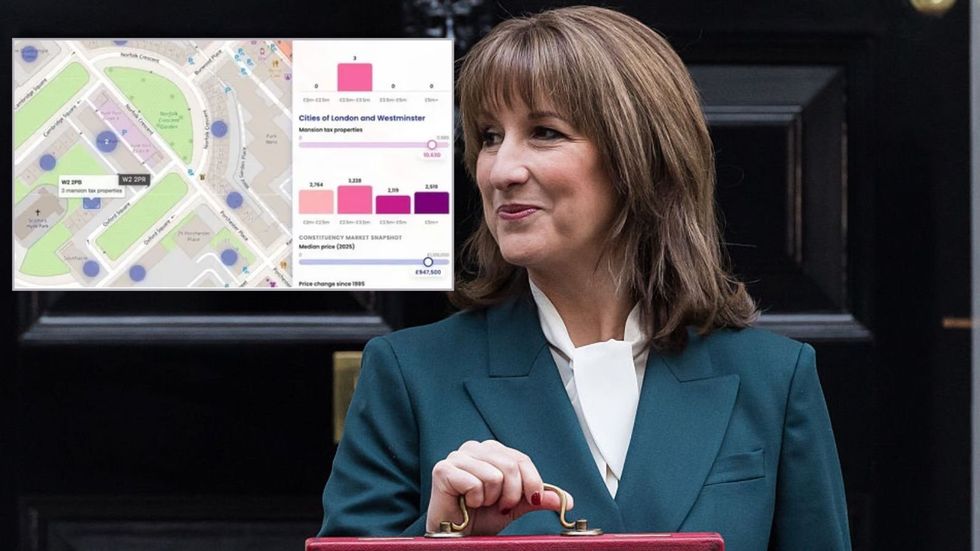 Who will need to pay the Chancellor's mansion tax? | GETTY
Elliot Keck, a Conservative councillor for Westminster's Hyde Park ward, where over 60 per cent of properties exceed the £2million threshold, told The Telegraph that the policy as "driven by little more than spite and envy".
Those earning just above the £35,000 income threshold will not qualify for deferral and must pay the charge annually, while households with savings exceeding £16,000 are similarly excluded from postponement.
The surcharge operates across four price bands, starting at £2,500 for properties valued between £2million and £2.5million, rising to £7,500 for homes worth more than £5million.
Properties currently in council tax bands F, G and H will undergo revaluation before the levy takes effect in 2028, with subsequent reassessments occurring every five years.
 Property taxes altogether make up 3.7 per cent of the total economy | GETTY
Annual charges will increase in line with inflation, and homeowners who extend their properties risk being pushed into higher bands if improvements boost their home's value.
Those who neither pay nor defer could face deductions directly from wages or have charges registered against their property. Property experts have cautioned that the levy could deter homeowners from investing in their properties.
The Office for Budget Responsibility (OBR) estimates approximately 165,000 homes will be subject to the charge, with the levy expected to generate £400 million in its inaugural year, climbing to £435million by 2030-31
The fiscal watchdog anticipates one in five affected homeowners will contest their valuations, with up to 40 per cent of appeals likely to succeed.
A Treasury spokesman said: "We want to provide options to people in more difficult circumstances, for example those who may struggle to pay or who meet certain disability criteria that is what our consultation set out.
"We are addressing a longstanding unfairness in our country, where a Band D home in Darlington or Blackpool pays nearly £300 more in council tax than a £10million mansion in Mayfair.."