









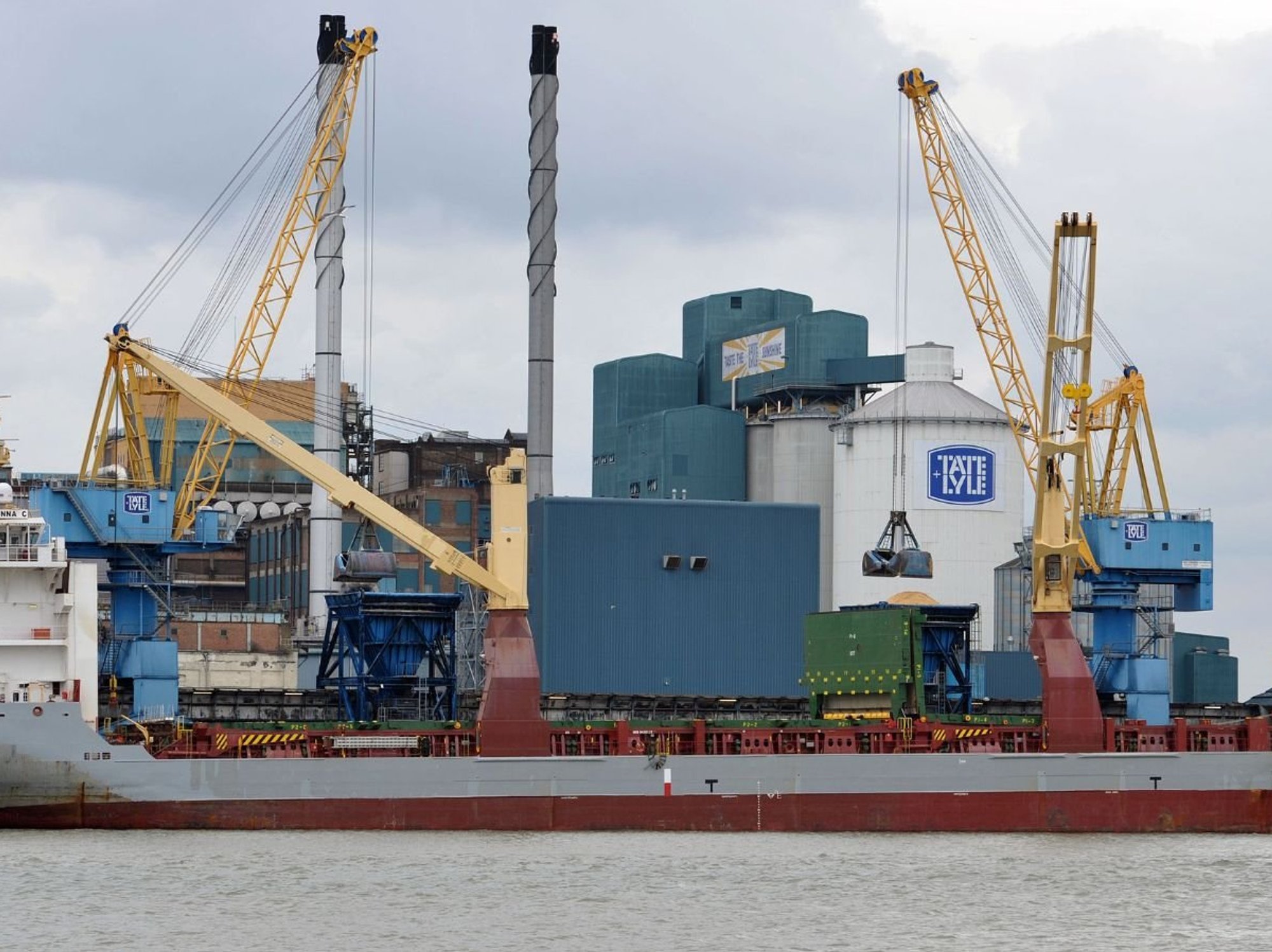
British households could face rising energy bills and higher food prices as Iran’s blockade of the Strait of Hormuz disrupts global supply chains.
The crisis has halted traffic through one of the world’s most important shipping routes, through which around a fifth of global seaborne crude oil and gas normally passes.
Large volumes of fertiliser raw materials also transit the narrow waterway.
The disruption has already sent shockwaves through commodity markets.
TRENDING
Stories
Videos
Your Say
Wholesale gas prices have jumped by about 70 per cent in recent weeks, while some benchmark fertiliser products have risen by more than a quarter.
Analysts warn these increases could eventually feed through into higher electricity bills and food prices.
The UK is seen as particularly vulnerable to energy market volatility due to its limited gas storage capacity.
Britain has storage equivalent to around 12 days of demand, compared with roughly 90 days in Germany and more than 100 in France.
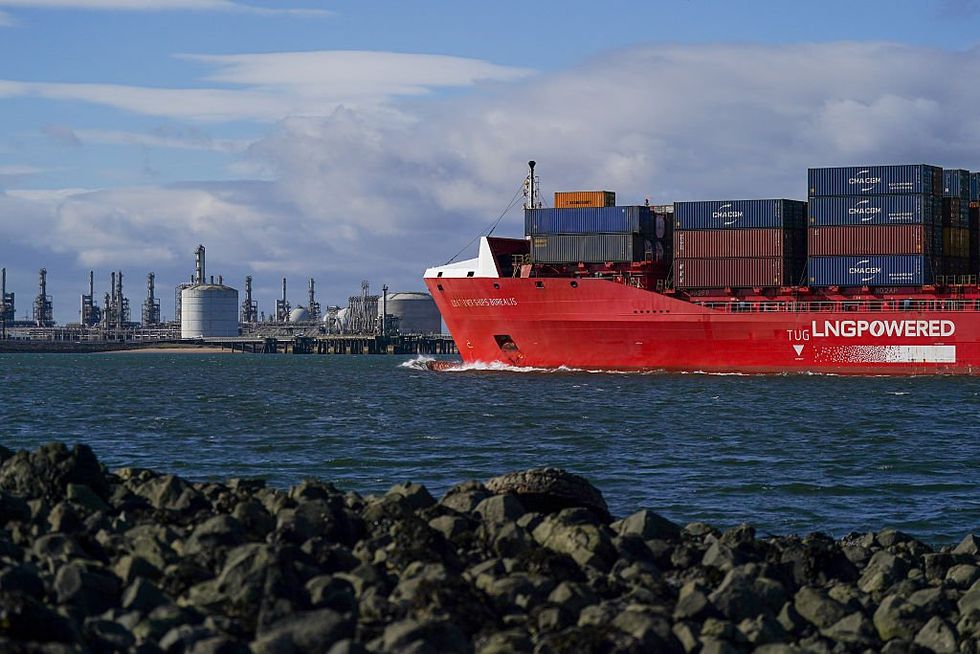
Iran Strait of Hormuz blockade could push up UK energy bills, food prices and inflation
|GETTY
Unlike the EU, the UK does not operate a mandatory gas storage target, a gap analysts say leaves the country more exposed during supply shocks.
The situation has been compounded by the suspension of a major storage facility off the northern coast of England last year.
The site, run by Centrica, previously accounted for around half of the UK’s storage capacity.
Gas-fired power stations currently generate about 30 per cent of the UK’s electricity, compared with 17 per cent in Germany and around three per cent in France.
More than 70 per cent of British homes rely on gas for heating.
LATEST DEVELOPMENTS
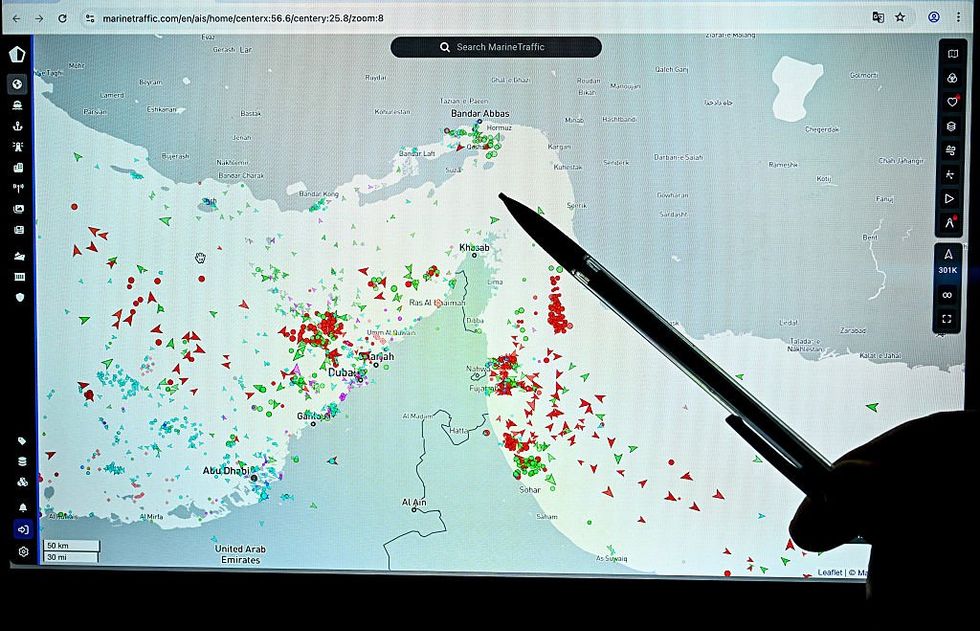
Agricultural supply chains are also being affected
|GETTY
Some analysts have warned that the turmoil could influence future energy price cap levels.
Forecasts suggest the cap could rise by around 10 per cent from July, when Ofgem’s observation window captures recent wholesale movements.
Agricultural supply chains are also being affected.
Between a quarter and a third of global fertiliser raw materials normally pass through the Strait of Hormuz, including ammonia and nitrogen used in fertiliser production.
Benchmark Egyptian urea prices climbed to $625 per metric tonne last week, up from around $485 the week before.
The UK produces only about 40 per cent of its nitrogen fertiliser domestically, leaving it heavily reliant on imports.
Higher fertiliser costs can push up farmers’ expenses and reduce crop yields if supplies tighten, contributing to rising prices for staples such as bread, pasta and potatoes.
Livestock farming can also be hit as feed costs increase.
Grocery inflation had already begun to edge higher, reaching 4.3 per cent in the four weeks to February 22.
Laura Suter, director of personal finance at AJ Bell, said the disruption to shipping routes could have wider effects on consumer prices.
"Even small changes to global shipping routes can increase transport costs and delivery times for goods heading to the UK.
"That can filter through to higher prices on shop shelves, affecting everything from clothing and electronics to household goods."
Currency movements are adding further pressure.
Sterling has weakened against the US dollar as investors seek safer assets during geopolitical uncertainty.
Tom Bradshaw, president of the National Farmers’ Union (NFU), said the situation is creating volatility across agricultural markets.
“We are seeing immediate price volatility but at this stage, it is too early to say how the UK may be impacted in the medium term,” he said.
Farmers were already grappling with rising input costs.
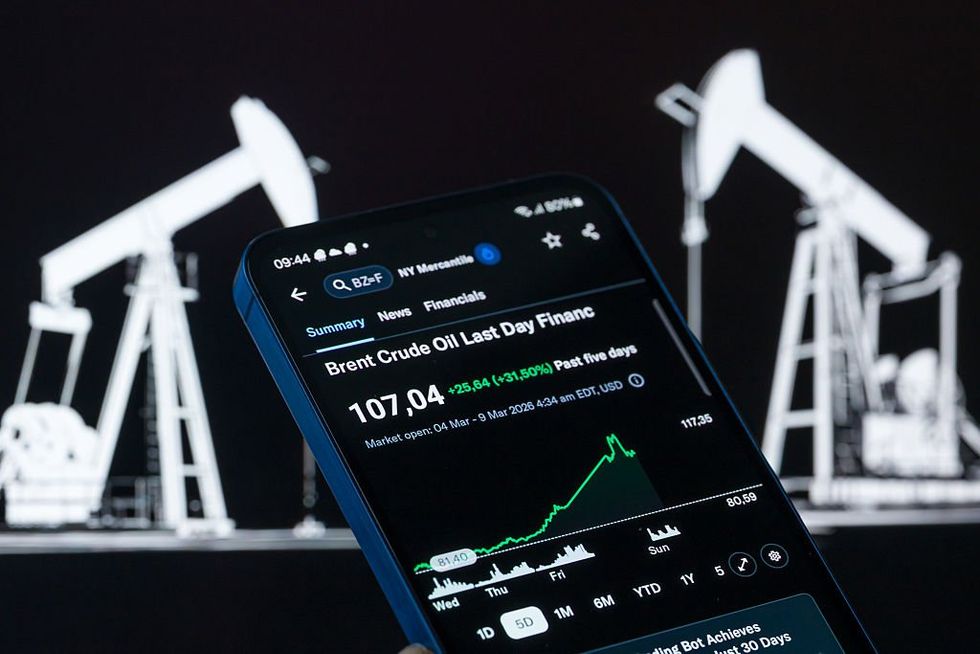
Economists warn that energy shocks can take time to feed through into broader inflation
|GETTY
Svein Tore Holsether, chief executive of fertiliser producer Yara, has previously described increasing production costs as “a very big burden on the shoulders of the farmers.”
Following Russia’s invasion of Ukraine, UK inflation peaked at 11.1 per cent in October 2022—months after global energy prices first surged.
Inflation stood at three per cent in January, still above the eurozone’s 1.7 per cent.
Market expectations for Bank of England interest rate cuts have also shifted amid the uncertainty, with investors now assigning roughly even odds to a quarter‑point reduction this year.
More From GB News