







Parents earning more than £60,000 a year are being urged to check whether they owe money to HM Revenue and Customs (HMRC) under the High Income Child Benefit Charge.
HMRC issued the warning on X over the weekend, telling higher earners: "Earning over £60k? Check if you need to pay the High Income Child Benefit Charge."
The charge applies to households where at least one partner earns above £60,000 while claiming Child Benefit.
Those affected may need to repay some or all of the benefit received, depending on their income level.
This comes as fresh research showed middle earners have been hit hardest by the Iran conflict and energy and fuel prices rise.
TRENDING
Stories
Videos
Your Say
The system operates on a sliding scale between £60,000 and £80,000.
For every £200 earned above £60,000, one per cent of Child Benefit must be repaid.
For example, someone earning £67,600 would be required to repay 38 per cent of their benefit.
Once an individual’s income reaches £80,000, the full amount of Child Benefit must be repaid.

'Earning over £60k? Check now' HMRC warns parents over Child Benefit charge
|GETTY
The calculation is based on adjusted net income, which includes salary, savings interest and dividends.
This figure is calculated before personal allowances but after deductions such as pension contributions and Gift Aid.
Where both partners exceed the threshold, the higher earner is responsible for paying the charge.
HMRC has introduced a digital service aimed at simplifying the process for those not already registered for Self Assessment.
LATEST DEVELOPMENTS
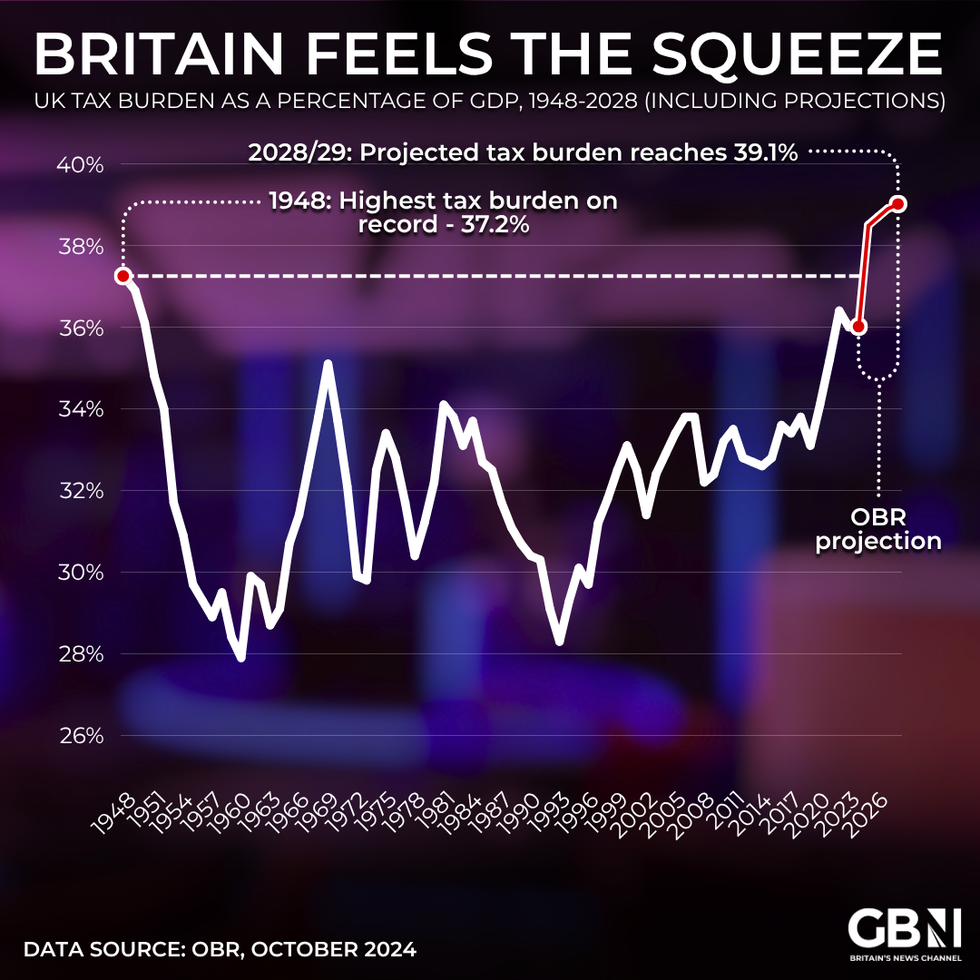 UK tax burden as a percentage of GDP | GB News
The tax authority said the process is "quick and easy with the HMRC app or online".
Employees can arrange for the charge to be collected through PAYE, allowing HMRC to adjust their tax code and deduct the amount directly from wages.
This removes the need to complete a full tax return in some cases.
However, the PAYE option must be set up before January 31 following the relevant tax year.
Those who are self-employed or already file tax returns will still need to complete Self Assessment.
Even if families choose to stop receiving Child Benefit payments to avoid the charge, they are advised to remain registered.
This ensures they continue to receive National Insurance credits, which count towards their state pension.

It comes at a time where middle earners are being hit the hardest by the Iran crisis
|GETTY
Registration also means children will automatically receive their National Insurance number without needing to apply at age 16.
Child Benefit currently pays £27.05 per week for the eldest or only child and £17.90 for each additional child.
For a family with two children, this amounts to £2,377.40 per year.
The benefit can be claimed until a child turns 16, or up to the age of 20 if they remain in approved education or training.
Our Standards: The GB News Editorial Charter