








HM Revenue and Customs (HMRC) has clarified a widespread misunderstanding surrounding state pension tax after many retirees were left confused by changes to their tax codes.
Many pensioners who rely solely on their state pension have historically paid no tax on their Department for Work and Pensions (DWP) income, leading some to mistakenly believe the payments are tax-free.
However, HMRC confirmed the state pension has always been taxable.
The confusion stems from the way tax is collected on state pension payments compared with other forms of income.
Unlike private pensions or salaries, the DWP does not deduct tax directly from state pension payments before they are paid.
Instead, HMRC adjusts a person's tax code to recover any tax owed through other sources of income, such as a workplace or private pension.
HMRC’s customer support account on X explained the process while responding to a pensioner querying a change to their tax code.
The tax authority said: "The State Pension is taxable, but the DWP doesn't take tax at source, so we change your tax code to give enough of your tax free allowance to match the State Pension, leaving whatever's left for a private pension."

HMRC clarifies state pension tax rules catching retirees off guard
|GETTY
Under the current system, part of the £12,570 personal allowance is allocated against state pension income.
Any remaining allowance is then applied to other taxable income, including private pensions.
The issue has gained renewed attention following concerns about future increases to the state pension under the triple lock system.
Chancellor Rachel Reeves previously confirmed pensioners whose only income comes from the state pension would receive an exemption from paying income tax from April 2027.
LATEST DEVELOPMENTS
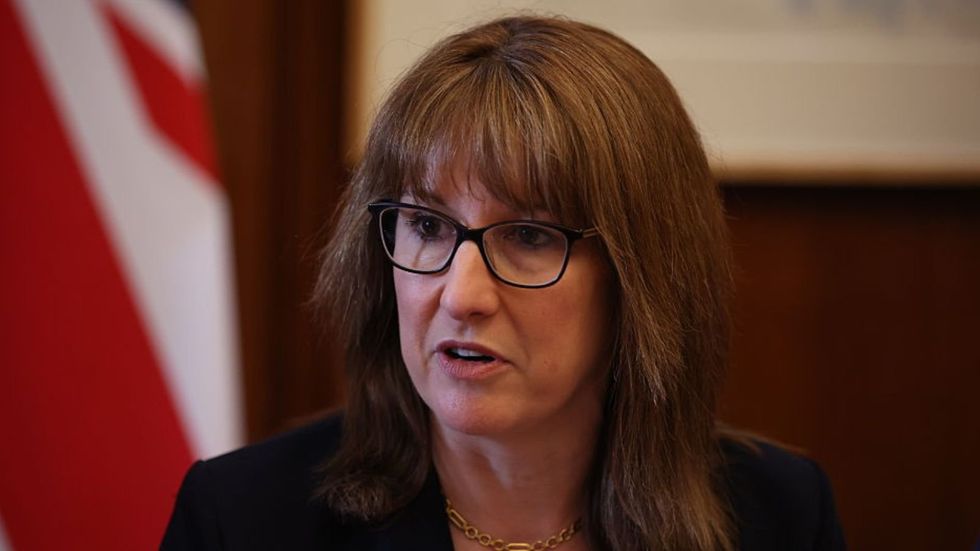
Labour has not yet confirmed how the exemption will operate in practice
| GETTYThe move is intended to prevent pensioners from facing tax bills solely because annual state pension increases exceed the frozen personal allowance threshold.
Under the triple lock, state pension payments rise each year by whichever is highest among earnings growth, inflation or 2.5 per cent.
With earnings growth recently recorded at 4.8 per cent, the full new state pension is expected to rise to around £12,548, close to the £12,570 personal allowance threshold.
Older pensioners receiving the basic state pension alongside additional pension payments are not expected to qualify for the exemption.
Rachel Vahey, head of public policy at AJ Bell, said: "That measure is designed to avoid the unwelcome optics of Government giving pensioners a benefit on one day, only to then ask for some of it back the next."
Ms Vahey warned the long-term sustainability of the policy could become more difficult if state pension payments continue to rise faster than the frozen personal allowance through to 2031.
She also raised concerns about differences in treatment between pensioners whose only income is the state pension and those with additional private retirement savings.
Ms Vahey said: "It means two pensioners on identical incomes could find only the one with private savings has to pay any tax."