










UK Government debt sales are projected to decline for the first time since 2023, with major investment banks forecasting gilt issuance will fall to £247billion in the fiscal year ending March 2027.
The estimate represents a substantial reduction from the £304billion being raised during the current financial year, marking a potential turning point in the trajectory of public borrowing.
A gilt is a bond issued by the UK Government to borrow money from investors in exchange for regular interest payments and a full refund at a later date.
If yields drop, it means the Government can borrow money more cheaply, reducing the interest costs on its debt and freeing up more public funds for spending or tax cuts.
The anticipated drop comes ahead of next week's spring statement on public finances and signals that Chancellor Rachel Reeves' efforts to rein in borrowing may be beginning to take effect.
Seven leading banks contributed to the average estimate, reflecting increased confidence in the gilt market's supply and demand balance following months of volatility.
TRENDING
Stories
Videos
Your Say

Investment banks forecast first annual decline in UK debt issuance since 2023
|GETTY
Britain’s projected reduction contrasts with other major economies including Germany and Japan, both of which are expanding their debt issuance programmes as fiscal pressures mount.
The expected fall in gilt sales is being driven by two primary factors, namely a smaller refinancing requirement for maturing debt in 2026/27 and lower overall borrowing needs following widespread tax increases announced in the autumn.
Ms Reeves’ November Budget, which initially unsettled financial markets due to its spending commitments, ultimately resulted in the Treasury doubling its fiscal buffer against borrowing limits to £22billion.
Her position has been further reinforced by January’s record £30billion surplus in the public finances, which exceeded expectations and strengthened the Government’s short-term fiscal outlook.
Between April and January, Government borrowing totalled £112.1billion, which was £14.6billion lower than during the same period a year earlier.
The figure also came in below the Office for Budget Responsibility (OBR)’s projection of £120.4billion for that timeframe, providing additional headroom against fiscal targets.
Ruth Gregory, UK economist at Capital Economics, said: "Lower gilt yields since the Budget are likely to add around £1.5billion to the Chancellor’s headroom compared to the November forecast."
Borrowing costs have retreated from their recent peak, with gilt yields falling from a 16-year high above 4.9 per cent last year to just over 4.3 per cent.
LATEST DEVELOPMENTS
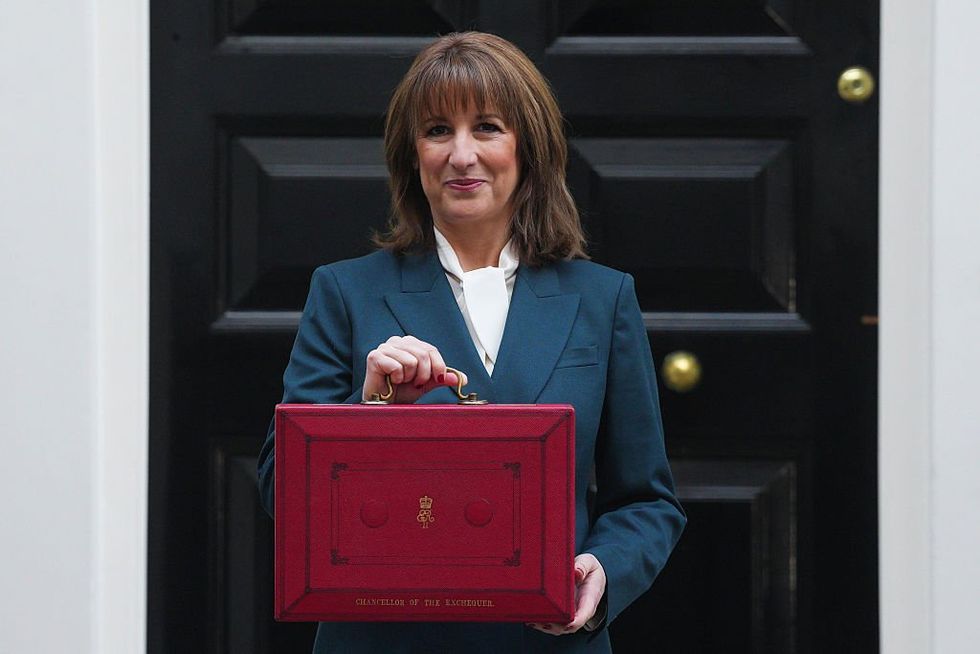
Borrowing costs have retreated from their recent peak
|GETTY
The tax-raising measures contained in Ms Reeves’ Budget contributed to a rally in Government bonds, easing earlier concerns about excessive supply in the market.
One senior rates trader said: "It gives them just a lot more breathing room to do what they need to do."
Market anxiety over the scale of gilt issuance has also eased, with the spread between gilt prices and equivalent interest rate swaps returning to levels not seen since before Labour’s first Budget in October 2024.
Mike Riddell, fund manager at Fidelity International, said: "The UK has learnt, through bitter experience, that deficit-fuelled growth won't be tolerated by markets. Other countries haven't been forced to change tack yet."
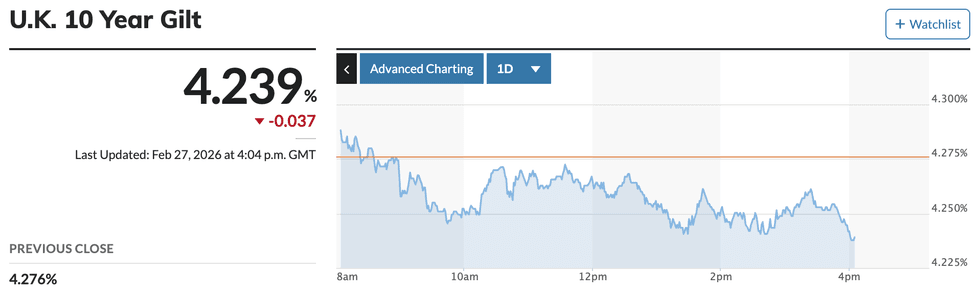
The UK 10 year gilt yields dropped on Friday
|MarketWatch
Despite the improvement in borrowing forecasts, analysts have warned political developments could affect investor sentiment in the months ahead.
Rob Wood, chief UK economist at Pantheon Macroeconomics, said: "I think the market underestimates the pressure on the Government to spend more."
"The Government is highly unpopular and is unlikely to use any improvement in the public finances to lower debt or put debt on a lower trajectory than otherwise."
The Treasury has also reduced the proportion of long-dated debt issuance in its funding plans, a move that has helped contain longer-term borrowing costs amid shifting market conditions.
Investors will now focus on whether ministers maintain their current fiscal stance in the spring statement, as the balance between spending pressures and market confidence remains closely watched.
Our Standards: The GB News Editorial Charter
More From GB News