










Analysts are warning that borrowing costs in the UK are on the rise in response to the recent hike in energy prices, reaching "levels not seen since the financial crisis".
Chancellor Rachel Reeves will have to contend with the ramifications of the US-Iran war, with yields on 10-year gilts climbing beyond the five per cent threshold.
This dramatic hike comes amid the ongoing blockade in the Strait of Hormuz, the vital shipping route which transports 20 per cent of the world's crude oil.
Brent crude continues to trade at approximately $111 per barrel, marking a three-week peak that keeps energy crisis fears at the forefront of investor concerns.
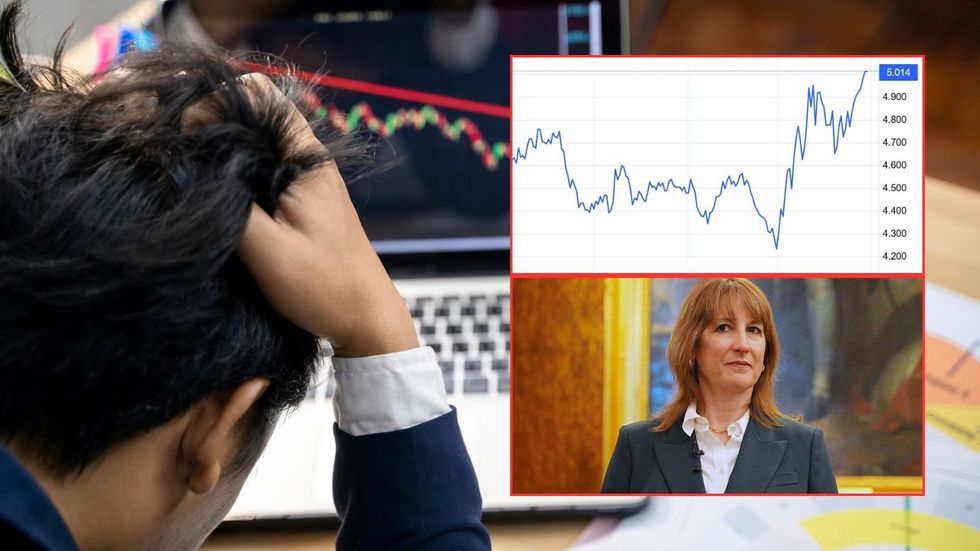
Borrowing costs SKYROCKET to 'levels not seen since financial crisis'
|GETTY / TRADING ECONOMICS
The consequences of this geopolitical standoff are reverberating throughout global markets, with elevated borrowing costs among the most significant impacts.
Today's surge in gilt yields comes before the Bank of England's base rate announcement, with the Monetary Policy Committee (MPC) widely expected to keep interest rates at 3.75 per cent.
Once trading opened this morning, the Ftse 100 retreated back into the red, as investors price in higher interest rates and energy prices for the foreseeable future.
Susannah Streeter, chief investment strategist at Wealth Club, said: "With the standoff over the Strait of Hormuz continuing and safe passage seemingly only guaranteed for luxury mega-yachts, rather than shipments relied on by many millions, it’s keeping worries about an energy crunch front and centre.
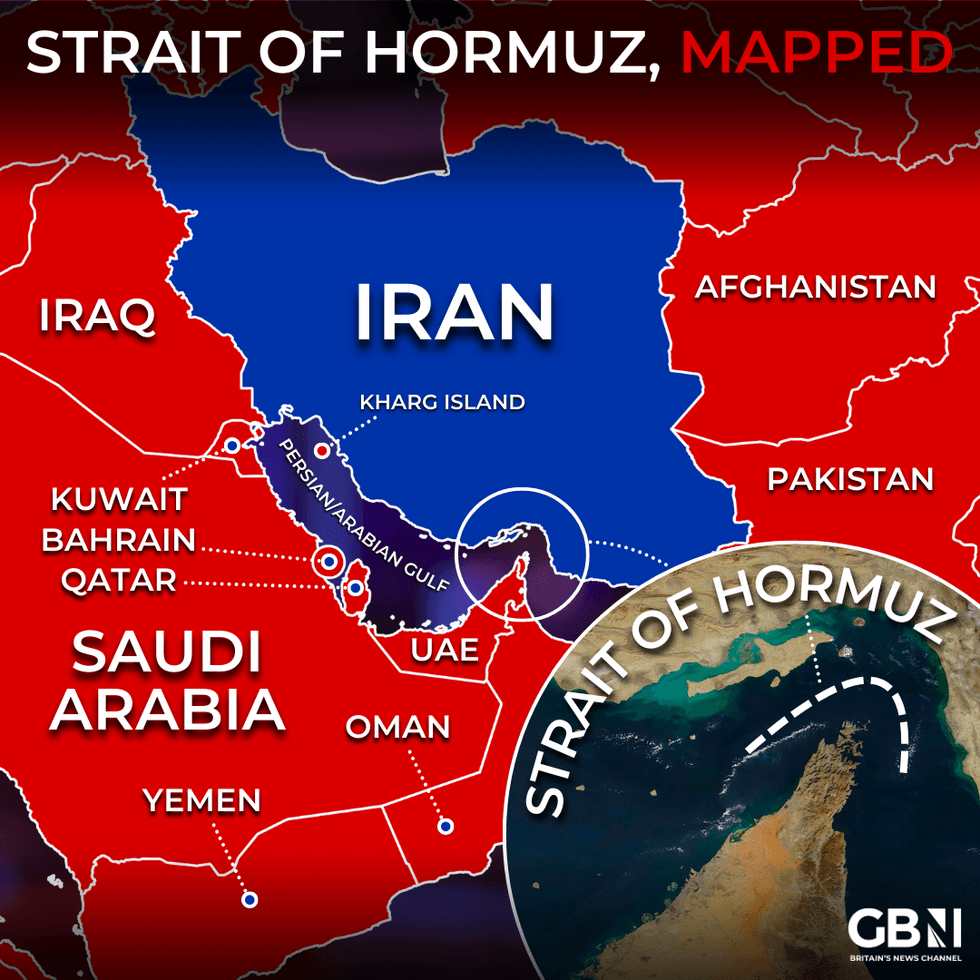 MAPPED: Where is the Strait of Hormuz? | GB NEWS
LATEST DEVELOPMENTS
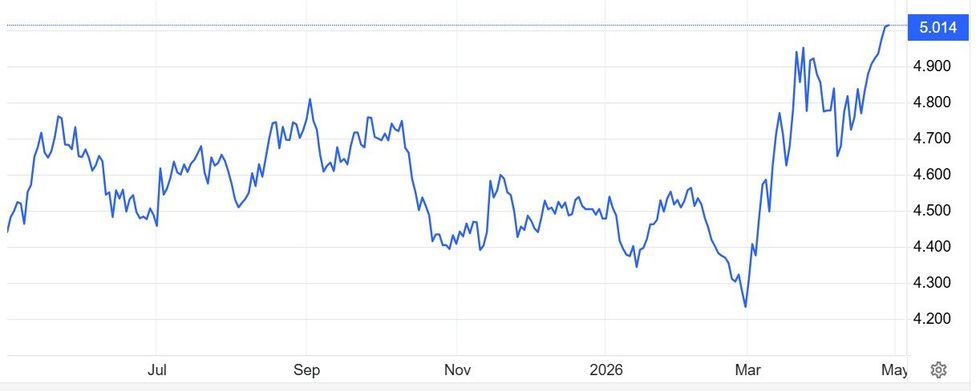
The 10-year gilt yield has jumped above five per cent
|TRADING ECONOMICS
"There are plenty of repercussions rippling through the global economy, not least higher borrowing costs. This looks set to put the brakes on advances for the internationally focused Ftse 100 as concerns collide about the impact on global fortunes and the UK economy."
Investors are now betting on up to three interest rate hikes from the UK central bank this year, after previously preparing for cuts to borrowing costs in 2026.
Ms Streeter added: "Worry about the expected ramp-up in rates is showing up in the bond markets. Gilt yields have risen above five per cent, levels not seen since the financial crisis, which means it’s becoming more expensive to finance UK government debt.
"At a time when calls are rising for extra help to support cash-strapped households and businesses, rising borrowing costs mean the Treasury is seeing any wiggle room for additional support rapidly evaporate, with more revenue set to be absorbed by debt interest payments.
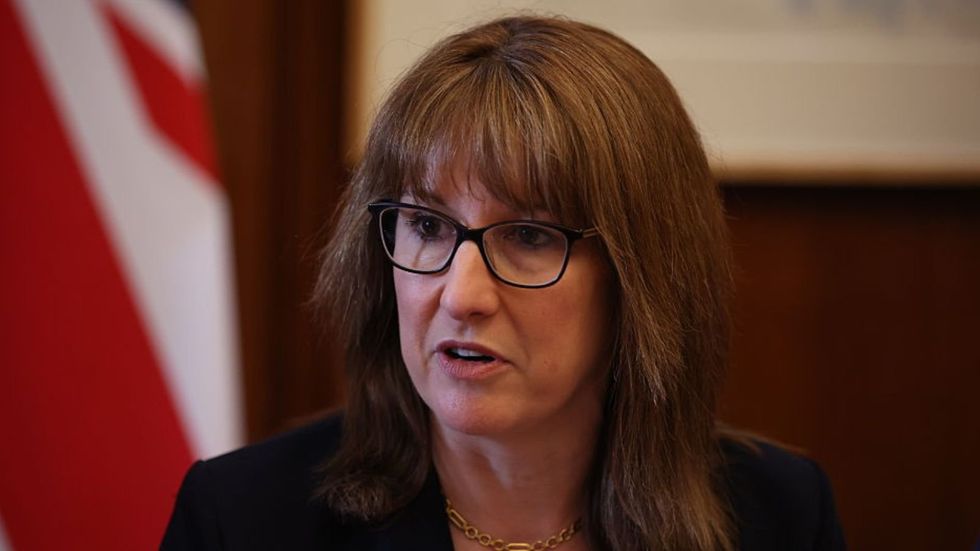 Rachel Reeves under pressure | GETTY
"This means the Government may be forced to make increasingly difficult choices, bring in higher taxes or tighten public spending elsewhere."
Despite the financial crisis, the Chancellor has doubled down on not providing universal support for households amid the fallout from the Iran war.
While attending a meeting of the Middle East Response Committee (Merc) this week, Ms Reeves asserted that any financial assistance must be "targeted".
Following the meeting, which was chaired by Prime Minister Keir Starmer, a Downing Street spokesperson said: "The Chancellor then updated the committee on the emerging fiscal picture we are seeing.
"She said that, before the conflict began, the UK economy was heading in the right direction. That would have seen inflation dropping to 2%, growth exceeding expectations, and further interest rate cuts forecast."