










Europe may have just six weeks of jet fuel remaining as supply disruption continues to grip the market, the International Energy Agency has warned.
Fatih Birol, executive director of the IEA, said the conflict had caused “the largest energy crisis we have ever faced”.
Mr Birol delivered the assessment to reporters in Paris, cautioning flight cancellations could soon materialise if supplies remain blocked.
According to the agency's latest monthly oil market report, European stocks would hit a critical threshold in June unless the continent sources at least half of its Middle Eastern imports from alternative suppliers.
TRENDING
Stories
Videos
Your Say
The IEA, which provides energy guidance to 32 member nations, said: "Physical shortages may emerge at select airports, resulting in flight cancellations, and demand destruction" if more than 50 per cent of Gulf supplies are not replaced.
If traffic through the Strait of Hormuz remains restricted then there could be flight cancellations “soon”, Mr Birol said.
He said Asian counties such as Japan, India and China that rely on energy from the Middle East are on “the front line”, but pressure will then “come to Europe and the Americas”.
Tehran took the action in response to US and Israeli military strikes, triggering disruption across global energy markets.
This closure has sent aviation fuel prices sharply higher, with the benchmark European jet fuel price reaching a record $1,838 per tonne at the beginning of April — more than double the $831 recorded before hostilities began.
Europe jet fuel warning: IEA says six weeks supply left as prices surge and airlines face disruption
|GETTY
The IEA said Europe has historically depended on the Middle East for roughly three-quarters of its jet fuel imports, leaving the region exposed to disruption.
Gulf region exports represent the largest source of aviation fuel for global markets, amplifying the impact of supply constraints.
The agency said: "The crisis has thrown a proverbial wrench into the inner workings of the aviation fuel markets."
EasyJet revealed the scale of industry pressure, disclosing £25million in extra fuel expenses during March alone as a direct consequence of the Middle East conflict.
LATEST DEVELOPMENTS
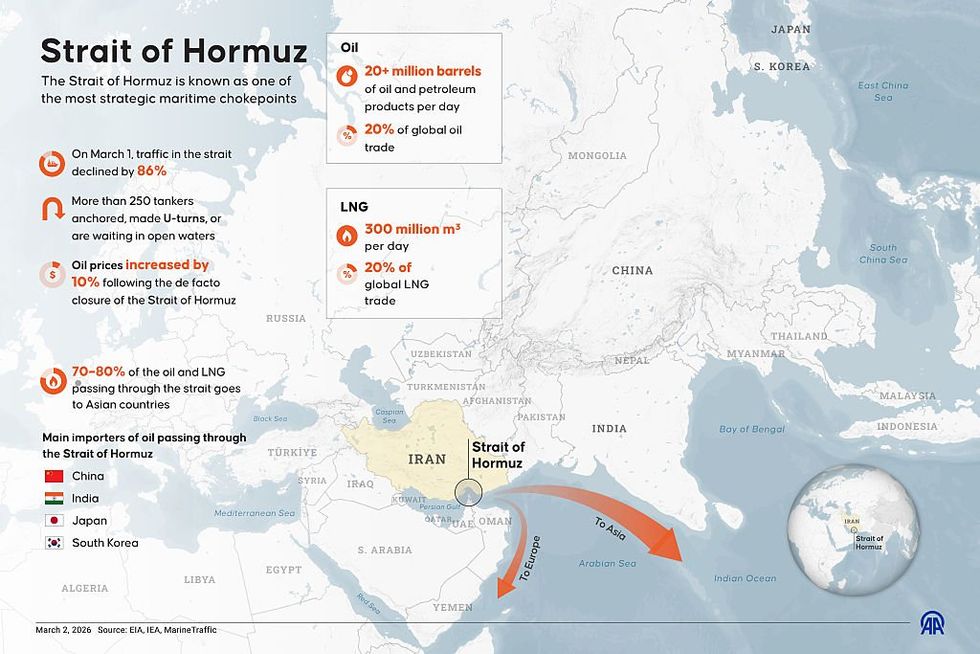 The Strait of Hormuz is one of the most important shipping routes in the world, especially for oil exports | GETTY
The budget carrier had protected more than three-quarters of its fuel requirements through fixed-price contracts before the crisis erupted.
Despite this hedging strategy, the airline issued a profit warning.
EasyJet said it expects to report a headline loss before tax of between £540million and £560million for the six months to the end of March.
The Luton-based airline's shares fell by as much as nine per cent following the update.
The war has introduced “near-term uncertainty around fuel costs and customer demand”, EasyJet reported.
Bookings are down two percentage points for the three months to the end of both June and September compared with a year ago.
The European Commission said earlier this week that supply difficulties could emerge "in the near future", although it maintained there is currently no evidence of shortages across the bloc.

Ryanair chief Michael O'Leary previously warned ticket prices may need to rise if disruption continues
|GETTY
A spokesperson said crude oil deliveries to EU refineries remain stable without requiring emergency stock releases.
Brussels said energy coordination groups are convening weekly, with the Commission president set to announce further measures next week.
American jet fuel exports have increased in recent weeks, although the IEA warned these shipments would cover only slightly more than half of lost Middle Eastern supplies even if entirely directed to Europe.
Several long-haul carriers have already introduced fuel surcharges as the industry responds to rising costs.
A Government spokesperson said: “We continue to engage with British airlines to support their operations against the backdrop of war in the Middle East, and to limit the impact on passengers.
“Most airlines purchase their aviation fuel in advance to offset price fluctuations, however we are aware of the impact to businesses, and are working with international allies to see a reopening of the Strait as soon as possible.”