









The Taliban have formally recognised child marriage under their Islamic system and have set guidelines for "virgin girls".
Under new laws, the Afghan political and militant organisation has legalised child marriage under a new 31-article family law regulation called "Principles of Separation Between Spouses".
The legislation, published by the Islamic Emirate of Afghanistan Ministry of Justice, sets out rules regarding the dissolution of marriages under various religious and legal conditions and was published in the Taliban's official gazette after being approved by their leader, Hibatullah Akhundzada.
On child marriage, the new regulation states if a child's (boy or girl) marriage is arranged by any other relatives other than their father or grandfather, it is legally valid – provided the spouse is compatible and the dowry is appropriate.
Another term states marriages involving a "non-compatible" spouse or an excessively unfair dowry would invalidate the union.
The legislation also allows the male figures of the family (predominantly fathers and grandfathers) to have authority over child marriages, but can be annulled if the child's guardians are considered unfit, abusive or morally corrupt.
Political commentator Fahima Mahomed told GB News: "Child marriage is not marriage in any meaningful sense. A child cannot properly consent, and treating silence as consent is dangerous because it removes a girl’s voice completely. It turns vulnerability into something legally acceptable.
"As a Muslim, I would also strongly reject the idea that this reflects Islam as a whole. The Qur’an itself speaks against compulsion and mistreatment of women, so the Taliban’s position should not be presented as “Islamic law” in a broad sense.
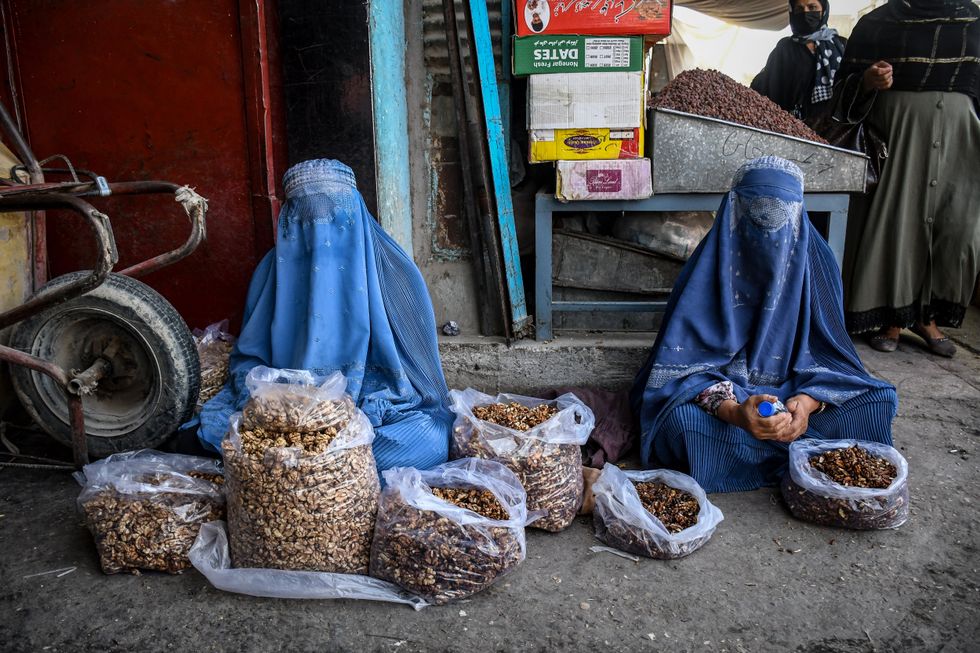
Women and girls in Afghanistan have a similar legal footing as slaves
|GETTY
"It is their political and extremist interpretation, enforced through power and fear."
Another section concerns "khiyar al-bulugh” or the “option upon puberty", a Islamic concept allowing a child who is married at a young age to annul the matrimony after they reach puberty.
However, they can only do so through a court order.
The seventh article of the legislation details the silence of a virgin girl after she has reached puberty can be interpreted as her consenting to the marriage, whilst the silence of a boy or a previously married woman cannot be automatically understood as them consenting to the union.
LATEST DEVELOPMENTS
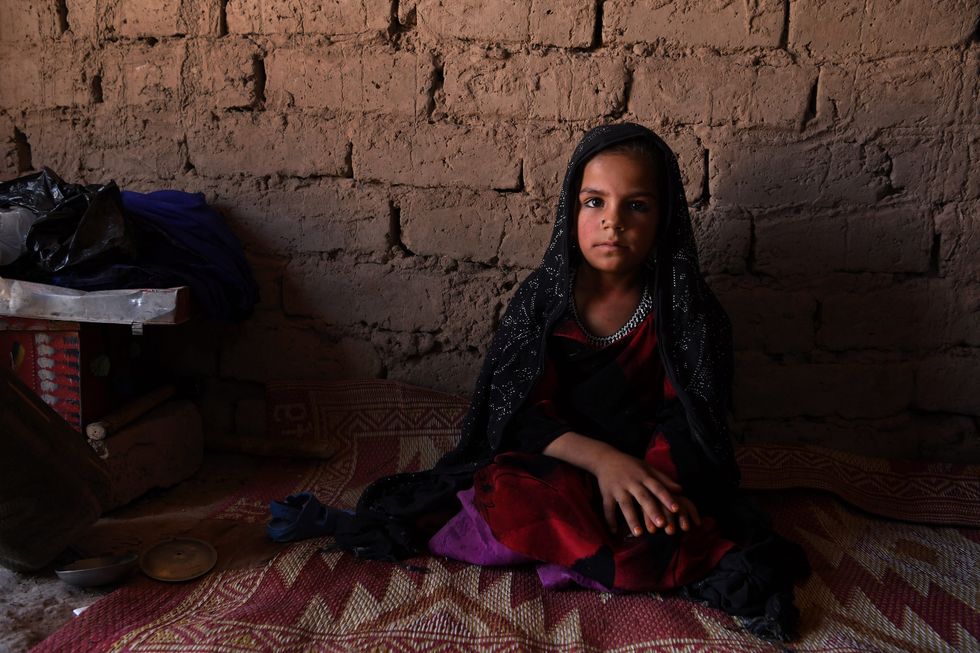
A six-year-old child bride in 2019, from Herat province in Afghanistan, who was sold for the equivalent of $61 to pay her family's debts
|GETTY
Almost a third of Afghan girls are married before they are 18-years-old, according to the charity Girls Not Brides.
Of this, almost one in 10 are married before they are 15.
Regional statistics tell a starker story, with child marriage being most prevalent in Ghor (50.1 per cent), Farah (49.6 per cent), Nimroz (48.6 per cent), Badghis (48.2 per cent), Faryab (48.6 per cent) and Herat (40 per cent).
The legislation also empowers Taliban judges to intervene in marriage disputes across a wide-range of religious issues, such as apostasy, prolonged absence of a husband, adultery and an Islamic concept known as "zihar", in which a husband compares his wife to a female relative in whom a marriage would be forbidden.
Under the "zihar" provisions, judges can compel husbands to fulfil religious penalties or grant divorce and may use both imprisonment and physical punishment to enforce compliance.
Marriages can also be annulled on the grounds of breastfeeding relations, an Islamic legal concept under which children nursed by the same woman are considered religious siblings and therefore prohibited from marrying one another.
The regulation also sets out procedures for cases involving husbands who have been missing for extended periods, allowing court intervention under certain conditions.
Ms Mahomed continued to express "many Muslims" would see these rules as "distortion of the faith, not a reflection of it".
She said: "Islam is not a monolithic faith with one single legal or cultural expression, and many Muslims would see this as a distortion of the faith, not a reflection of it."
On violence against women, the Taliban's new rules say husbands are permitted to beat their wives, provided it does not cause bodily harm.
A woman can only seek justice if she can prove severe injury before a judge, whilst she has to remain fully covered and accompanied by a male chaperone, likely to be her husband, who has abused her.
Ms Mahomed told the People's Channel: "That is not justice: that is a system designed to silence her."
The legislation is the latest move from the Islamic militant group, which returned to power in 2021 after Nato forces vacated the Middle Eastern country after almost 20 years of deployment.
Girls in Afghanistan are banned from being educated beyond the age of 12.
Women's ability to travel and work is heavily restricted, with a penal code introduced that places them on the same legal footing as slaves.
The new rules do not prohibit sexual or psychological violence against women.
If you are you know someone who has been affected by the issues discussed above, you can call the National Domestic Abuse Helpline on 0808 2000 for free.
Our Standards: The GB News Editorial Charter