






The Department for Work and Pensions (DWP) is being urged to maintain "accuracy, proportionality, and public trust" when its new anti-fraud surveillance powers come into effect.
Analysts note the Government department has entered a test-and-learn phase with its its ability to view peoples' bank accounts, prompting calls from industry experts to ensure the scheme is implemented carefully.
Stuart Morris, chief technology officer at SmartSearch, has urged the Labour Government to build the initiative around three core principles.
Mr Morris said: "The key focus of the 'test and learn' phase should be accuracy, proportionality, and public trust. The DWP needs to test how effectively eligibility verification systems identify genuine fraud without creating unnecessary false positives."
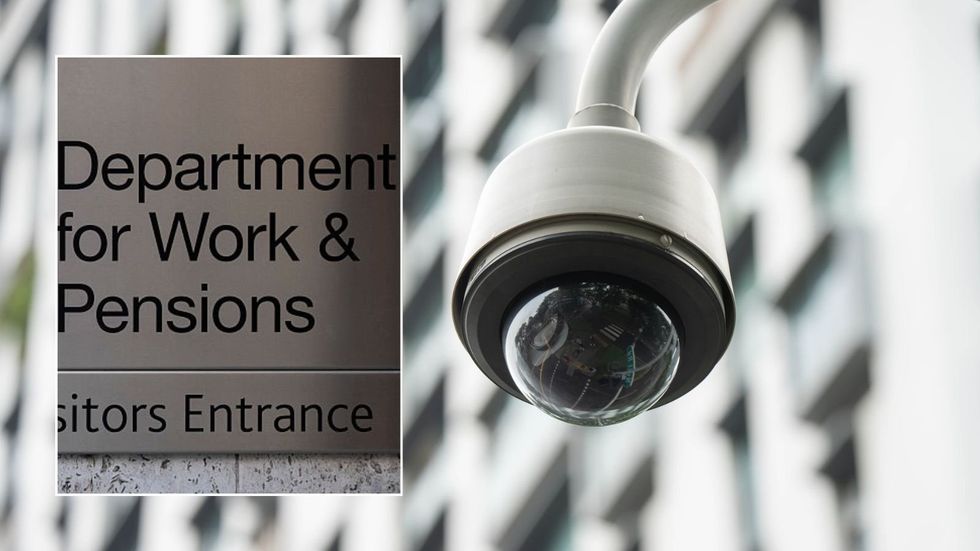
The DWP is being urged to exercise caution with its new anti-fraud powers
|GETTY
The technology executive emphasised that verification systems must successfully distinguish between fraudulent claims and legitimate ones.
Mr Morris highlighted the growing sophistication of fraudulent activity, warning that DWP systems must be capable of catching threats that conventional manual processes would miss, such as synthetic identities and fabricated bank statements created using artificial intelligence.
Research conducted by SmartSearch revealed that more than half of organisation, 54 per cent, continue to rely on manual identity verification procedures.
The same study found that nearly a quarter of respondents, at 24 per cent, identified AI-generated fraud and deepfake documentation as their most significant emerging concern.
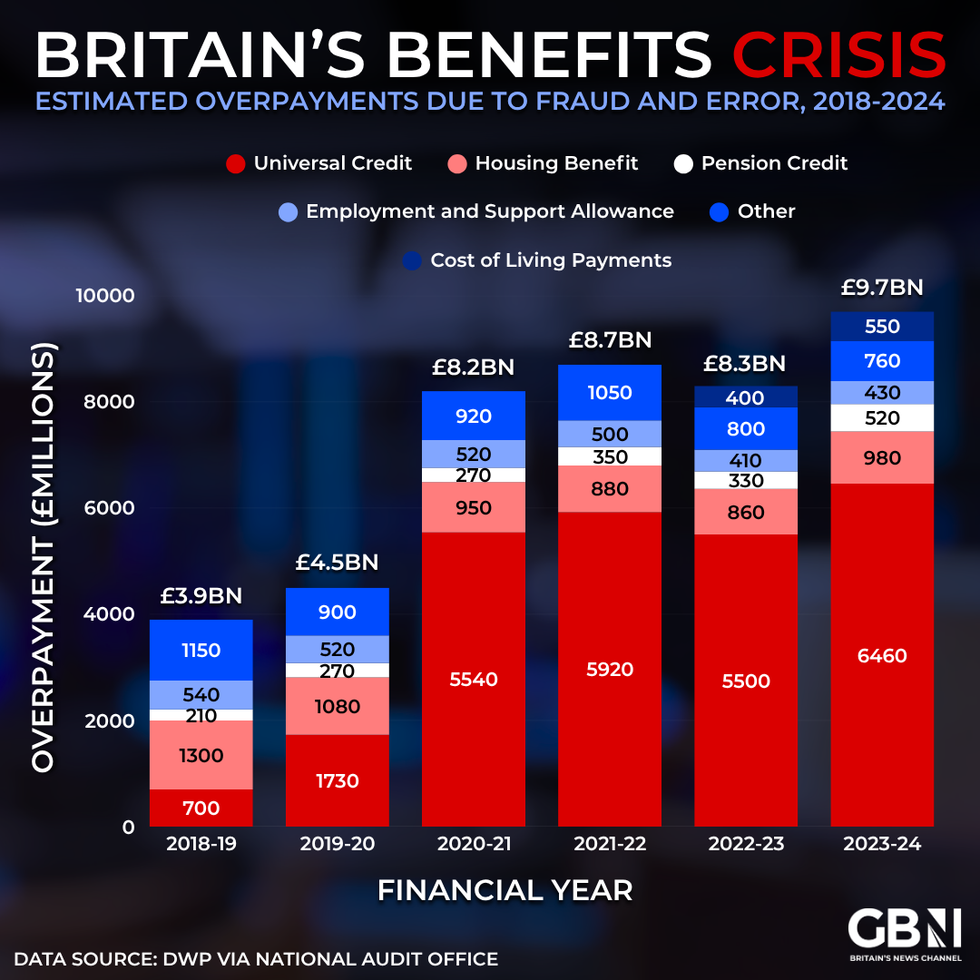 Billions of pounds in benefits are estimated to be overpaid due to fraud or error each year | GB NEWS/DWP
LATEST DEVELOPMENTS
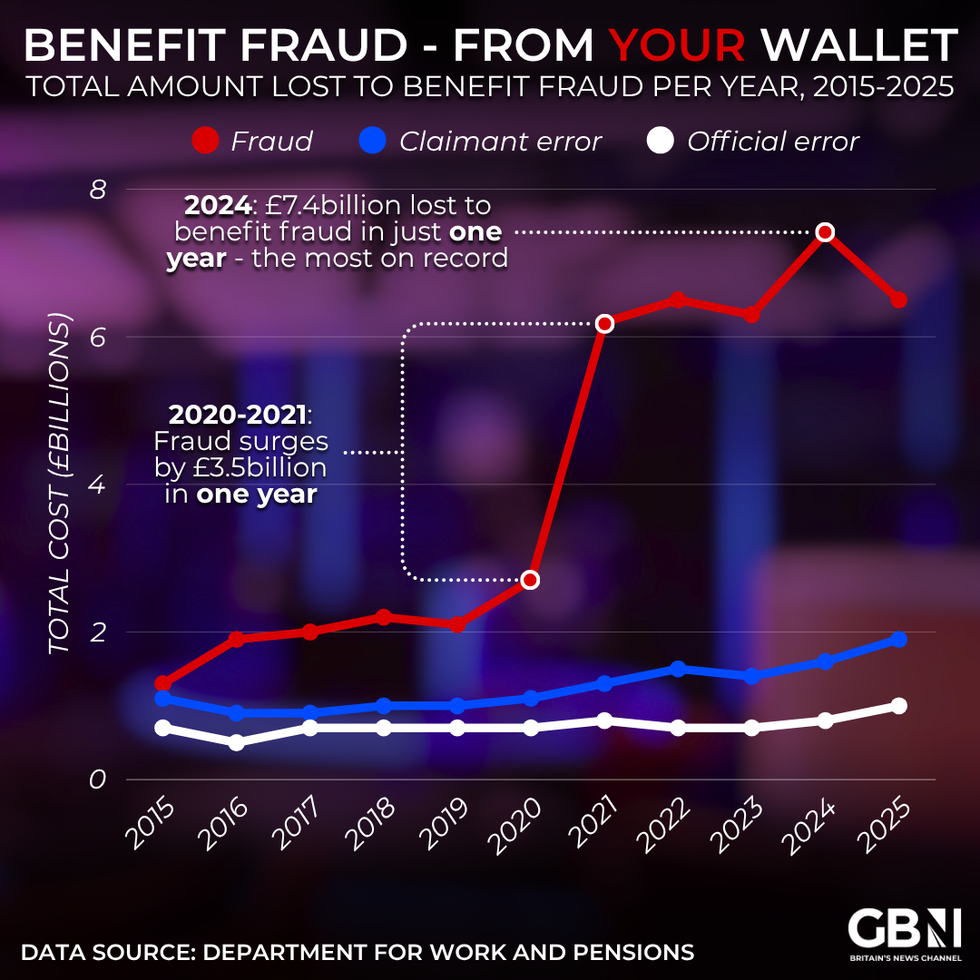 Benefit fraud - from your wallet: Total amount lost to benefit fraud per year | GB NEWS
Mr Morris also raised concerns about the potential impact on genuine claimants who have done nothing wrong.
He said: "There is a risk that some claimants could feel anxious about the introduction of these powers, even when they have provided accurate information, because any system involving increased monitoring or automated checks can create concern if people don't fully understand how decisions are made."
To address these worries and reduce the likelihood of erroneous decisions, Mr Morris stressed that several safeguards would be essential.
These include transparent processes, effective communication with claimants, independent oversight mechanisms, and rapid appeals procedures for those who believe they have been incorrectly flagged.
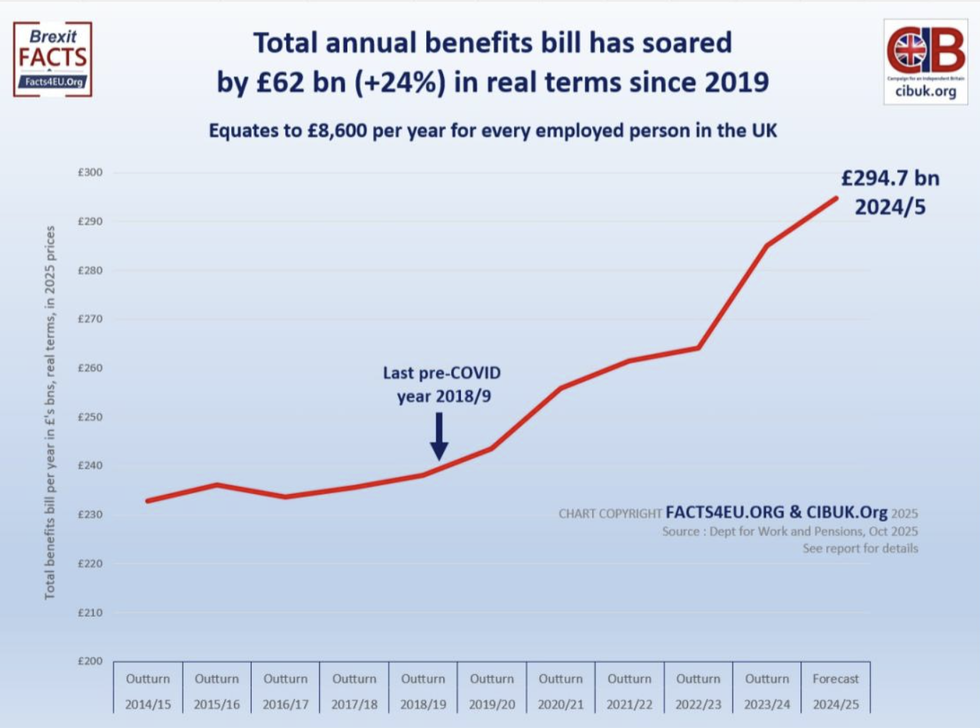 Since Covid, the benefits bill has soared | FACTS4EU
Mr Morris argued that enhanced verification capabilities, rather than simply expanding powers, would prove most effective in tackling benefits fraud over the long term.
He advocated for improved data sharing between the DWP, HM Revenue and Customs (HMRC) and other government departments to spot discrepancies more rapidly, alongside stronger digital identity systems to prevent criminals exploiting false or stolen credentials.
"Advanced fraud detection tools, including AI-driven risk analysis and multi-bureau verification, could also improve accuracy while reducing false positives," the tech expert said.
SmartSearch's Compliance Report indicated that 68 per cent of compliance professionals spend half their working hours on tasks suitable for automation, suggesting the DWP could redirect staff towards complex cases requiring human assessment.