








Local authorities in England spent almost £2billion transporting pupils with special educational needs and disabilities (SEND) to school in 2024/25, according to a new investigation that exposes the growing financial strain on council budgets.
The report, produced by Green Shoots Market Intelligence and commissioned by Minerva Virtual Academy, shows SEND home‑to‑school transport spending has risen by 204 per cent since 2015/16.
That increase represents an additional £1.3billion burden on local authorities over nine years.
Over the same period, the number of SEND pupils grew by just 44 per cent, meaning transport costs have risen 4.5 times faster than the SEND population itself.
SEND transport now accounts for 4.9 per cent of all local authority education spending, up from two per cent a decade ago, making it the fifth‑largest area of education expenditure.
For families like that of Shelley Clark, a 41‑year‑old mother now living in Dorset, the financial data reflects a deeply personal reality.
While living in South Yorkshire, her son Alfie attended a specialist SEND school he enjoyed.
During COVID lockdowns, he continued attending in person because Ms Clark’s finance job classed her as a key worker.
TRENDING
Stories
Videos
Your Say
Transport support was essential despite the school being within walking distance. Alfie’s separation anxiety meant familiar drivers and passenger assistants became part of his daily routine from the age of five.
“At its best, the transport team was incredible,” Ms Clark said. Staff adapted to Alfie’s needs, sometimes letting him sit at the front as a “co‑pilot” and spending up to an hour helping him board calmly.
That stability collapsed in July 2022 after an incident on school grounds. Another child on the minibus experienced a prolonged crisis, screaming and kicking for 35 minutes while refusing to wear a seatbelt. Alfie, seated at the front, was unable to remove himself.
“He should have been taken off straight away. Instead, he just had to sit there and absorb it,” Ms Clark said. Alfie returned home exhausted and distressed. He never went back to school.

After a distressing experience Alfie never returned to school
|GETTY/MVA
Attempts to reintroduce transport failed. Professionals later identified severe autistic burnout. Alfie became unable to leave the house for months and developed a fear of vehicles. “School wasn’t safe anymore. That’s what he kept telling me,” Ms Clark said.
The incident triggered ongoing school‑related anxiety, emotionally based avoidance and symptoms consistent with post‑traumatic stress.
The impact spread across the family. Ms Clark had to leave her in‑person job because she could not leave Alfie alone. Her younger daughter’s activities also stopped.
“Everything revolved around keeping him safe. The knock‑on effect was huge,” she said.
LATEST DEVELOPMENTS
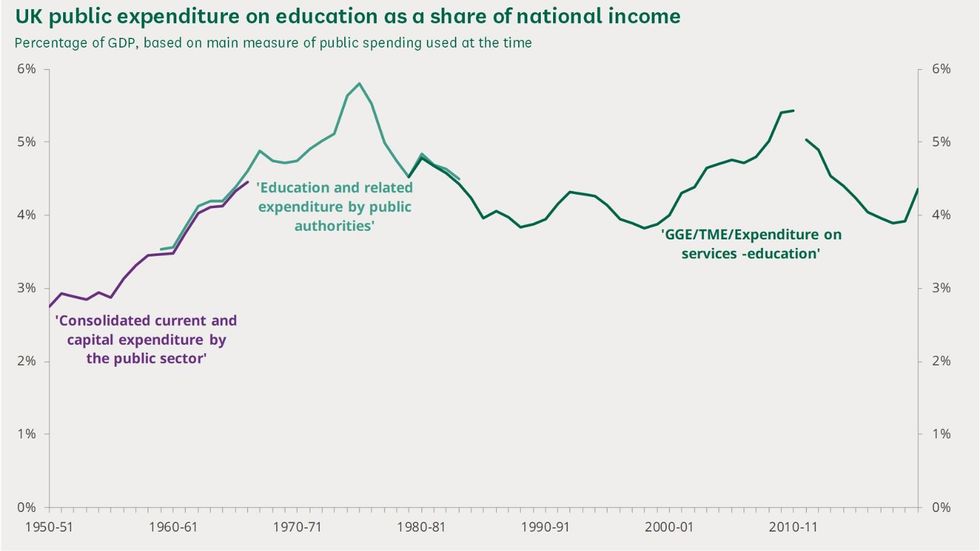
Hugh Viney, CEO of Minerva Virtual Academy, wants to help the system through his own innovative school
|GOV.UK
Alfie received no education for 18 months. Online learning was initially unsuitable, but returning to a physical school was impossible.
After prolonged disputes, authorities eventually agreed to off‑site education with a dedicated teacher and teaching assistant — a proposal previously rejected on cost grounds.
By then, Ms Clark had relocated to Dorset to be closer to family support.
The report also highlights sharp regional disparities. Kent County Council recorded the highest SEND transport spend at more than £74million in 2024/25, followed by Hampshire (£60.7million), Surrey (£59.6million), Birmingham (£51million) and Norfolk (£49.1million).
Kent’s costs rose by more than £40 million in five years — the largest increase in England.
County and rural councils were under the greatest strain. Since 2019/20, Calderdale’s SEND transport costs rose by 557 per cent, Sheffield’s by 464 per cent, Herefordshire’s by 391 per cent and North Somerset’s by 301 per cent.
In Kent, the number of transport providers fell from 412 to 377 between 2022/23 and 2024/25, with payments to the council’s largest supplier reaching £3.7million.
In Norfolk, six of the ten most expensive contracts were awarded to Norse Transport, companies owned by the council.
Hugh Viney, founder and chief executive of Minerva Virtual Academy, told GB News that the figures reveal structural failings.
"We are trying to solve a 21st‑century crisis with a 19th‑century model,” he said. Transporting children further away, he argued, is often the only option when a school cannot meet a child’s needs.

Experts say the SEND system is failing
|GETTY
Mr Viney described the £2billion annual cost as “dead money” that could instead fund around 40,000 teaching roles. He said a “bricks‑and‑mortar bias” prevents wider adoption of alternative education models.
A full year at his online academy costs under £9,000, he said, and provides both education and wellbeing support. He added that SEND pupils at the academy outperform national averages by nearly 40 per cent.
He called for changes to accreditation rules, the creation of a state‑backed online school and earlier inclusion of online options in Education, Health and Care Plans.
“They often tell us they wish they had been signposted to us much sooner, before the financial and mental health burden on the entire family became too much,” he said.
For Ms Clark, the message is clear: “A bad transport journey can mean a child can’t access their education,” she said.
Bridget Phillipson MP, Secretary of State for Education, has been contacted for comment.
More From GB News