







Six councils in the UK have been granted permission by the government to increase council tax beyond the standard five per cent threshold without seeking approval from residents through a referendum.
These councils will have the power to make larger council tax hikes after Labour has reduced their share of government funding
Wandsworth, Westminster, Hammersmith and Fulham, the City of London, Kensington and Chelsea, and Windsor and Maidenhead will be exempt from rules that normally require council tax rises of five per cent or more to be approved by a local referendum.
The government said residents in these areas have had "historically very low bills".
The two-year exemption forms part of a wider shake-up of how councils in England are funded, with the aim of directing more money towards areas facing greater economic hardship.
Ministers said the changes would create a "fairer" system and give local leaders "the option of bringing their bills more in line with the rest of the country".
However, opposition parties claim Labour is unfairly penalising councils that have kept council tax lower.
The new funding system will be phased in over three years from 2026 and will direct more money to councils with higher levels of deprivation and a larger share of homes in lower council tax bands.
Labour says these areas were hit hardest when central government funding was cut during the austerity years of the 2010s, and argues that the current funding system, which has been in place since 2013, no longer reflects the true demand for local services.
After concerns were raised by inner London councils, the plans were revised in June to factor housing costs into how deprivation is measured.
 Taxpayers are struggling with the unsustainable burden of council tax | PA
Nevertheless, the Institute of Fiscal Studies noted that the six councils receiving enhanced tax-raising flexibility remain among those facing the steepest declines in government funding allocations.
The think tank observed that urban areas with higher deprivation levels would see substantially larger funding increases overall, with outer London boroughs expected to benefit most from the changes.
Government officials justified selecting these six councils by pointing to their "very low" council tax rates, with Band D households paying between £450 and £1,280 below the English average.
Historically, no local authority has successfully secured public backing in a referendum to exceed the five per cent cap, though councils in severe financial distress have increasingly received ministerial permission to bypass this requirement.
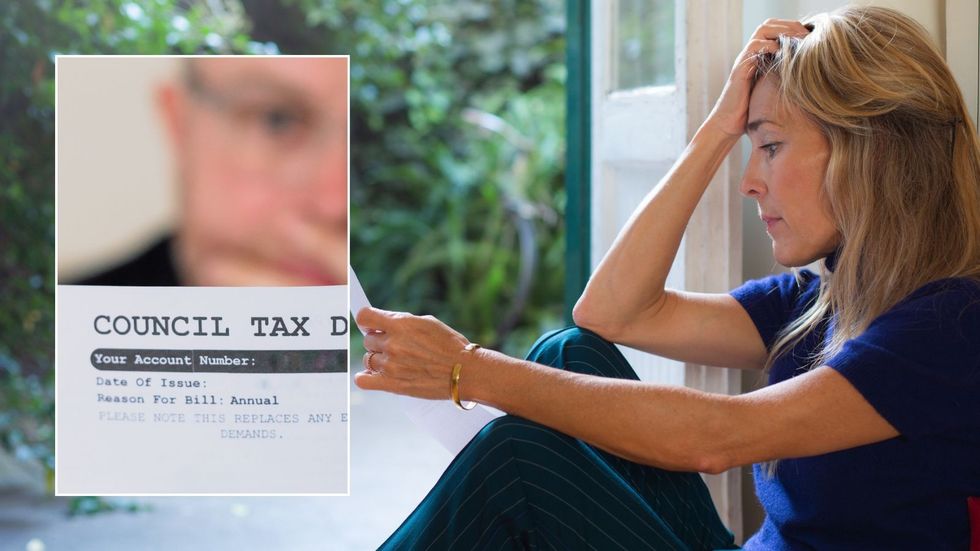
Some residents will see their bills rise over five per cent
| GETTYBirmingham residents have faced tax rises exceeding 17 per cent over the past two years as the council sought to address its effective bankruptcy, while Croydon imposed a 15 per cent increase in 2023.
Officials indicated that the six affected councils could address funding shortfalls through alternative means, such as raising parking charges or drawing on financial reserves.
Overall council funding across England is set to rise by £3.9billion next year, representing a 5.8 per cent increase, assuming all authorities implement the maximum permitted tax rise.
The Conservative shadow local government secretary Sir James Cleverly condemned the move as "a nakedly political power grab" that would "hike council tax across the board".

Reform UK expressed concern that the settlement would disadvantage rural communities
| GETTYHe accused ministers of "fiddling the funding model to punish councils that keep council tax low and moving funding to badly-run Labour councils that spend irresponsibly".
Reform UK expressed concern that the settlement would disadvantage rural communities, "funnelling money towards Labour-dominated London and city councils".
Elizabeth Campbell, the Conservative leader of Kensington and Chelsea council, described it as "a deeply disappointing response from a government using tax as the answer, again", warning that many deprived residents in her borough "will not be able to afford the exponential increases that government appears to be proposing".
Stephen Cowan, Labour leader of Hammersmith and Fulham, attributed his council's low rates to efficiency, pledging: "At a time when residents are struggling with the cost of living, we will not burden them with extraordinary new tax rises."
More From GB News