







Older savers and those approaching retirement could be among the hardest hit by reported ISA reforms being considered by the Treasury.
Experts have warned the changes may penalise people who hold larger cash balances to protect themselves from market volatility later in life.
Chancellor Rachel Reeves is reportedly planning to introduce a 22 per cent tax on interest earned from cash held within stocks and shares ISAs from April 2027.
The proposed levy would match the basic rate of tax on savings income due to apply in the 2027/28 tax year.
The reforms are also expected to reduce the annual cash ISA allowance for people under 65 from £20,000 to £12,000 from next April.
The overall ISA allowance would remain unchanged at £20,000, meaning savers could still invest the remaining £8,000 through a stocks and shares ISA.
People aged 65 and over would continue to benefit from the full £20,000 cash ISA allowance.
Tom Minnikin, partner at DJH Group's tax firm Forbes Dawson, questioned whether the proposals would treat all savers fairly.
"It seems unfair to tax individuals who hold cash temporarily, such as when switching between investments," Mr Minnikin told GB News.
He also warned that the measures could disproportionately affect people nearing retirement.
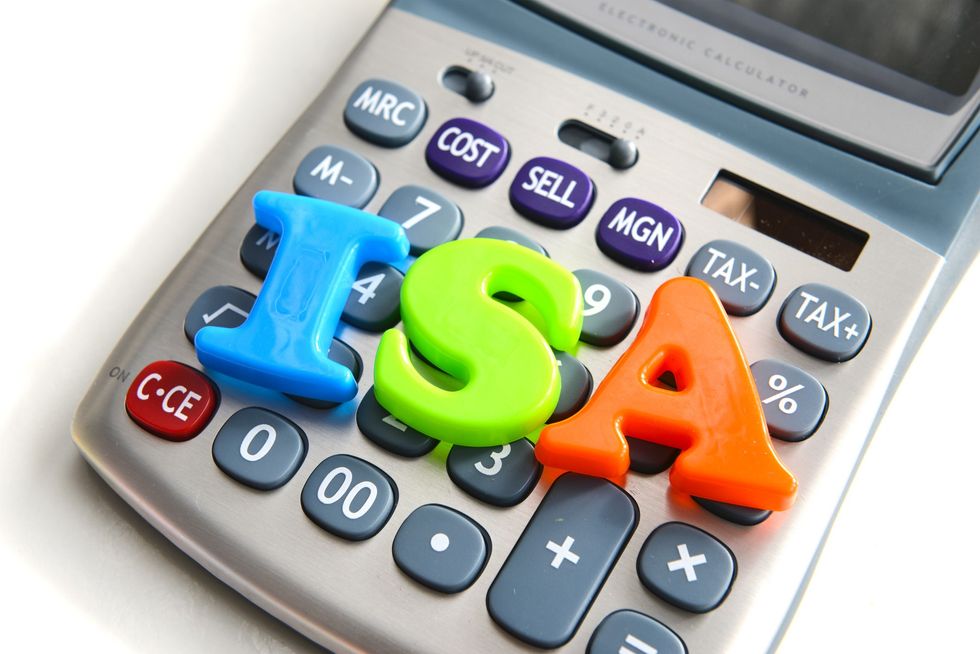 Customers can deposit up to their annual ISA limit of £20,000 | GETTY
"Similarly, older generations may be advised to hold more in cash as they approach retirement to smooth out investment fluctuations. They may feel hard done to by these changes," Mr Minnikin added.
While acknowledging that taxing cash in stocks and shares ISAs "arguably aligns the tax benefits of these types of account with the underlying policy intention, i.e. to promote investment," Mr Minnikin warned the new measure adds to an already complicated regime.
"The beauty of the original ISA regime was its simplicity. The introduction of further rules could put off some investors, particularly those without financial advisers," Mr Minnikin observed.
Rob Morgan, chief investment analyst at Charles Stanley Direct, expressed similar reservations about the direction of travel.
 The ISA allowance resets each year on April 6, when a new tax year begins | GETTY
"The suite of 'anti-circumvention' measures risks reversing much of the simplification of ISAs achieved in 2014, replacing it with a more restrictive and complex landscape," he warned.
Mr Morgan noted the proposed 22 per cent charge echoes the pre-2014 system, when cash interest within stocks and shares ISAs attracted a 20 per cent levy before George Osborne's reforms swept it away.
Experts have identified a potential flaw in the Chancellor's reforms that could allow savers to sidestep the new restrictions entirely.
By investing as little as one penny in qualifying equities while keeping the vast majority of their holdings in money market funds, investors could effectively replicate cash holdings without triggering the 22 per cent charge.
One industry source warned: "This would add even more complexity and would fail to help investors or the aim of these reforms."

Treasury has defended the proposed changes as a means of steering savers towards investments
| GETTYAndrew Prosser, Head of Investments at InvestEngine, said: "Reports that investors may be able to sidestep the proposed reforms with a token stock holding highlight just how difficult these rules could be to design and implement cleanly in practice."
HMRC and the Treasury have devised anti-circumvention provisions that would classify portfolios consisting entirely of cash-like assets as "non-qualifying," requiring them to be sold or transferred within 30 days.
The Treasury has defended the proposed changes as a means of steering savers towards investments that have historically outperformed cash holdings.
A Treasury spokesman said: "We are reforming the cash ISA to encourage more people to invest in stocks and shares - which have historically performed better than cash savings - and we have retained the generous £20,000 tax-free limit."
The spokesman added: "These changes will make people better off and will not require anyone to move existing savings from their cash ISA."
Officials insisted the majority of savers would continue paying no tax on their savings, with HM Treasury and HMRC working closely with the industry on detailed rules.
"HMT and HMRC are working at pace with industry on the detailed rules and will update on next steps in due course," the spokesman confirmed.