









Food production has become economically unviable for the average English farm, according to a major Government-commissioned review into farm profitability.
The assessment, led by former National Farmers Union president Minette Batters, found around one in three agricultural businesses across Great Britain operated at a loss in the previous year.
The review concluded many farming households can no longer support themselves financially through food production alone.
Instead, the majority of income for the typical farm now comes from state subsidies and non-agricultural activities.
TRENDING
Stories
Videos
Your Say
During the 2023-24 financial year, the report found core farming operations on the average English farm ran at a net deficit.
Prices for fuel, fertiliser and animal feed increased sharply following Russia’s invasion of Ukraine, placing further strain on already tight margins.
Unpredictable weather has added to the pressure, affecting crop yields and livestock productivity.
The review said uncertainty around policy has compounded these challenges.
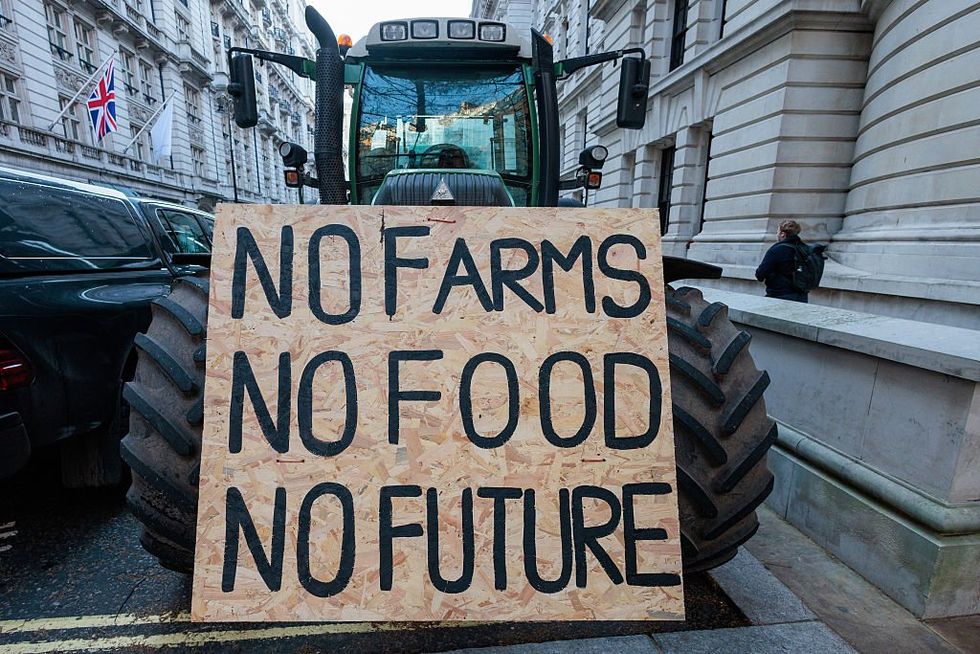
Government review finds food production now economically unviable for average English farm
|GETTY
In March, the Government suspended its sustainable farming incentive scheme after the allocated budget was exhausted.
The pause led to an immediate fall in income for many farms, with ministers yet to confirm when payments will restart.
Ms Batters said farming has endured unprecedented policy upheaval in recent years.
She wrote: "In the past nine years, farming policy has undergone the greatest set of changes in living memory, with no consistent political direction at a time when farming needed it most".
Ms Batters said the removal of full inheritance tax relief had left many farmers "bewildered and frightened of what might lie ahead". However The government has announced it will raise the Agricultural and Business Property Reliefs threshold from £1million to £2.5 million when the changes take effect in April 2026.
LATEST DEVELOPMENTS:
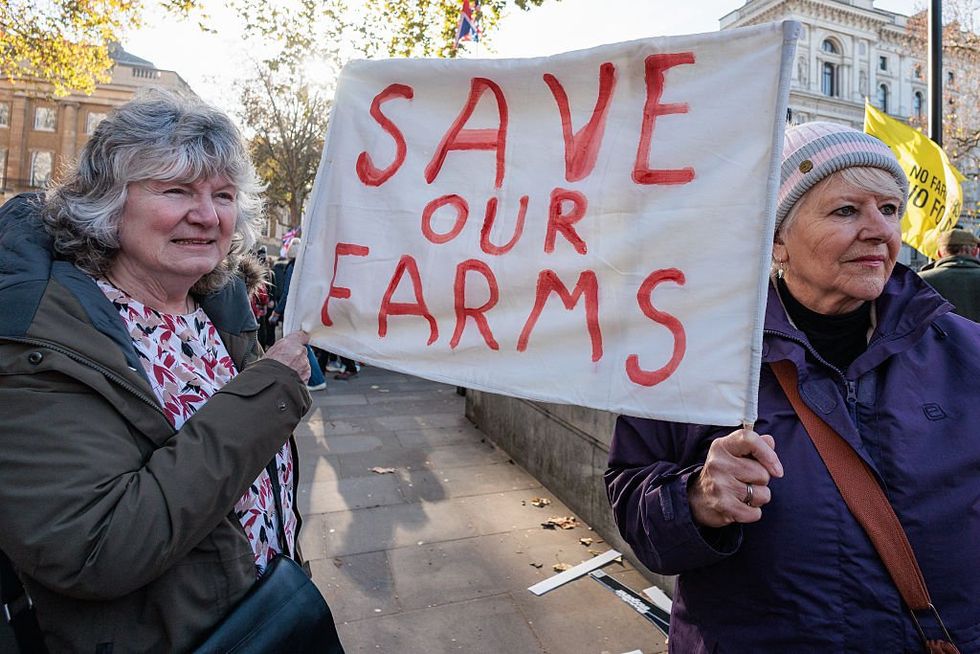
A 'save our farms' banner at the farmer protests in London
|GETTY
This means spouses or civil partners will be able to pass on up to £5million of qualifying farm or business assets between them before paying inheritance tax, in addition to existing allowances.
Ministers said the move follows concerns raised by farmers and businesses after Budget 2024 and is intended to protect more assets while still limiting unlimited tax relief for the most valuable estates.
Average farm income across Great Britain stood at £41,500 per holding in 2023-24. However, the review noted this headline figure masks wide disparities among different types of farm and regions.
Further analysis by land agents Strutt & Parker suggested an even more fragile picture. The firm found that fewer than half of English farms earned more than £34,500 a year, and described that level of income as the minimum required for sustainability.
The review also examined the impact of the transition away from the European Union’s Common Agricultural Policy, saying the move has been marked by instability and a lack of clarity.
Defra was criticised for failing to provide a clear long-term vision since Brexit, with farmer confidence in the department’s approach dropping sharply.
Just seven per cent of farmers now say they fully understand their strategy for agriculture, down from 10 per cent previously.
The review made 57 recommendations aimed at restoring viability to British farming.
Ms Batters urged ministers to simplify agricultural support schemes, which she said have become overly complex and difficult to access.
Expanding exports of English produce to overseas markets was identified as a priority.
The report also encouraged greater use of private investment, including through natural capital projects and carbon offsetting schemes.
Supply chain fairness was highlighted as a persistent problem.
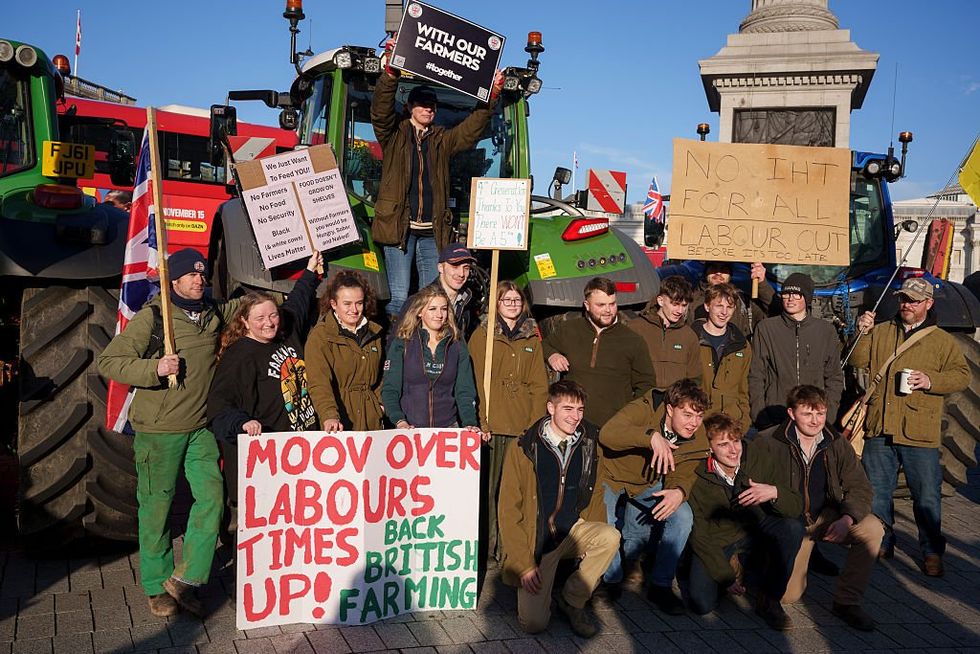
Farmers are struggling to keep their businesses alive
|GETTY
The review said farmers are often squeezed by larger and more powerful buyers, limiting their ability to secure fair returns.
It also recommended incorporating agricultural topics into Stem education to attract new entrants into the industry.
Ms Batters further proposed extending seasonal worker visas from six to nine months.
She said longer visas would provide farms with more reliable access to essential labour.
The Government responded by announcing the creation of a new Farming and Food Partnership Board, chaired by Environment Secretary Emma Reynolds, and is set to bring together representatives from farming, retail, finance and Government.
Ministers said the group will focus on strengthening domestic food production.
Our Standards: The GB News Editorial Charter
More From GB News