



All products and promotions are independently selected by our experts. To help us provide free impartial advice, we will earn an affiliate commission if you buy something. Click here to learn more








Vitamin C serums have become a skin care favourite, offering up to six complexion-boosting benefits - most notably their ability to tackle uneven skin tone by controlling hyperpigmentation.
The essential nutrient is one of several required to produce pro-collagen, which forms the foundation of collagen fibres in the skin. It also helps tackle uneven skin tone by controlling hyperpigmentation.
This is why, according to Chartered Chemist Bruce Green, the ingredient deserves a spot in every skin care routine.
- Buy Farmacy 10% Vitamin C Serum
- Buy L'Oréal Paris Revitalift Clinical 12% Pure Vitamin C
- Buy LAIKOU skincare set with Vitamin C
"The benefits of topically applied Vitamin C play a vital role in the production of pro-collagen, the building blocks of collagen fibres," the scientist and founder of SOS Serum told GB News.

Vitamin C leaves the complexion looking brighter when used properly
|GETTY
He added that it "helps control hyperpigmentation" and "scavenges free radicals" while strengthening capillary walls and supporting damaged skin healing.
Additionally, vitamin C can boost the skin's natural immune system, leaving your complexion looking brighter and helping ward off premature ageing signs.
Since our bodies don't naturally produce L-Ascorbic acid, applying it directly to the skin is essential for reaping the rewards.
How to use vitamin C in skin care?
When it comes to getting started, Bruce recommends easing into things gradually.
"From a clinical point of view, it is important to note that the efficiency of any serum is proportional to the concentration up to a maximum of 20 per cent - start at 5 per cent," he advised.
The chemist suggests beginning with just one or two applications per week, then building up as your skin adjusts.
LATEST DEVELOPMENTS
"Use only once or twice a week initially and incorporate it into your routine, after cleansing but before moisturising and use sparingly," the chemist noted.
Evening application is his preferred approach, though morning use works too, provided you follow up with sun protection.
He also stressed the importance of conducting a patch test before your first application to check for any reactions.
Keeping your serum in top condition requires care, according to Bruce. He warned that vitamin C formulations in particular are notoriously unstable, making proper storage crucial for effectiveness.
"Vitamin C serums have a relatively short shelf life. Do not expose it to heat, light and air," he explained.
- Buy Farmacy 10% Vitamin C Serum
- Buy L'Oréal Paris Revitalift Clinical 12% Pure Vitamin C
- Buy LAIKOU skincare set with Vitamin C
The product will gradually lose its potency through oxidation, with a telltale colour change signalling it's time to bin it.
"When this happens, the product will darken to brown," Green noted, recommending storage in a cosmetic fridge away from direct sunlight.
Purchasing smaller bottles and replacing them before the three-month mark can ensure you're always using a fresh, effective formula.
For those wanting to get more from their vitamin C serum, pairing it with the right ingredients can amplify its benefits, Bruce explained.
"You could pair it with Vitamin E, Ferulic acid and always apply an SPF," he recommended, noting that sun protection is particularly important when using this active ingredient.
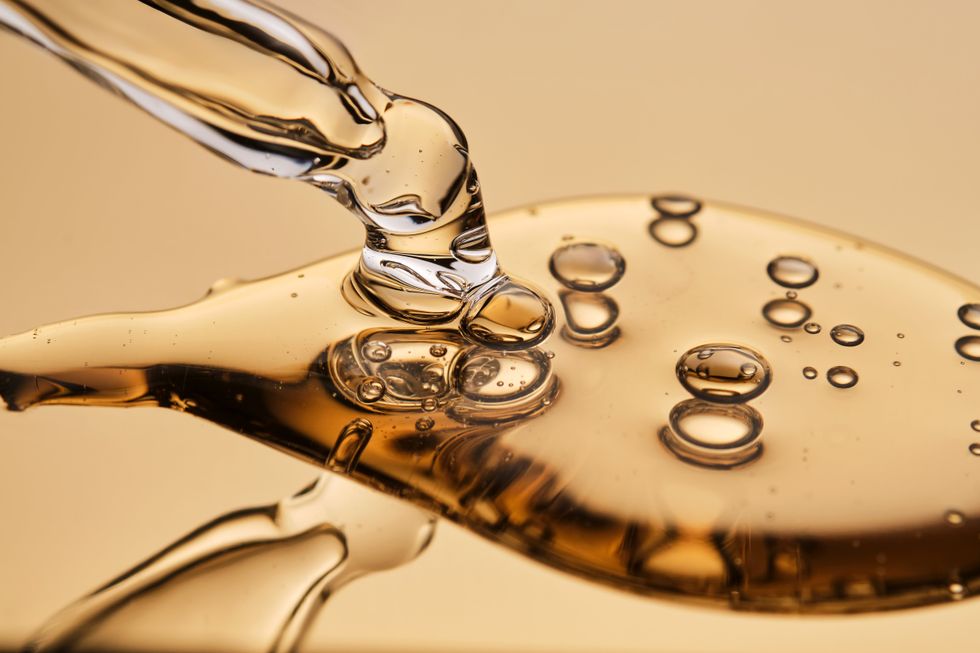
Vitamin C can be paired withVitamin E and Ferulic acid for extra benefits
|GETTY
However, certain products don't play well together with vitamin C formulations.
"What other products/ingredients should you avoid when using a vitamin C serum? Tanning products, Retinol, Salicylic Acid, Glycolic Acid," the chemist cautioned.
For those keen to maximise results, Green also suggested incorporating vitamin C into your diet through citrus fruits, potatoes, tomatoes and leafy greens.
He noted that serums deliver far more effective concentrations than face washes or moisturisers, making them the superior choice for targeting skin concerns.
Our Standards: The GB News Editorial Charter