








Self-driving cars may not be fully prepared to deal with runners on the road, according to a new study, which warned of massive safety risks.
Researchers found that runners were far more likely than walkers to take risks when crossing roads, something current automated vehicle systems may not properly account for.
The study, carried out by teams at the University of Glasgow and KAIST, used augmented reality technology to explore how runners behaved differently from pedestrians.
Their findings showed runners were less likely to slow down or stop at crossings and may even run in front of approaching vehicles to maintain their pace, leading to runners being struck by virtual cars in simulated scenarios.
Professor Stephen Brewster, of the University of Glasgow's School of Computing Science, said: "We realised that there's been very little research into how runners might expect to interact with driverless cars. That's surprising on a couple of levels."
He warned that it will be increasingly important to ensure that runners and automated vehicles "can share the roads safely in the years to come".
To carry out the research, 24 participants were asked to walk or run towards a junction while wearing augmented reality headsets, which displayed a life-sized virtual car approaching them.
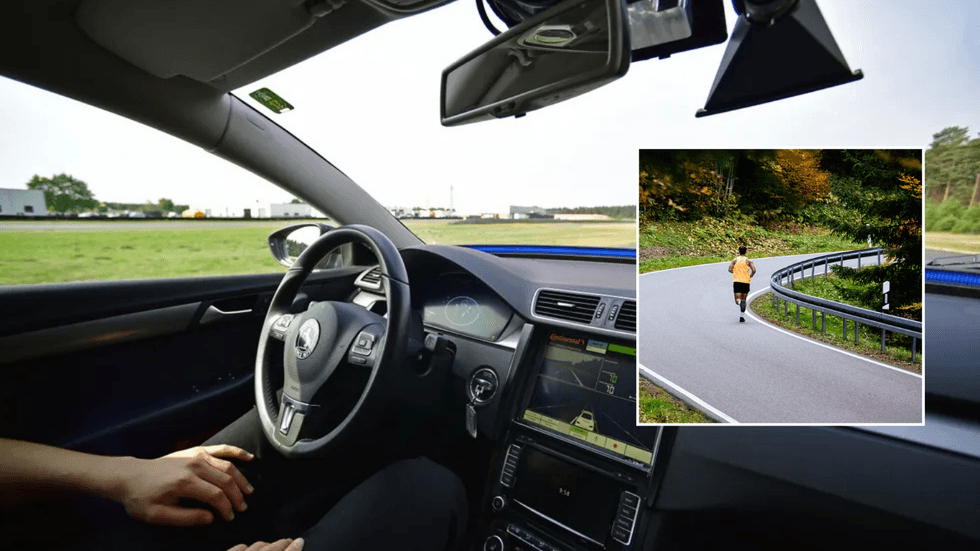
The survey revealed key safety concerns over how the vehicles reacted to runners on the road
|PA/GETTY
The simulated vehicles were programmed to sometimes stop and sometimes continue through the junction. In some cases, they were fitted with special external displays designed to communicate their intentions to pedestrians.
These displays, known as "external human-machine interfaces", used lights to signal to pedestrians whether it was safe to cross.
One design, called a "LightRing", used simple red and green lights, while another, known as "CyanBand", used moving light patterns to show whether the car slowed down or sped up.
Both walkers and runners detailed how the displays helped them understand what the vehicle was going to do. However, their behaviour still differed significantly.
LATEST DEVELOPMENTS
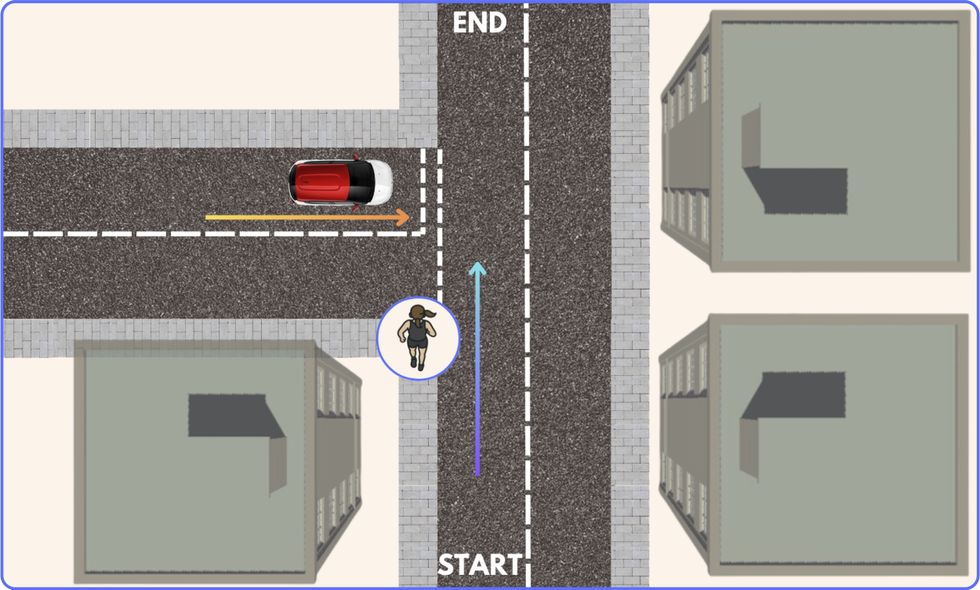
The study hopes to measure how effective self-driving cars are at stopping for runners
|UNIVERSITY OF GLASGOW
The study also found that runners struggled to process more complex signals, such as the moving lights used in the CyanBand system. During the tests, runners collided with the virtual vehicle three times, while walkers were able to avoid all contact.
Researcher Ammar Al-Taie, one of the study's authors, said: "I'm a runner myself, and I've noticed that crossing roads while running feels different from when I'm walking.
"I'm much more motivated to keep moving because slowing to let a car pass and accelerating again takes a real physical effort."
The study also aims to improve safety systems in driverless cars, particularly by designing clearer and faster ways for vehicles to better communicate with people on the road.
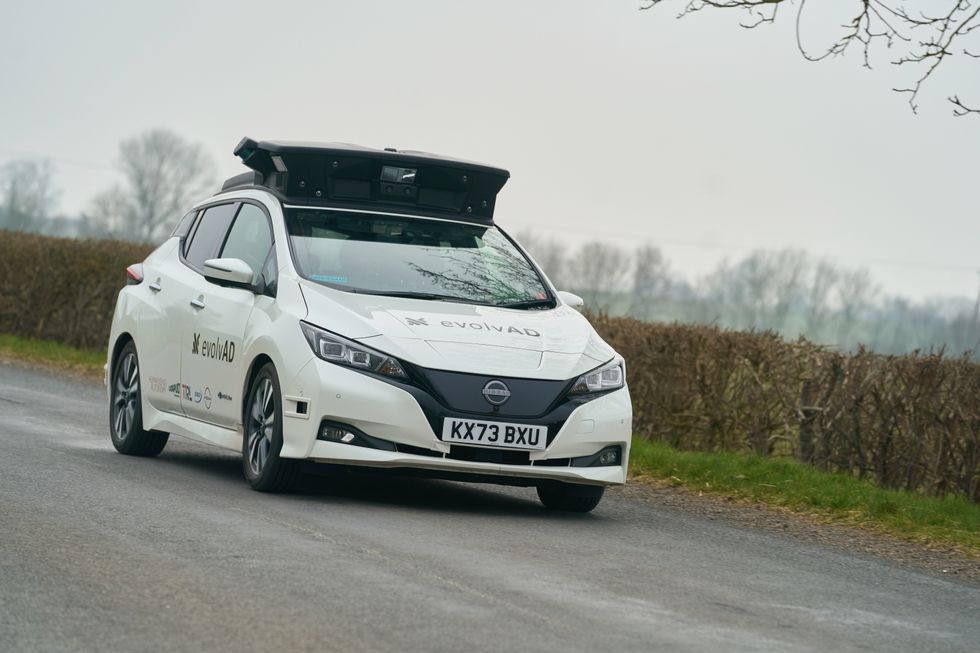 Drivers have raised safety concerns about self-driving cars | NISSAN
The Automated Vehicles Act was passed through Parliament in 2024, with the Government hoping to launch self-driving vehicles in the UK later this year.
Earlier this year, Waymo, the American autonomous vehicle company owned by Alphabet, revealed its intention to begin operating a fully driverless taxi service in the capital as soon as September 2026.
Graham Conway, managing director at Select Car Leasing, said: "While there's clear excitement in the industry about what driverless taxis can offer, it's clear that firms like Waymo have some way to go before they win the hearts and minds of users.
"For any firm operating a driverless taxi, they'll need to prove how effective - and safe - the system can be before trust is truly earned here in the UK."