










Experts are warning that major car brands could face a serious headache in the coming years as lithium demand is expected to soar as electric vehicles become more popular.
New data reports that global lithium demand could exceed 13 million tonnes by 2050 under accelerated plans, prompting caution from experts.
The data, from Wood Mackenzie's latest Energy Transition Outlook for Lithium, warns that existing supply projects are unlikely to meet demand beyond the mid-2030s.
Lithium plays a crucial role in the transition to electric vehicles, with lithium-ion batteries being the most popular type in zero emission cars, thanks to their high-energy density.
TRENDING
Stories
Videos
Your Say
Wood Mackenzie has issued a dire warning that supply deficits could emerge in just two years without significant investment.
Under the "delayed transition" scenario, the market remains adequately supplied until 2037 before entering a deficit, at around 5.6 million tonnes of Lithium Carbonate Equivalent (LCE).
Under the most serious "Net Zero" scenario, deficits are expected to begin in 2028, while an additional supply of 8.5 million tonnes of LCE will be required in 2050.
The report stated that electric vehicles will be the primary driver of demand growth over the next 24 years, accounting for between 72 and 80 per cent of lithium consumption across scenarios.
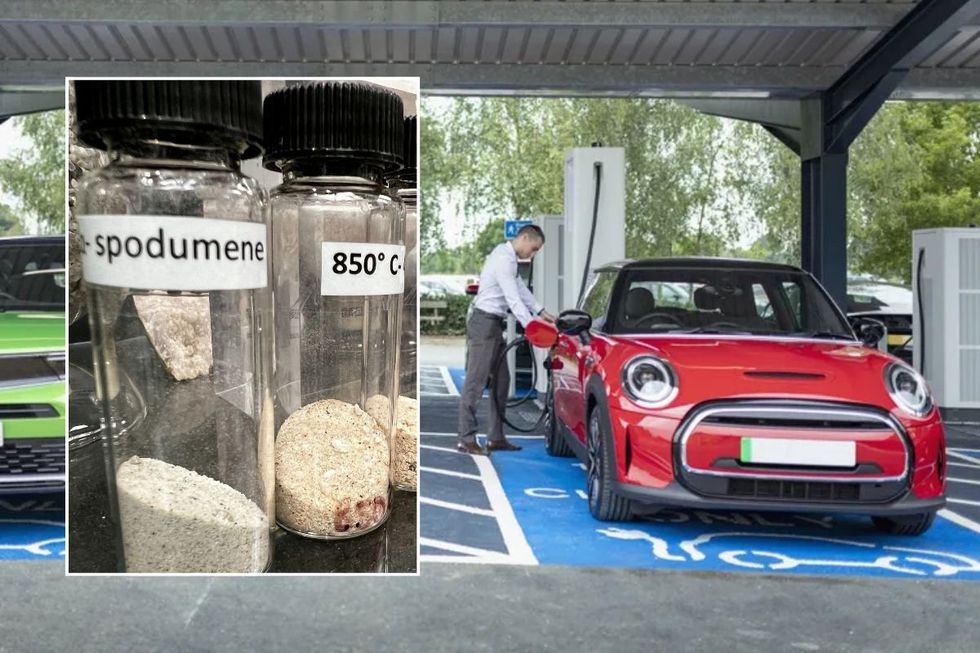
Experts have warned that more needs to be done to prepare for the increased use of lithium by 2050
|REUTERS/GETTY
By the middle of the century, Wood Mackenzie suggests that rechargeable batteries across all applications will account for a staggering 96 to 98 per cent of lithium consumption.
Allan Pedersen, research director at the firm, said: "The lithium market is heading into a supply crunch much sooner than many industry players expect.
"The industry needs to act now should governments progress policies towards net zero. Projects approved today will determine market balance in the critical 2030s."
The lithium industry will also require huge investment to meet the demand from electric vehicles and other sectors.
LATEST DEVELOPMENTS
 Experts have expressed serious concerns about the availability of lithium | REUTERS
Total investment ranges from $104billion (£78billion) under a delayed transition scenario to as much as $276billion (£132billion) under a net zero scenario.
Investment in the lithium sector is expected to peak between 2030 and 2034, which is due to mining, refining infrastructure and regional supply chains.
Rebecca Grant, senior research analyst, added: "This is a $100-275billion (£75-206billion) investment story depending on how the energy transition unfolds.
"The winners will be those who can deploy capital efficiently while navigating trade fragmentation and securing regional market access."
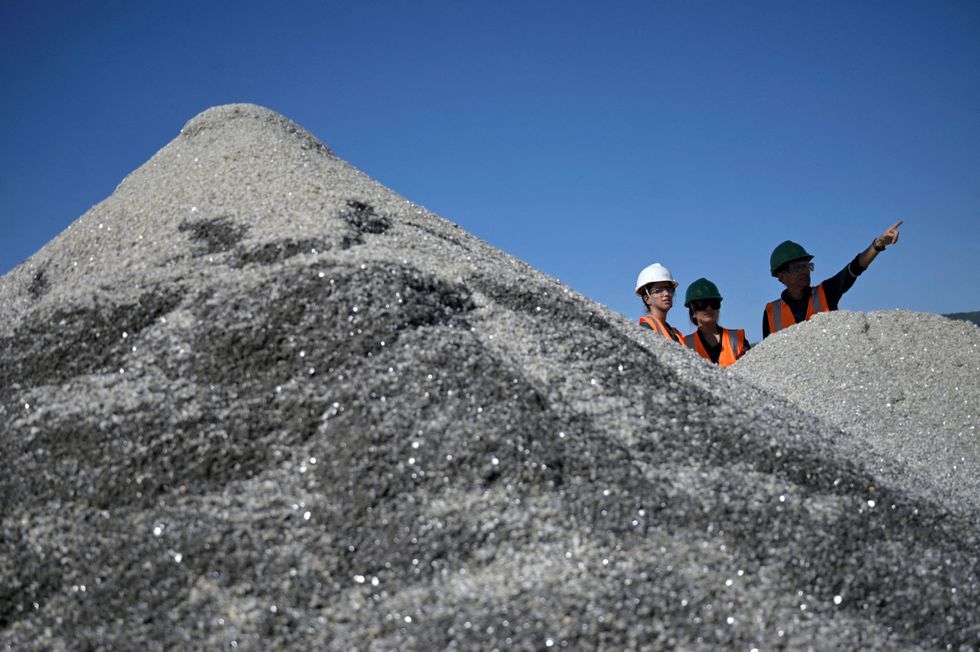
Hundreds of billions of dollars will be needed to address potential lithium shortages within years
|REUTERS
The report highlights that lithium is "irreplaceable" in the energy transition for electric vehicles, although the sector must adapt to the rapidly rising demand.
Mr Pedersen emphasised that lithium demand will "outstrip current supply plans", whether the world is on track for 1.5C pathway or something less ambitious.
He concluded: "The question isn't whether we need more lithium. It's whether the industry can mobilise capital fast enough to meet demand while navigating an increasingly fragmented global trade environment."