










Drivers are being warned of hefty fines and prosecuted if they have medical conditions and fail to report them to the DVLA.
More than 750,000 motorists across the UK have a medical condition that can affect their driving ability, according to recent data from 2021.
Motorists must inform the Driver and Vehicle Licensing Agency (DVLA) if they have developed a "notifiable" medical condition or disability, or have a condition that has worsened since they received their licence.
Common medical conditions that could impact their ability behind the wheel are included in the list, such as diabetes, heart conditions and epilepsy.
The DVLA warns that motorists could face a £1,000 fine if they fail to tell them about a condition that might affect their ability to drive safely.
In the event that a medical condition contributes to an accident, and the DVLA has not been informed, the driver could even be prosecuted.
Once someone has declared a medical condition to the DVLA, the agency may contact their doctor, arrange for the driver to be examined or ask them to take a driving assessment, or an eyesight or driving test.
The DVLA can decide if drivers need a new licence, special adaptations for their vehicles or if they have to stop and give up their licence.
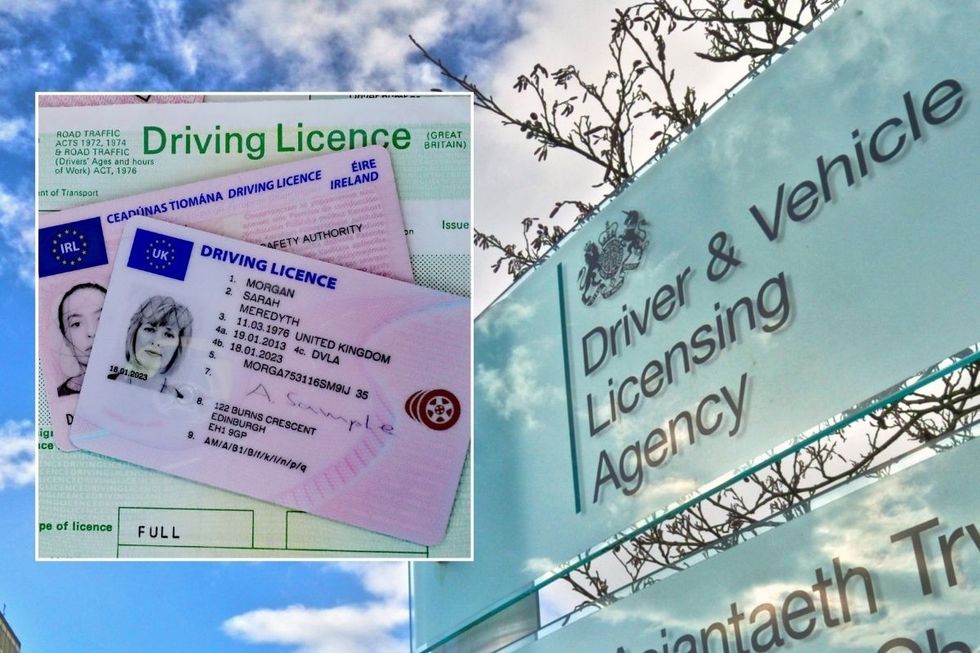
Drivers could be fined £1,000 for not declaring a medical condition to the DVLA
| PA/DVLAIn some circumstances, motorists may be told that they can have a shorter licence, of either one, two, three or five years.
If someone is told to stop driving, they can send the DVLA more evidence, reapply for their licence or appeal the decision.
Someone must check with their doctor if they wish to reapply for their licence in the event that it was already taken away because of a medical condition.
GB News has compiled a list of medical conditions which may need to be reported to the DVLA, although not every condition is notifiable.
There may also be different requirements for reporting medical conditions if the person drives a car or motorcycle, or a bus or lorry.
LATEST DEVELOPMENTS

The DVLA frequently encourages drivers to ensure their licence is up-to-date
| DVLAMedical conditions that may need to be reported to the DVLA
- Absence seizures
- Acoustic neuroma
- Agoraphobia
- Alcohol problems
- Alzheimer's disease
- Amaurosis fugax
- Amputations
- Amyotrophic Lateral Sclerosis (ALS)
- Angina
- Angioplasty
- Ankylosing spondylitis
- Anorexia nervosa
- Anxiety
- Aortic aneurysm
- Aortic stenosis
- Arachnoid cyst
- Arrhythmia
- Atrial defibrillator
- Arteriovenous malformation
- Arthritis
- Asperger syndrome
- Ataxia
- Attention deficit hyperactivity disorder (ADHD)
- Autistic spectrum condition
- Balloon angioplasty (leg)
- Bipolar disorder
- Blackouts
- Blepharospasm
- Blood clots
- Blood pressure
- Brachial plexus injury
- Brain abscess, cyst or encephalitis
- Brain aneurysm
- Brain angioma
- Brain haemorrhage
- Brain injury (traumatic)
- Brain tumours
- Broken limbs
- Brugada syndrome
- Burr hole surgery
- Caesarean section
- Cancer
- Cataracts
- Catheter ablation
- Cardiac problems
- Carotid artery stenosis
- Cataplexy
- Cavernoma
- Central venous thrombosis
- Cerebral palsy
- Charcot-Marie-Tooth disease
- Chiari malformation
- Chronic aortic dissection
- Cognitive problems
- Congenital heart disease
- Convulsions
- Coronary artery bypass or disease
- Coronary angioplasty
- Cranial nerve palsy (with double vision)
- Cystic fibrosis
- Deafness
- Defibrillator
- Déjà vu
- Dementia
- Depression
- Diabetes
- Dilated cardiomyopathy
- Diplopia (double vision)
- Dizziness
- Drug misuse
- Eating disorders
- Empyema (brain)
- Epilepsy
- Essential tremor
- Eye conditions
- Fainting
- Fits
- Fractured skull
- Friedreich's ataxia
- Glaucoma
- Global amnesia
- Grand mal seizures
- Guillain-Barré syndrome
- Head injury
- Heart attack
- Heart arrhythmia
- Heart failure
- Heart murmurs
- Heart palpitations
- Heart valve disease or replacement valve
- High blood pressure
- HIV or AIDS
- Hodgkin’s lymphoma
- Huntington’s disease

Motorists with diabetes need to inform the DVLA of their medical conditions
| GETTY- Hydrocephalus
- Hypertension
- Hypertrophic cardiomyopathy
- Hypoglycaemia
- Hypoxic brain damage
- Hysterectomy
- Implantable cardioverter defibrillator (ICD)
- Intracerebral haemorrhage
- Ischaemic heart disease
- Kidney dialysis
- Kidney problems
- Korsakoff’s syndrome
- Labyrinthitis
- Learning difficulties
- Left bundle branch block
- Leukaemia
- Lewy body dementia
- Limb disability
- Long QT syndrome
- Loss of an eye
- Low blood glucose (sugar)
- Lumboperitoneal shunt
- Lung cancer
- Lymphoma
- Macular degeneration
- Malignant brain tumours
- Malignant melanoma
- Manic depressive psychosis
- Marfan's syndrome
- Medulloblastoma
- Memory problems (severe)
- Meningioma
- Mini-stroke
- Monocular vision (sight in one eye only)
- Motor neurone disease
- Multiple sclerosis
- Muscular dystrophy
- Myasthenia gravis
- Myocardial infarction
- Myoclonus
- Narcolepsy
- Night blindness
- Obsessive compulsive disorder
- Obstructive sleep apnoea
- Ocular myasthenia gravis (with double vision)
- Ophthalmoplegia (with double vision)
- Pacemakers
- Palpitations
- Paranoia
- Paranoid schizophrenia
- Paraplegia
- Parkinson’s disease
- Peripheral arterial disease
- Peripheral neuropathy
- Personality disorder
- Petit mal seizures
- Pituitary tumour
- Post traumatic stress disorder (PTSD)
- Psychosis
- Psychotic depression
- Pulmonary arterial hypertension
- Renal dialysis
- Retinal artery fugax
- Retinitis pigmentosa
- Retinopathy (with laser treatment)
- Schizo-affective disorder
- Schizophrenia
- Scotoma
- Seizures
- Severe communication disorders
- Severe depression
- Sight in one eye only
- Sleep apnoea
- Sleepiness (excessive)
- Spinal problems and injuries
- Stroke
- Subarachnoid haemorrhage
- Surgery
- Syncope
- Tachycardia
- Temporal lobe epilepsy
- Tonic clonic fits
- Tourette’s syndrome
- Transient global amnesia
- Transient ischaemic attack
- Tunnel vision
- Usher syndrome
- Valve disease or replacement valve
- Ventricular defibrillator
- Vertigo
- Vision in one eye only
- Visual acuity (reduced)
- Visual field defect
- VP shunts
- Wolff-Parkinson-White syndrome