







Thousands of drivers across the UK will be exposed to new motoring rules next year, with motorists being urged to familiarise themselves now.
From December 24, 2026, all newly registered goods vehicles must have a full "smart 2 tachograph" fitted to remain on the road.
Despite the new rules, transitional "smart 2 tachographs" do not need to be retrofitted in vehicles registered before Christmas Eve next year.
Tachographs record driving times, breaks and rest periods, other work and periods of availability, the vehicle's speed and the distance travelled by the vehicle.
TRENDING
Stories
Videos
Your Say
This will follow the established deadline of July 1, 2026, when a full smart 2 tachograph must be fitted into goods vehicles over 2.5 tonnes used for international journeys for hire and reward.
However, there is no requirement to fit a tachograph if the international journey is for the driver's or the company's own account and it does not constitute the main activity of the motorist.
The new tachograph rules launching on December 24, 2026, will also apply to newly registered buses and coaches.
Any goods vehicles between 2.5 tonnes and 3.5 tonnes that are used solely in the UK do not need to have a tachograph fitted.
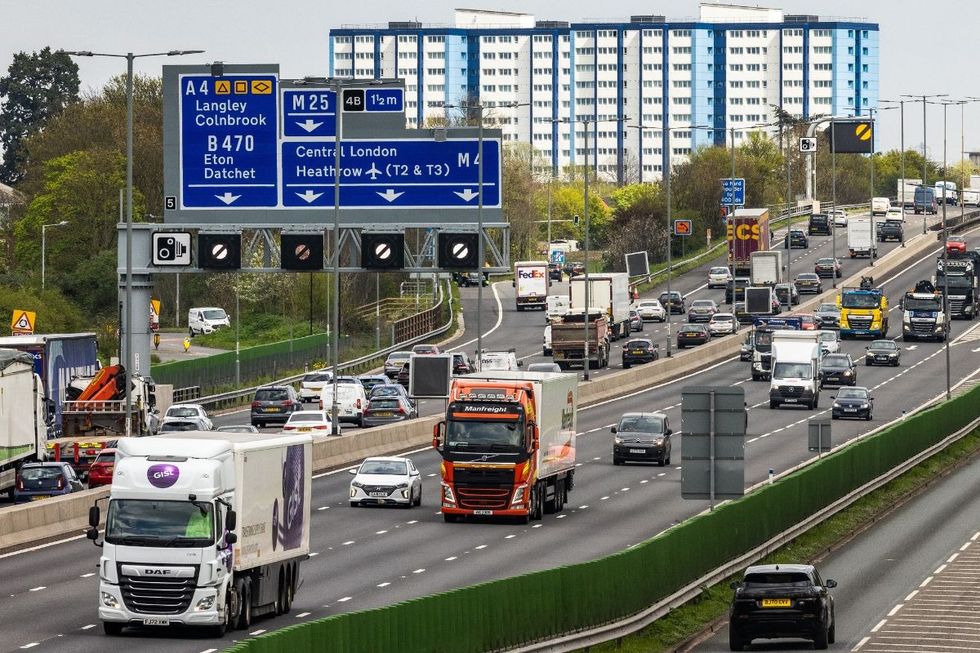 The new tachograph rules launching today are expected to boost safety among professional drivers | GETTY
A full or transitional smart 2 tachograph must be retrofitted in vehicles carrying out international journeys between the UK and EU.
This applies if they have an analogue or digital tachograph, and if they have a smart 1 tachograph on or after August 19, 2025.
The transitional smart 2 tachograph does not have the location verification facility within its software. This is known as Galileo.
Motorists and companies can be slapped with verbal warnings, offence rectification notices, prohibitions, fines and even prosecutions if they exceed driving times.
LATEST DEVELOPMENTS
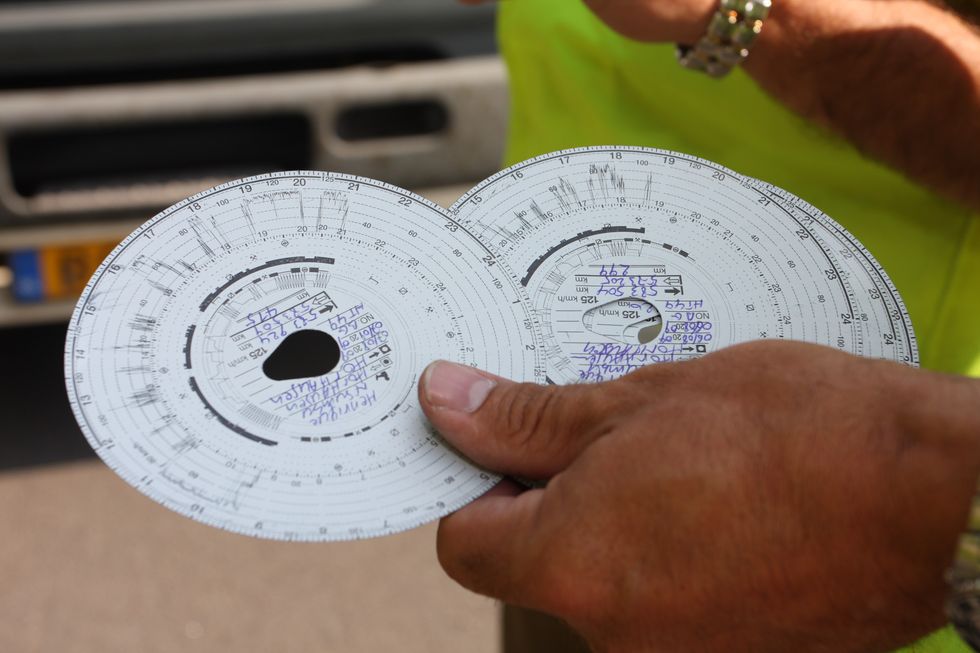 Motorists are required to record their hours on a tachograph, with drivers fined for failing to follow the rules | GETTY
If it is judged to be in the public interest, more serious infringements are considered for prosecution if they exceed driving hours. This can apply to the driver, the operator, or both.
Motorists must not drive more than nine hours in a day, 56 hours in a week, or 90 hours in any two consecutive weeks.
Motorists must have at least 11 hours of rest every day, although this can be reduced to nine hours of rest three times between any two weekly rest periods.
When driving on international roads, they can take two consecutive reduced weekly rest periods of less than 45 hours, if they are taken outside of the UK and are outside of their country of residence.