








One of China's most innovative brands has unveiled fresh plans to accelerate its rollout of self-driving vehicle technology, flying cars and even robots.
Xpeng has confirmed that it will introduce new vehicle technology later this month to vehicle owners across Europe, which will prioritise road safety and enhance self-driving capabilities.
It also showed off its new Vision-Language-Action (VLA 2.0) autonomous driving system as the Chinese brand moves towards Level 4 self-driving capabilities.
Xpeng will deploy VLA 2.0 in China for its Robotaxi vehicles, which have entered supervised public-road testing, with trials expected to launch this year.
TRENDING
Stories
Videos
Your Say
The brand's chairman and CEO, He Xiaopeng, also confirmed that German auto giant Volkswagen would be the first customer and commercial partner to adopt the VLA 2.0 system.
The system, which is powered by artificial intelligence, is designed to be used across Robotaxi fleets, in humanoid robots and modular flying vehicles.
Xpeng's Physical AI strategy aims to use technology to power intelligent machines operating in a range of real-world environments.
Mr Xiaopeng said: "Xpeng's VLA 2.0 is the first version designed to achieve full autonomous driving and will iterate at an unprecedented pace.
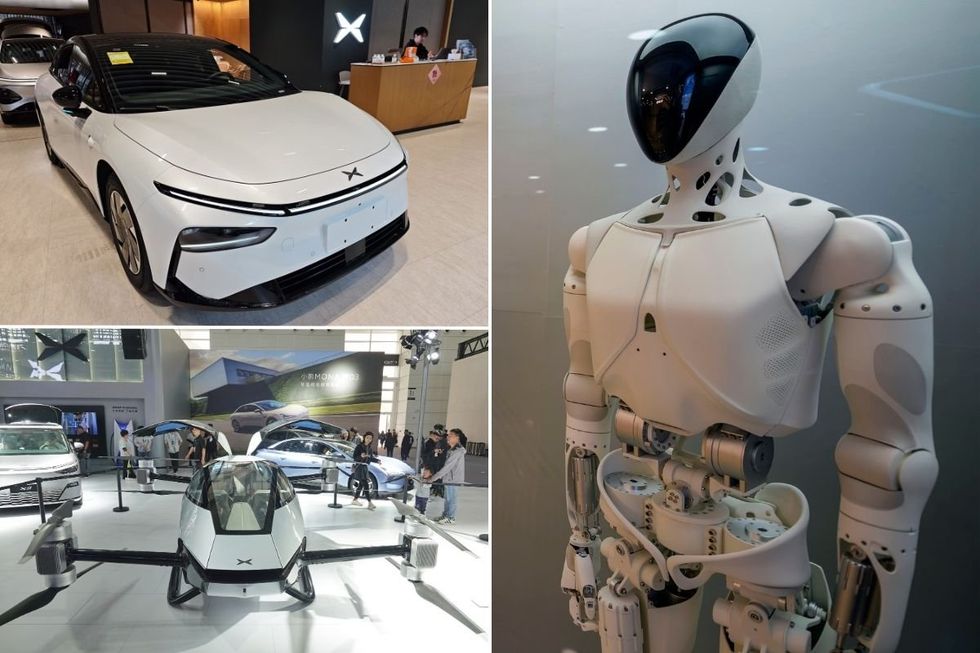
Xpeng said its technology would work towards improving its vehicle, robotaxi and humanoid robot services
|GETTY
"We believe that full autonomy will arrive within the next one to three years, making autonomous driving a natural part of people's daily travel."
Early testing from Xpeng revealed a 23 per cent improvement in driving efficiency in dense urban and mixed-traffic conditions.
The technology can identify erratic vehicles, navigate accident scenes, and even yield to small vehicles.
Xpeng added that the VLA 2.0 technology has been extensively tested on campus lanes, rural dirt roads, non-navigable routes and manoeuvred around potholes.
LATEST DEVELOPMENTS
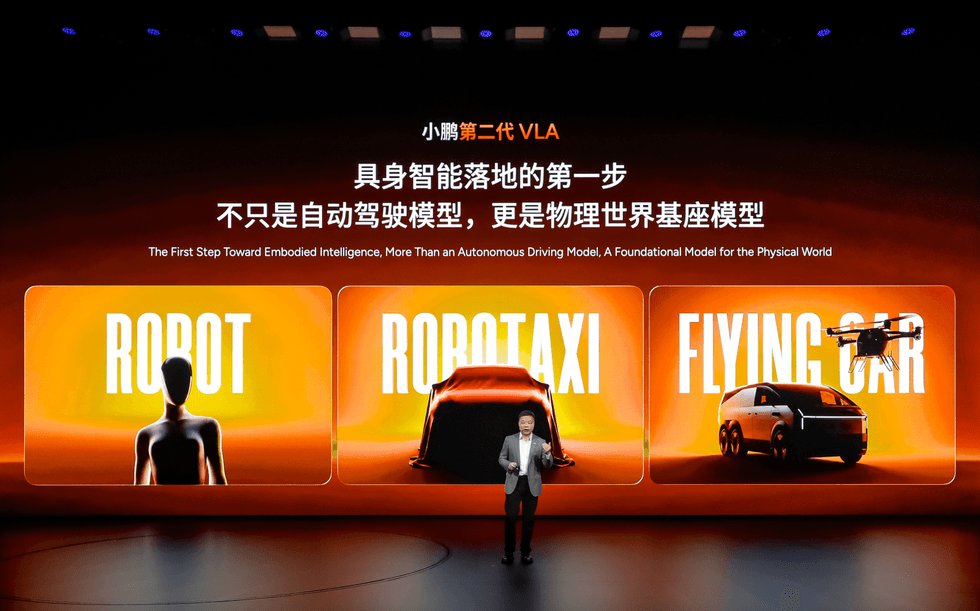
Xpeng unveiled a range of new features at an event in China
|XPENG
At an event in November, Xpeng unveiled the Next-Gen Iron humanoid robot, following the launch of the "human-like" first-generation Iron in 2024.
The Iron robot makes use of the smallest "harmonic joint", creating a 1:1 hand size. It stands at almost six feet tall and weighs 70kg, and has "fully covered flexible skin".
Mr Xiaopeng said: "By the end of 2026, Xpeng aims to achieve large-scale mass production of high-level humanoid robots.
"To accelerate the application and implementation of humanoid robots, Xpeng Iron will open its SDK and jointly build a humanoid robot application ecosystem with global developers."
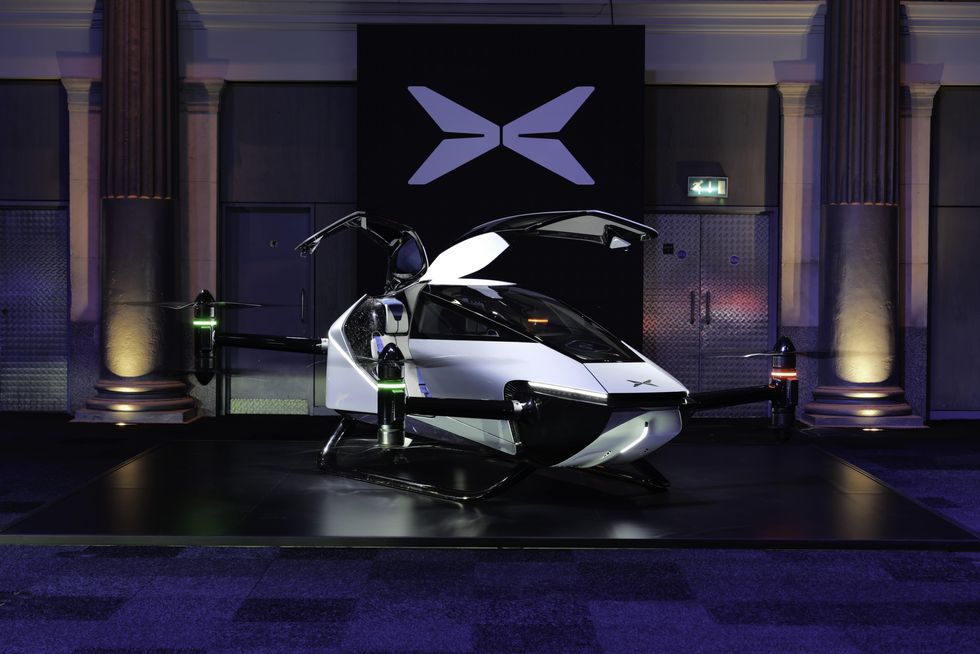
Xpeng said it would continue to accelerate its offering of flying cars in the future
| XPENGThe new XOS 5.8.7 update will first start in the Early Access Programme form, before being rolled out for a wider batch of motorists across Europe.
It will include optimisations to Adaptive Cruise Control (ACC) and Lane Centring Control (LCC) by reducing unnecessary deceleration and eliminating small movements to the steering wheel.
Additional updates will include system stability, improved CarPlay and Android Auto connectivity, and faster over-the-air update speeds.
Xpeng said it wanted to reinforce the emphasis on technology to enhance its existing vehicle fleet and benefit drivers with constantly improving features.