








British scientists have developed a pioneering artificial intelligence system designed to pinpoint individuals facing the greatest danger from obesity-related illnesses.
The tool, named Obscore, could transform how the NHS distributes scarce weight-loss treatments such as injectable medications.
Published in Nature Medicine, the research moves beyond simple body mass index measurements to assess patient risk more comprehensively.
Approximately two-thirds of adults across England currently fall into the overweight or obese categories, a statistic that has prompted considerable alarm among medical professionals.
The new approach offers a more tailored method for determining who should receive priority access to interventions.
The researchers employed interpretable machine learning techniques to analyse data from approximately 200,000 participants enrolled in the UK Biobank study.
Each individual included in the analysis had a BMI of 27 or above, placing them in overweight or obese classifications.
This sophisticated approach enabled the team to identify 20 distinct health, lifestyle and demographic markers capable of forecasting risk.
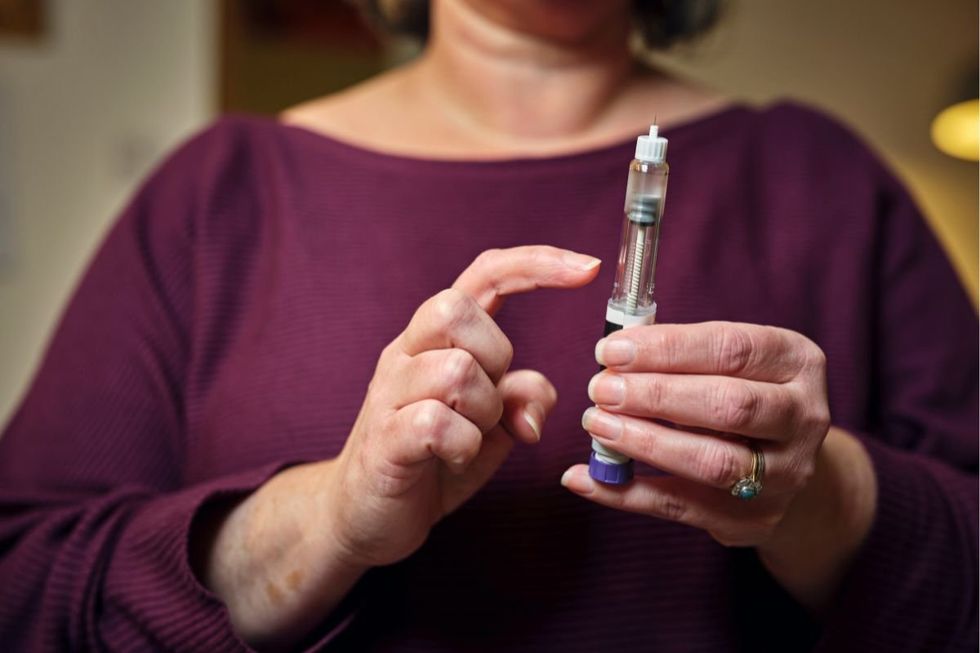
The tool aims to assess patient risk more comprehensively
|GETTY
These predictive factors encompass age, sex, cholesterol levels and creatinine measurements, among other indicators.
The system can estimate the likelihood of developing 18 separate obesity-linked conditions over a decade, ranging from gout to stroke.
Participants were sorted into five risk categories for each potential complication.
Professor Nick Wareham from the University of Cambridge, who co-authored the study, emphasised that the tool serves a specific purpose within healthcare planning.
"It's about developing and validating a score that can help with more rational resource allocation. So, can we prescribe therapy to those people who are most likely to need it and most likely to benefit from it, which is what we should do within the NHS," he said.
LATEST DEVELOPMENTS:
The findings revealed that people sharing identical age, sex and BMI measurements can face markedly different risks for various conditions.
Kamil Demircan, a co-author from Queen Mary University of London, highlighted a crucial discovery regarding type 2 diabetes.
"These constitute a population of individuals who may be overlooked if we only look at BMI and not other risk factors," he noted.
Professor Naveed Sattar, a cardiometabolic medicine specialist at the University of Glasgow who was not part of the research team, offered a measured assessment of the work.

Nearly two-thirds of adults across England currently fall into the overweight or obese categories
|GETTY
He observed that numerous obesity-related conditions share close connections with one another, and established risk scores already exist for several of them.
Furthermore, he pointed out that certain measurements required by Obscore are not routinely collected within NHS settings.
"Overall, this work represents a thoughtful attempt to move towards more holistic risk prediction across multiple obesity-related conditions," Professor Sattar said.
"But substantial further development and validation will be required before such an approach can be translated into routine clinical practice."
Our Standards: The GB News Editorial Charter