









Millions of people across England are heading to A&E departments for everyday health niggles like coughs, blocked noses and even hiccups, fresh data has revealed.
It's a trend that health leaders say exposes a real failure to give patients quick access to primary care when they need it.
Emergency departments are meant for serious injuries and life-threatening situations, but they're increasingly overwhelmed with people whose concerns could be handled elsewhere.
The numbers are quite striking. Cough-related visits have shot up nearly tenfold since 2020-21, climbing from around 44,000 cases to a whopping 435,728 in 2024-25.
TRENDING
Stories
Videos
Your Say
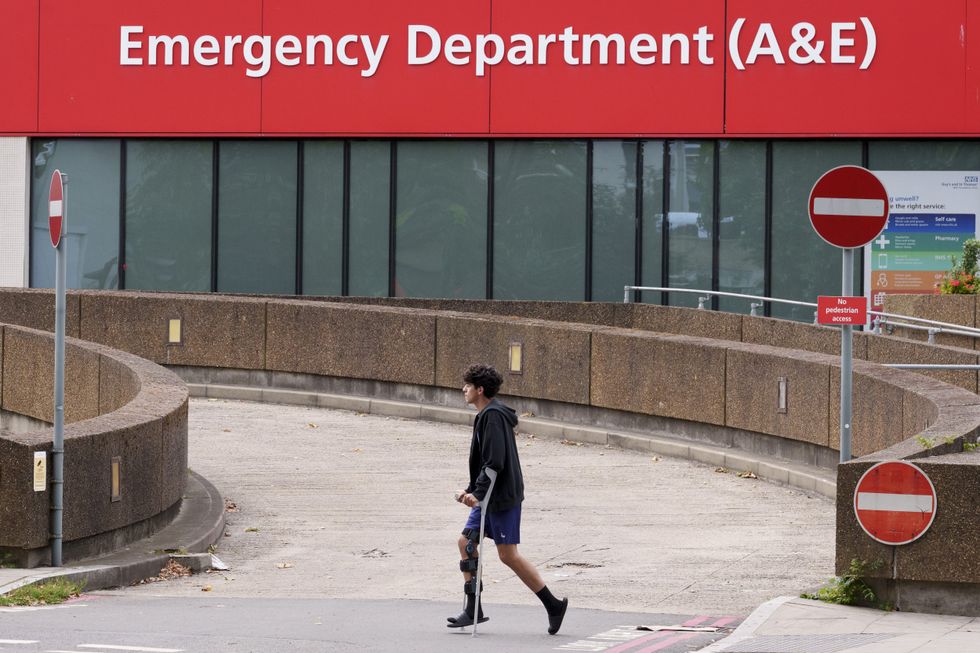
Emergency departments are meant for serious injuries
|GETTY
Attendances for hiccups, dizziness and various other minor conditions have also surged dramatically over the same period.
Looking at the five-year period from 2020-21 to 2024-25, the figures show almost 1.9 million people turned up at emergency departments seeking help for a headache, while nearly 1.4 million visits were due to a cough.
Sore throats accounted for 1.2 million attendances, and a million people showed up complaining of an earache.
There were close to 69,000 visits for blocked noses, around 4,200 for hiccups, and 290,000 for constipation.
Perhaps most telling is this: doctors recorded "no abnormality was detected" for 2.2 million A&E attendances in 2024-25 alone.
On top of that, more than half a million patients left before receiving any diagnosis at all.
Daniel Elkeles, chief executive of NHS Providers, says the shift to community-based care needs to happen far more quickly.
He said: "Patients choosing to attend A&E for help with relatively simple conditions like earache lays bare a failure to give people enough access to convenient, responsive services closer to home where they can get the help they need there and then."
LATEST DEVELOPMENTS
He hopes to see neighbourhood healthcare "turbocharged" with many more primary care appointments in communities and GP practices.
Dr Ian Higginson, president of the Royal College of Emergency Medicine, put it bluntly: "This is a symptom of the healthcare system not working as it was designed to."
He pointed out that primary and community services are often at capacity when open, but frequently aren't available when patients actually need them.
The government's decade-long plan for the NHS has promised to move care away from hospitals, creating neighbourhood health services across towns and cities.
A Department of Health and Social Care spokesman acknowledged there's a "long road ahead" to fix the NHS but insisted change is already happening.
GP teams have delivered 6.5 million more appointments over the past year, backed by £1.1billion in extra investment.
GP teams have delivered 6.5 million more appointments over the past year
|GETTY
The National Pharmacy Association's Henry Gregg reminded people that pharmacists can now supply prescription medicines on the NHS for common illnesses without needing a GP appointment.
NHS England urged the public to use A&E and 999 only for life-threatening conditions, suggesting NHS 111 online or by phone for everything else.
Our Standards: The GB News Editorial Charter