










A pioneering urine test capable of spotting lung cancer years before patients experience any symptoms may become available through the NHS within five years.
The diagnostic tool, developed with funding from Cancer Research UK, targets proteins produced by so-called "zombie" cells that indicate the earliest stages of the disease.
Currently, most lung cancer cases in England are identified at advanced stages, making treatment considerably more challenging. But the new approach could enable far earlier intervention.
The test functions by detecting proteins secreted by senescent cells, which scientists have dubbed "zombie" cells due to their peculiar nature.

The test is designed to identify proteins secreted by zombie cells
|GETTY
These cells remain alive within the body but have lost their ability to grow and divide normally.
Rather than dying off harmlessly, they cause damage to surrounding tissue by fundamentally altering their immediate environment.
This reprogramming process actively encourages the development of cancerous cells.
By identifying these telltale proteins, the diagnostic tool can flag potential malignancies months or even years ahead of conventional symptom-based detection.
The Cambridge University research team's findings were published in the journal Nature Ageing, with validation conducted using genuine patient samples and extensive genetic datasets.
LATEST DEVELOPMENTS
The technology works through an injectable sensor that interacts with zombie cell proteins, releasing a compound that can be easily identified in urine samples.
Prof Ljiljana Fruk, from the University of Cambridge, said: "The sensor has not yet been tested in humans.
"Next is the clinical trials, and it is likely it will take a few years to bring it to patients, but it is a first big step, and it could one day be used easily in GP surgeries and hospitals to help detect recurrence in this hard-to-treat cancer much earlier."
The research team has already modified the probe to identify lung fibrosis and is currently seeking funding to adapt it for other cancer types.
Prof Daniel Munoz-Espin, from the Early Cancer Institute, said: "Our previous studies showed that senescent cells in response to chemotherapy can cause treatment resistance and an aggressive lung cancer relapse."
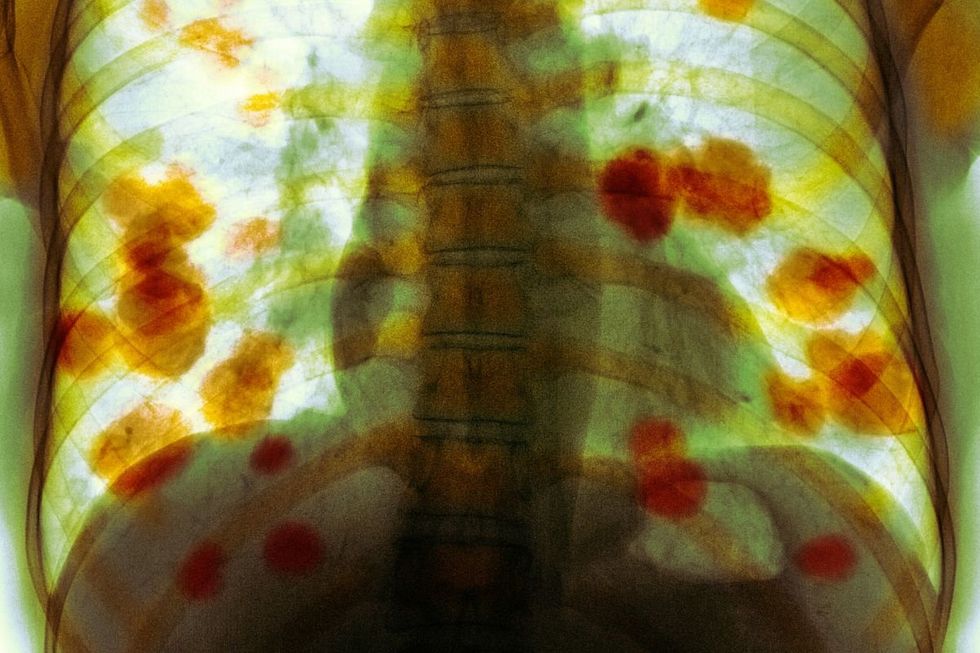
Most lung cancer cases are currently identified in the advanced stages
|GETTY
He added: "We also found that senescent immune system cells promote lung cancer development by causing immunosuppression. Our urine nano sensor may allow primary care detection of therapy resistance and lung cancer early development in future clinical settings."
Prof Robert Rintoul, of the oncology department at Cambridge, added: "Novel approaches for lung cancer detection and response to treatment are urgently needed to improve patient outcomes.
"This work forms the basis for testing within clinical trials with a view to future use in the clinic."
Our Standards: The GB News Editorial Charter